How China Uses Law and Legal Education to Project Global Authoritarian Control
In the era of globalization, law is not only a tool for domestic control—it can also serve as a means of cross-border authoritarian projection. Publicly available Chinese government documents reveal that the CCP has constructed a systematic, institutionalized “law and ideology export” framework aimed at extending its reach beyond China’s borders. This article examines the strategy across legal provisions, judicial interpretations, national security law, legal education and research, and international dissemination.
1. Legal Provisions: Establishing the Basis for Cross-Border Control
Article 8 of the Criminal Law of the PRC states:
“Where a foreigner commits a crime outside the territory of the People’s Republic of China against the state or citizens of China, and the minimum punishment under this law is imprisonment of three years or more, this law may be applied.”
This allows China to assert jurisdiction over actions that occur abroad but affect China or Chinese citizens, creating legal cover for cross-border interventions.
Judicial Interpretation (Fa Shi [2021] No.1) further expands “place of crime” to cyberspace: server locations, network providers, victim systems, users, and property loss sites. In other words, any online connection can be claimed as a Chinese crime scene, vastly extending extraterritorial reach.
The Criminal Procedure Law and related interpretations (Articles 291 & 599) allow foreign defendants to be tried in absentia if evidence is complete, institutionalizing cross-border prosecution mechanisms.
2. National Security Law: Legalizing Mass Mobilization and Authoritarian Control
The National Security Law states:
“Citizens and organizations have the responsibility and obligation to safeguard national security… They should be broadly mobilized to prevent, stop, and punish acts endangering national security.”
This law not only incorporates the entire population into the national security framework but also legitimizes authoritarian mobilization, making any individual potentially an instrument or target of state control.
3. Legal Education and Research: Ideological Domination and Talent Production
The CCP General Office and State Council issued “Opinions on Strengthening Legal Education and Legal Theory Research in the New Era”, which mandates that legal education must be guided by Xi Jinping Thought on the Rule of Law:
“Deeply study and implement Xi Jinping Thought on the Rule of Law, fully occupy the field of legal education and legal theory research, and guide students and scholars to become firm believers, active disseminators, and model practitioners of Xi Jinping Thought on the Rule of Law.”
Key goals include:
-
Optimizing the legal disciplines: Updating constitutional law, criminal law, civil and commercial law, international law, technology law, climate law, maritime law, etc., and promoting cross-disciplinary integration (economics, sociology, computer science, etc.) to train globally-oriented authoritarian legal talent.
-
Enhancing teaching systems: Integrating ideology, ethics, and professional conduct into practical and international training; establishing off-campus practice bases; promoting “Internet + Education” models.
-
Research and think tanks: Focus on national security, technological innovation, public health, ecological civilization, risk prevention, and diplomacy; build national-level foreign law research bases to produce globally relevant research supporting CCP authoritarian strategy.
These measures consolidate domestic authoritarian control and institutionalize China’s influence over international legal norms and discourse.
4. International Dissemination: Exporting Authoritarian Legal Influence
The policy explicitly directs:
“Strengthen the international dissemination of Xi Rule-of-Law Thought, tell China’s rule-of-law story, and encourage experts and scholars to speak abroad.”
This creates a training → output → international deployment loop:
-
Train domestic cadres in Xi Rule-of-Law Thought.
-
Integrate ideology into courses and textbooks.
-
Export ideas via conferences, visiting scholars, and research institutions.
The result is a cross-border network of legal and ideological influence, shaping global perceptions of Chinese law and projecting authoritarian authority internationally.
5. Systematic Logic: Law, Education, and International Projection
The CCP’s global authoritarian framework is structured as follows:
-
Legal Provisions: Extraterritorial laws provide legal cover for cross-border enforcement.
-
National Security Law: Mobilizes society to enforce authoritarian objectives.
-
Legal Education and Research: Politically directed, interdisciplinary, internationally focused training of legal cadres.
-
International Dissemination and Practice Bases: Converts domestic ideological training into global influence.
-
Think Tanks and Research: Provide strategic, forward-looking support for CCP policy and global authoritarian projection.
This is not ad hoc; it is a systematic, institutionalized, global authoritarian project.
6. Practical Implications
Individuals or organizations labeled as “threats to national security” or “separatist forces”—whether media outlets, academics, or foreign citizens—can be targeted through these legal, educational, and institutional channels. Missing-in-person trials, cross-border accountability, and narrative shaping are all legally and organizationally codified.
7. Conclusion
Through legal provisions, judicial interpretations, national security law, systematized legal education, international dissemination, and research think tanks, the CCP has created a global authoritarian legal infrastructure. As stated in official documents:
“Adhere to the Party’s comprehensive leadership over legal education and research, advance the international dissemination of Xi Rule-of-Law Thought, and tell China’s law story.”
This system consolidates domestic authoritarian control and projects it globally, forming a comprehensive, institutionalized plan for worldwide authoritarian influence.
如何通过法律与教育体系实现全球统治:中共极权输出战略解析
在全球化时代,法律不仅是国内控制的工具,也可能被用作跨境统治和极权输出的手段。通过官方文件可以看出,中共已经建立了一个系统化、制度化的“法律与思想输出”体系,目标不仅在国内,而是形成跨境、全方位的统治能力。本文从法律条款、司法解释、国家安全法、法学教育与研究、国际传播等维度解析其布局。
1. 法律条款:奠定跨境统治基础
《中华人民共和国刑法》第八条明确规定:
“外国人在中华人民共和国领域外对中华人民共和国国家或者公民犯罪,而按本法规定的最低刑为三年以上有期徒刑的,可以适用本法。”
这意味着,即便犯罪行为发生在境外,只要影响到中国或中国公民,中国法律就可主张管辖,为跨境法律干预提供了合法外衣。
司法解释(法释[2021]1号)将“犯罪地”扩展到网络空间,包括服务器所在地、网络服务提供者所在地、受害信息系统所在地、用户所在地以及财产损失地。网络一连,中国就可以宣称“犯罪地=中国”,大幅拓展了跨境司法覆盖能力。
刑事诉讼法及相关司法解释(第291条、第599条)进一步明确:境外被告、材料齐全即可缺席审判。这意味着跨境追责体系已经制度化。
2. 国家安全法:全民动员与合法化极权
《中华人民共和国国家安全法》规定:
“公民和组织都有维护国家安全的责任和义务,应当广泛动员公民和组织,防范、制止和依法惩治危害国家安全的行为。”
这一条款不仅将全民纳入国家安全体系,也合法化了极权动员。任何人都可能被动员为国家安全工具,或被以“未尽义务”名义追责,从而形成全民参与的跨境统治网络。
3. 法学教育与研究:思想统治与全球人才培养
中共中央办公厅、国务院办公厅印发的《关于加强新时代法学教育和法学理论研究的意见》提出,法学教育必须以习近平法治思想为根本遵循:
“深入学习贯彻习近平法治思想,坚持用习近平法治思想全方位占领法学教育和法学理论研究阵地,教育引导广大法学院校师生和法学理论工作者做习近平法治思想的坚定信仰者、积极传播者、模范实践者。”
文件进一步提出系统化目标,包括:
-
优化学科体系:更新宪法学、刑法学、民商法学、国际法学、科技法学、气候法学、海洋法学等学科,推进法学与经济学、社会学、网络工程等交叉,培养具有国际视野的极权法治人才。
-
完善教学体系:思想道德教育、职业伦理、实践教学与国际实习相结合;建设校外实践基地;推动“互联网+教育”模式。
-
研究与智库建设:关注国家安全、科技创新、公共卫生、生态文明、风险防控、外交等重点领域,建设国家级涉外法治研究基地,为全球统治提供理论与智力支撑。
这些措施不仅巩固国内极权控制,也为中共在国际舞台上的法律统治与话语输出提供制度化保障。
4. 国际传播:全球法治与极权输出
文件明确要求:
“加强习近平法治思想国际传播,讲好中国法治故事,推动专家学者对外发声。”
形成了“培训 → 输出 → 国际组织化”的闭环:国内培养人才 → 将理念融入课程与教材 → 通过国际研讨、访问学者、研究机构对外传播。结果是形成跨境的法律与思想网络,塑造全球对中国法治的认知,为极权统治提供国际合法性话语基础。
5. 系统化逻辑:法律、教育、国际化联动
中共全球极权输出体系的逻辑链条清晰:
-
法律条款:域外适用条款与司法解释,为跨境统治提供合法性。
-
国家安全法:全民动员,制度化执行极权。
-
法学教育与研究:政治导向 + 跨学科 + 国际化,培养极权法治人才。
-
国际传播与实践基地:将国内理论转化为全球影响力。
-
智库与研究:战略性、前瞻性支持国家重大政策与全球统治布局。
这一体系不是临时拼凑,而是制度化、系统化、全球化的极权工程。
6. 实践与影响
对于国内外公众人物、媒体或学者,如果被界定为“危害国家安全”或“分裂势力”,中共可以通过法律条款、司法解释、国家安全法以及教育培训的人才与平台进行制度化追责。缺席审判、跨境追责、舆论话语塑造等措施都有明确法律与组织支撑。
7. 总结
中共通过法律条款、司法解释、国家安全法、系统化法学教育、国际传播及研究智库等手段,形成了一个可操作的全球极权统治体系。正如文件所述:
“坚持党对法学教育和法学理论研究的全面领导,推进习近平法治思想国际传播,讲好中国法治故事。”
这一系统不仅巩固国内极权控制,也为中共在国际舞台上投射全球法律话语权与制度影响力提供坚实支撑。可以说,这是一个制度化、全方位的全球极权输出计划。
蓝绿都难逃?国共之外的两岸律师统战战线。台湾民进党已经破防?

当台湾人谈到中共的“统战”,往往想到宗教、社团、甚至媒体,但鲜少有人注意到,律师事务所也早已成为隐秘的前线。
2017年,一名台湾律师在上海的律所实习,表面上是为了拓展国际经验,但背后却与中共涉台系统建立了直接联系。几年后,他的名字再次出现在台湾政商圈的核心舞台。这样的故事并非孤例,而是两岸律师统战网络的冰山一角。
福建闽天律师事务所、蔚理律师事务所,以及台湾本土的大型律所,都在这张跨越两岸的法律网络中扮演着重要角色。蓝营政治人物背后的法律顾问,早已与北京司法系统互动;而更令人警觉的是,绿营阵营也逐渐卷入其中。
统战不只是在校园、庙口、新闻台,连律师事务所都成了新战场?国民党那边不意外,但现在连民进党都被点名“破防”?这背后的故事,可能比你想的还要复杂。
在中国共产党对台工作的整体战略中,法律界一直是统战和渗透的重要环节。以福建为例,由于地缘接近台湾,福建律师事务所往往成为统战工作的前沿阵地。其中,福建闽天律师事务所及其律师代表人物严峰,在这种格局中扮演了十分典型的角色。
福建闽天律师事务所的性质与定位
福建的严峰律师,自1989年起就在福建省司法厅直属的“台胞事务律师事务所”执业,后来加入福建闽天律师事务所。这家律所的来头不小:它前身就是“福建省律师事务所”,由福建省司法厅批准设立,历年还被授予“先进基层党组织”等荣誉。

更关键的是,闽天律所的客户名单里,赫然包括海峡之声广播电台。别小看这个电台,它是解放军福建前线广播电台,代号“61023部队”,被学界与国防研究机构公认为是中共对台心理战的重要平台。换句话说,闽天作为法律顾问,直接服务解放军的对台宣传机构。
闽天并非普通律所,其官方网站公开写道:
“现担任中国邮政储蓄银行、中国建设银行、海峡之声广播电台(中国人民解放军61023部队)、福建省省直住房公积金中心、中华人民共和国南平海关等近百家行政机关和大中型企业的常年法律顾问。”
这段话点出了闽天的真实定位:它不仅深度服务于金融体系(建行、邮储),也直接为解放军对台心理战平台——海峡之声提供法律顾问。换句话说,律师业务与中共军方宣传体系之间存在正式合作关系。
更耐人寻味的是,严峰在个人履历中还特别强调:
这句话非常耐人寻味。它显示严峰不仅仅在大陆涉台法律圈活动,还主动以“与台湾两大代表性律所——万国(偏绿)与蔚理(偏蓝)——建立合作”为亮点写进履历。这意味着,中共涉台律师体系已经把蓝、绿两边的台湾律师事务所都纳入自己的对接网络,并视其为统战成果。
福建闽天律师事务所前身是福建省律师事务所,创建于1985年,由福建省司法厅批准成立。福建省司法厅本身就是中共司法行政系统的组成部分,长期受中共中央政法委和国务院司法部领导。因此,闽天所从创立之初,就带有明显的“体制内”背景。
在官方宣传中,闽天所被授予“福建省司法行政系统先进集体”“文明服务窗口”“先进基层党组织”等称号。这些荣誉并不是单纯的业务成绩体现,而是代表事务所主动配合、服务于党的政治任务。换言之,闽天所本质上是一个深度嵌入统战与政法系统的“半官方”法律机构。
更关键的是,该所现担任大量党政机关与国有金融机构的法律顾问,包括:
-
中国邮政储蓄银行
-
中国建设银行
-
福建省直住房公积金中心
-
中华人民共和国南平海关
其中,“海峡之声广播电台”由解放军直接掌控,是专门针对台湾民众开展心理战、宣传战的重要单位。闽天所作为其法律顾问,等同于在法律与合规层面为解放军的对台宣传体系保驾护航。这种服务关系,直接将事务所与中国人民解放军的对台政治工作体系绑定。
台湾的呼应:蔚理与万国
严峰的合作对象,赫然包括台湾知名的 蔚理法律事务所 与 万国法律事务所。
-
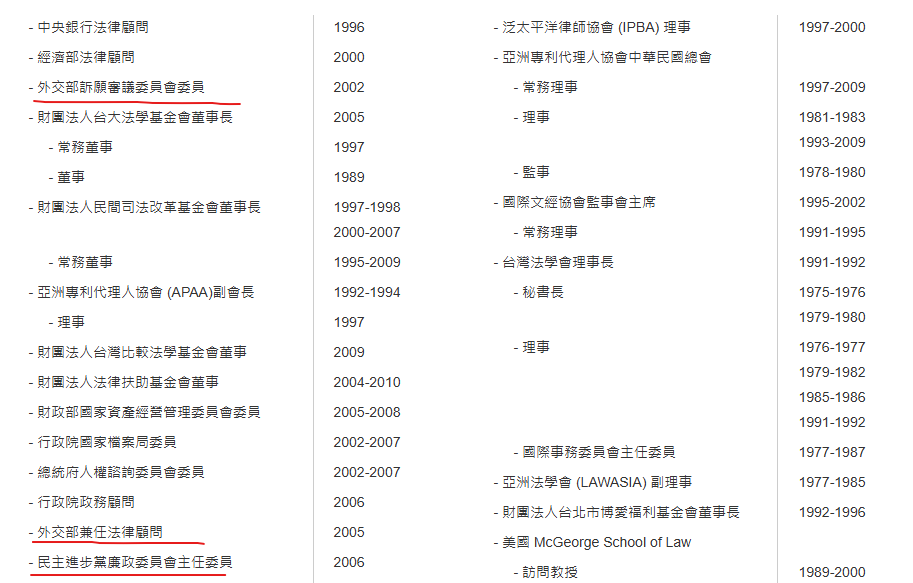
蔚理律师事务所 所长吕荣海,曾任公平交易委员会委员,直接参与两岸关系条例、两岸中介团体制度的研究,甚至担任连战“破冰之旅”的随团法律顾问。蔚理事务所长期专注“中国大陆投资与贸易法律”,几乎成了台商登陆的法律桥梁。
-
万国律师事务所 创所律师陈传岳,不仅是台湾司法改革的重要人物,还曾出任 民进党廉政委员会主任委员。然而,万国事务所的合伙人王孟如,却曾在中共政法委体系下的君合律所上海分所实习,并受邀在上海公开演讲“涉台投资并购的新动向”。
当这些律师一方面服务台湾政府,另一方面与中共统战体系深度互动时,蓝绿的表面对立,似乎变成了另一种形式的默契:两岸专业合作凌驾于台湾的国家安全考量之上。
吕荣海的“四百次往来”与周大伟的连接
吕荣海律师自称在1988年至2012年间“往返大陆近400次”。这一频率,已经远超一般律师的业务往来,而是更接近 准官方的法律交流管道。
在这条管道里,一个关键人物是 周大伟。周大伟出身西南政法、人民大学,后来赴美深造,在哥大、伯克利、斯坦福都有访学背景,看似“国际化学者”,但在实际履历中,他深度参与了中共法治体系的奠基工作——例如担任教育部统编教材《民法》的主要撰稿人之一,起草《技术合同法》和《专利法实施细则》。这些法律,恰恰是1980年代中共推动“改革开放”,引进技术与外资的关键制度设计。换句话说,周大伟就是 中共用来把“科技—法律—资本”三者打通的桥梁人物。
更耐人寻味的是,周大伟近年来的学术挂靠点是 北京理工大学法学院。北京理工大学并不是单纯的法学研究重镇,而是中共最核心的军工科研单位之一——在导弹、火箭、无人机等领域承担了大量国防科工委与解放军的重大项目,甚至因涉及军事技术而长期被美国列入出口管制和制裁名单。

这意味着什么?
-
吕荣海通过周大伟的学术链条,等于在两岸法律交流中直接触及中共军工背景的机构。
-
北京理工大学的法学院本质上是军工体制的“法律外衣”:既为科研成果的知识产权与合同提供保护,又能在对外合作中扮演“合法合规”的门面。
-
台湾律师与周大伟的交往,表面上是“学术交流”,实质上却可能为北京军工体系搭建 对台合法化与人脉渗透的双重通道。
换句话说,吕荣海与周大伟的关系,不只是“25年的友谊”,而是 在统战逻辑下,法律、学术与军工的交叉点。当台湾律师把大陆“法律学者”当作交流对象时,他们往往没有意识到,这背后可能连着的并非单纯的法学院,而是 导弹实验室、国防科研单位,以及与解放军直接挂钩的利益链条。
因此,吕荣海的“四百次往来”,不仅仅是数字游戏,更是一次次在台湾与中共法律、军工复合体之间搭桥的历史记录。
两岸关系条例的破口
问题的根源,还要追溯到台湾的《两岸人民关系条例》。根据该条例,大陆人民来台并非单纯凭护照,而是需经过中华人民共和国公安机关批准。
换句话说,凡是能够合法来台的大陆律师,几乎必然是经过 中共公安与国安系统层层筛选的对象。这等于台湾主动承认了中共的“许可权”,让北京可以名正言顺地派出政法委系统的律师进入台湾社会,进行交流、合作甚至渗透。
这就是中共统战的高明之处:在“合法框架”下输出代理人,让台湾自己打开大门。
统战的逻辑:蓝的红利,绿的破口
-
蓝营 从一开始就与北京的制度性互动密切,律师体系如蔚理事务所,长期提供“登陆台商”的制度设计。
-
绿营 虽然执政,却因部分律师与律所深陷国际仲裁、跨境并购、智财诉讼等业务,与中共律所保持实质合作,形成“专业正当性包装”的破口。
这就是统战的逻辑:
-
蓝营得到红利 ——以专业合作换取北京资源;
-
绿营暴露破口 ——在国家安全与经贸议题上被迫噤声。
于是,台湾的蓝绿政治对立,反而可能成为一种假象。在真正涉及北京核心利益的问题上(芯片制裁、对陆关税),双方都保持沉默。
美国出手的必要性
在这种格局下,美国的角色就显得至关重要:
-
补台湾的漏洞:出口管制、投资审查、科技合作,弥补台湾《两岸关系条例》的先天缺陷。
-
制造政策护栏:台湾执政党在蓝白把持立法院下常常选择“避战”,而美国的压力可以成为台湾政府对北京的“挡箭牌”。
-
切断统战网络:透过金融制裁与司法协作,让台湾专业人士必须在美中之间做选择,从而削弱中共通过律师与律所延伸统战的空间。
换句话说:
-
台湾内部的假对立,只会换来真正的沉默;
-
美国外部的真施压,才可能打破沉默。
结语
律师与律所,本应是法律专业的象征,但在两岸政治中,却成了最隐秘的统战通道。蓝营律师提供了制度红利,绿营律师制造了政治破口,而台湾的制度设计又为中共提供了“合法渗透”的大门。
如果这种局势继续下去,台湾恐怕不仅在政治上难以自立,在法律与经贸的专业战线,也可能沦为中共统战的俘虏。
所以,这个问题不能再被忽视。美国的出手不仅是对台支持,更是对台湾自身制度盲点的一次必要提醒。


Chinese-American Network of Firearm Owners (大芝加哥地区华人枪友会)
According to a June 3, 2020 article by Chinese of Chicago News Network (芝加哥侨学网) from Sohu approved by CCP’s Central Propaganda Department, the Chinese-American Network of Firearm Owners (大芝加哥地区华人枪友会) claimed to have played a central role in protecting Chicago’s Chinatown during the violent unrest that swept through the city in late May and early June 2020.
According to reports from the Chicago Chinese News Network on June 3, 2020, Chinatown in Chicago remained remarkably safe on June 1 despite violent unrest spreading across the city and its suburbs. Sources claim that the Chinese-American Network of Firearm Owners (CANFire) actively coordinated voluntary neighborhood patrols, ensuring that the area remained largely undisturbed during the third consecutive night of civil unrest.

Caption: June 1, 2020 – CANFire volunteers patrolling the Chinatown area at night.
A reporter who joined the patrols stated that volunteers, all concealed-carry trained, strategically monitored every vehicle and pedestrian in the district’s most isolated areas. "You could stand at a bridge underpass on the outskirts of Chinatown at 10 PM and see every car carefully assessed, with concealed firearm holders and experienced neighborhood watch members covering the area," the report indicated.
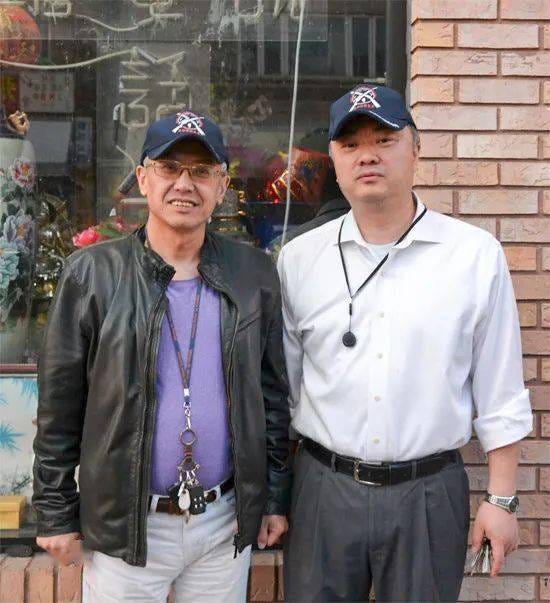
CANFire President Jun Wang and Board Chairman Peter Qiu were reportedly on-site directing operations. Observers claim that the volunteers filled key gaps in security coverage, particularly along Canal and Stewart Street underpasses, areas historically prone to incidents, while state police and Illinois National Guard personnel secured the main thoroughfares of Cermak Street and South 26th Street.
Caption: Jun Wang (President) and Peter Qiu (Chairman) coordinating volunteer patrols along Chinatown streets.
The report further stated that the volunteer call generated a strong response: over 40 participants stayed on duty past 2 AM on May 31, and over 60 signed up for June 1, operating in shifts from 8 PM until after 2 AM. Volunteers reportedly used the Zello real-time communication system to maintain situational awareness across the district.
According to eyewitnesses, all participants adhered to Illinois law requiring concealed firearms, with larger weapons kept out of sight. The volunteers represented a cross-section of the local Chinese community, including lawyers, doctors, professionals, restaurant staff, construction workers, and business owners. Sources suggest that this community cohesion and self-organized vigilance contributed significantly to Chinatown’s relative safety.


Caption: Volunteers stationed at the Canal/Stewart Street underpasses, historically high-incident areas.
One participant, identified as Mr. Wang, a construction worker and five-year U.S. resident, reportedly joined the second consecutive night of patrols. According to the report, volunteers remained committed to safeguarding the neighborhood until the early morning hours, exemplifying a high level of civic engagement and community solidarity during the unrest.
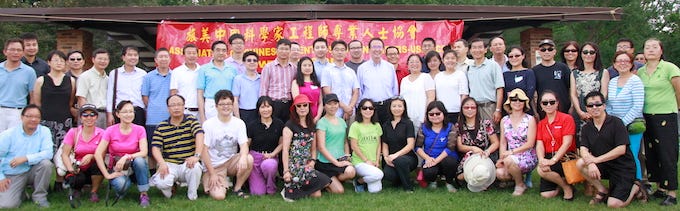
According to a report by Chicago Chinese News Network on August 14, 2016, the Association of Chinese-American Scientists and Engineers (旅美中国科学家工程师专业人士协会, ACSE), together with alumni associations from Tsinghua University, Peking University, Fudan University, Zhejiang University, Nanjing University, Southeast University, Renmin University of China, Nankai University, Tianjin University, Huazhong University of Science and Technology, Shanghai Jiao Tong University, East China University of Science and Technology, Shanghai University, Beijing Foreign Studies University, Sichuan University, Central University of Finance and Economics, China Agricultural University, as well as the Chinese Financial Association, the Chinese American Professors and Scientists Association, the Chicago Chinese Women’s Chamber of Commerce, Chicago Chinese Cultural Village, Chicago Chinese Forum, student and scholar associations from Northwestern University, UIC, IIT, University of Chicago, and DePaul University, and the Chicago chapter of the Overseas Chinese Education Foundation (OCEF), jointly hosted a summer picnic and networking event on August 13, 2016, in Palatine, northwest suburb of Chicago.
The event was attended by over 700 participants, including Consul General Hong Lei (洪磊), Deputy Consul General Yu Peng (余鹏), and Consul Lu Xiaohui (卢晓晖). CSSEA President Xu Xiangdong (徐向东) delivered the opening remarks. CSSEA’s first female president Liang Kun (梁琨) also spoke at the event, expressing gratitude to the consulate and all attendees.
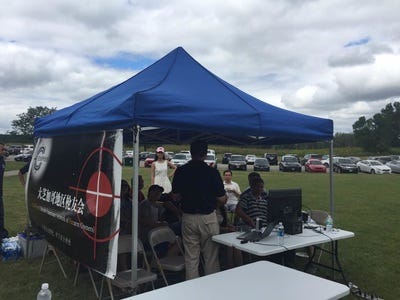
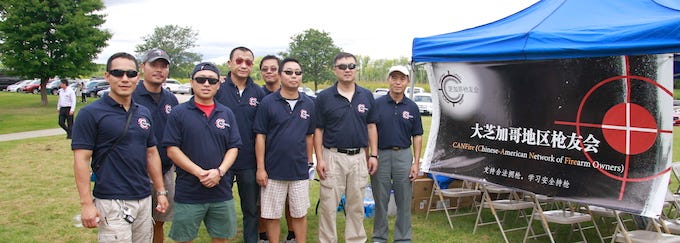
Wang Jun (王军), President of the newly established Chinese-American Network of Firearm Owners (CANFO, 大芝加哥地区华人枪友会), gave a lecture.
Pictures from website of CANFire
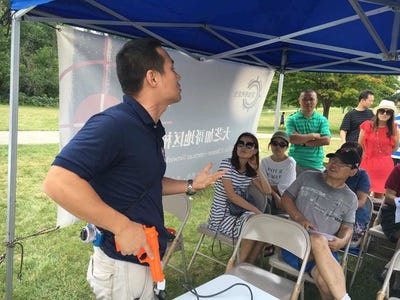
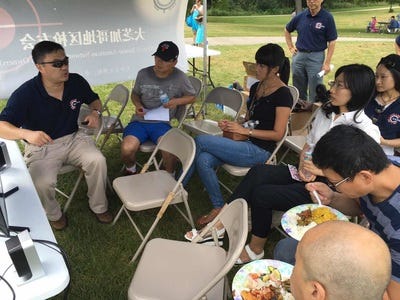
Pictures from Chicago Chinese News Network:
CANFire giving an on-site gun safety and legal firearm lecture.
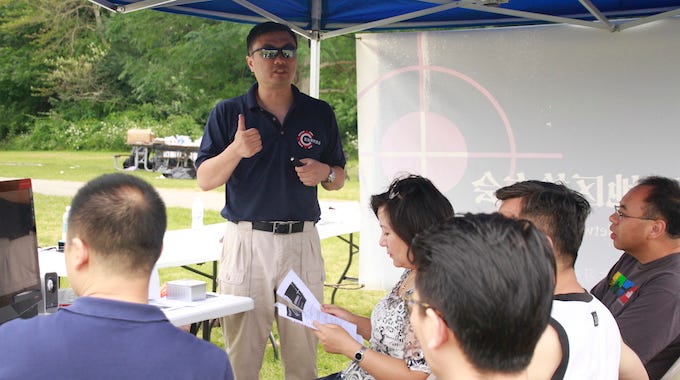
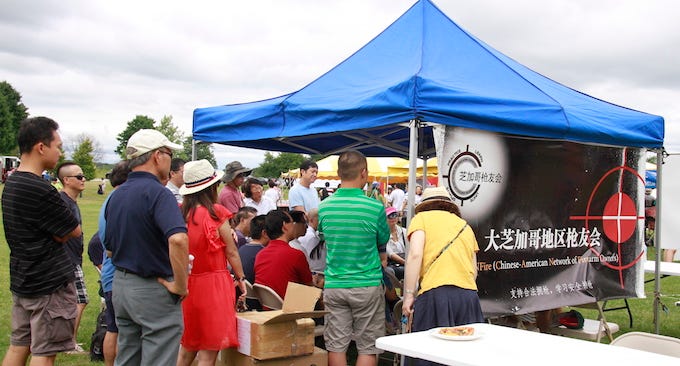
CANFire members group photo at the event.
Consul General Hong Lei (洪磊, left) performing “Song of the Yangtze River” for attendees.
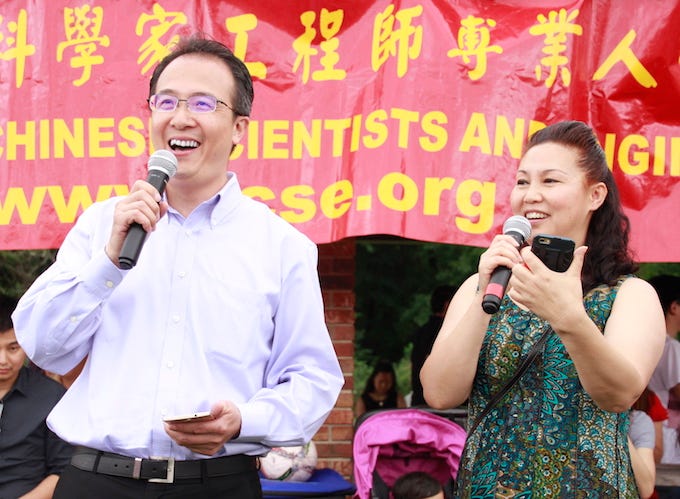
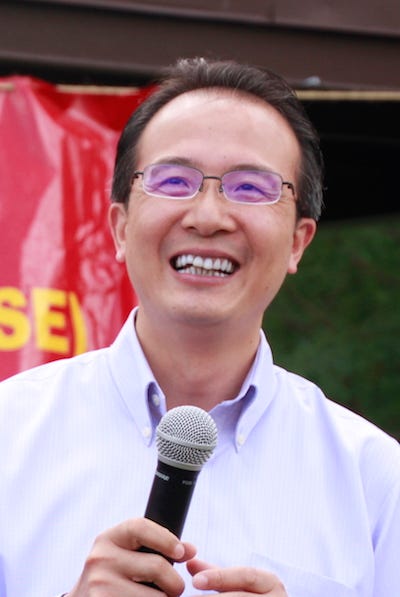
Consul General Hong Lei (洪磊) delivering his speech.
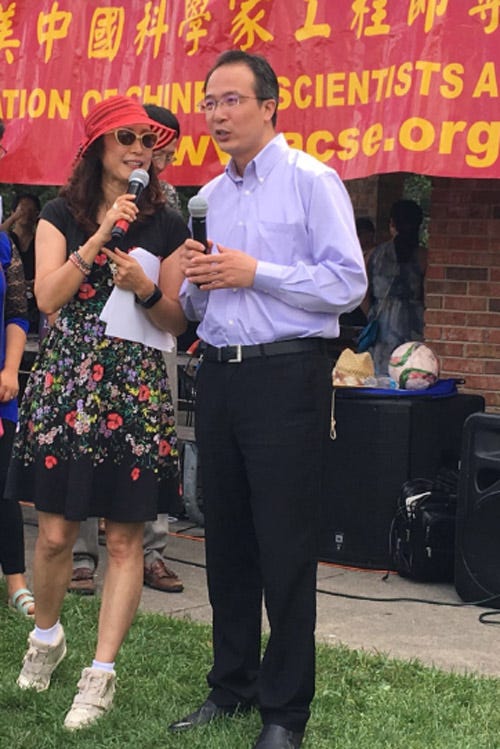
Consul General Hong Lei (洪磊) interviewed on-site by ACSE Vice President Wang Jian (王健, left).
Alumni of Central University of Finance and Economics at the picnic.
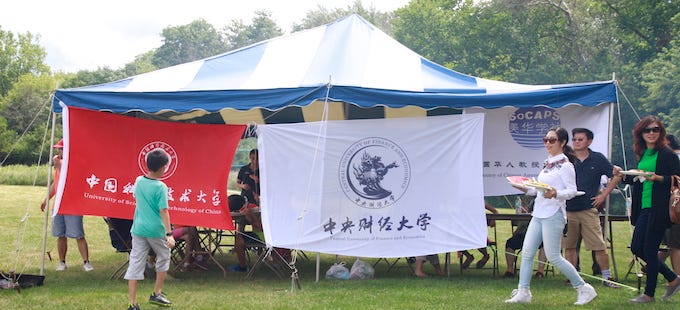
Alumni of Fudan University at the picnic.

The event included performances from the Chicago Chinese Arts Troupe, martial arts demonstrations by Feiying Kung Fu Academy, and interactive fitness sessions led by local instructors.
Original report
Picture from Chicago Chinese News Network:
According to Chicago Qiaoxue Network (芝加哥侨学网)’s article posted on Sohu.com in China, Qiu & Wang Law Group, LLC (丘岩王军律师事务所) is a full-service law firm located near Chinatown in Chicago, with a branch in Evanston. The firm provides extensive legal and immigration services, with a focus on business, civil, criminal, and firearm law.
The firm is led by senior attorneys Peter Y. Qiu (丘岩, J.D., M.A., B.A.) and Jun Wang (王军, J.D., M.CS., M.S., B.S.), both with decades of professional experience in the United States and internationally.
Peter Y. Qiu – Founding Attorney
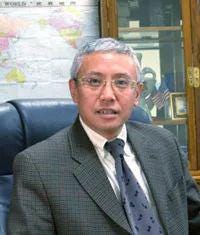
Peter Qiu has practiced law for over 20 years and has over 30 years of research in Chinese and American literature and history. He is recognized for courtroom advocacy and complex case management. His clients span North America, the Middle East, Europe, Mainland China, Hong Kong, Macau, Taiwan, and Southeast Asia.
Education:
B.A. in English Literature, Jilin University, 1978–1982
M.A. in History, University of Illinois at Chicago, 1988–1990
J.D., Chicago-Kent College of Law, Illinois Institute of Technology, 1995–1998
Experience
Chair of Board, Chinese-American Network of Firearm Owners (CANFO/Chicago Gun Club), 2016–present
(as reported on the firm’s website):
Qiu Law Office, May 1999–present
Chicago Fulibond Peters Law Office, Jan 1996–July 1998
Official, Illinois Department of Labor, Jan 1991–Dec 1995
Lecturer in American History, Chicago City Colleges, Sept 1990–June 1991
Teaching Assistant, English Department, University of Illinois at Chicago, June 1988–June 1990
Assistant to Chairman, Shenzhen Import & Export Trading Group (in China), Apr 1984–June 1986
Professional Highlights (as reported by Chicago Qiaoxue Network):
Extensive experience in EB-5 investment immigration and business legal services:
Assisted Chinese investors in Tennessee to acquire a yacht manufacturing company, including full equity, land, factory buildings, assets, and intellectual property. Managed due diligence, UCC filings, contract negotiations, and resolution of supplier, advertising, sales, and employee-related claims.
Provided investment, immigration, and litigation services for a large Chinese enterprise establishing a U.S. branch. Successfully secured an investor visa for its CEO and green cards for the entire family.
Represented Chinese entrepreneurs in U.S. mergers and acquisitions, drafting shareholder agreements, corporate bylaws, management contracts, and preparing investment immigration documentation.Jun Wang – Managing Partner
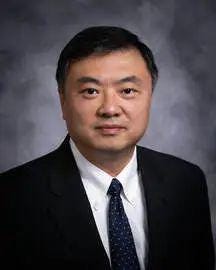
Jun Wang, with multidisciplinary expertise in law, computer science, ecology, and geography, joined the firm in 2020, becoming managing partner. He oversees daily operations in both Chicago and Evanston offices.
Wang is especially noted for expertise in Illinois firearms law, self-defense law, and firearm training. He holds a concealed carry instructor certificate from Illinois and a certification from the National Rifle Association, with nearly 1,000 successful students obtaining concealed carry permits.
Education:
B.S., Geography, Beijing Normal University, 1989–1993
M.S., Ecology, Chinese Academy of Sciences, 1993–1996
M.CS., Computer Science, University of Illinois Urbana-Champaign, 1996–2000
J.D., Chicago-Kent College of Law, Illinois Institute of Technology, 2017–2019
Professional Experience:
Managing Partner, Qiu & Wang Law Group, 2020–present
President, Chinese-American Network of Firearm Owners (CANFO/Chicago Gun Club), 2016–present
Co-Partner, Canfire Instructors LLC, firearm training, 2016–present
Partner, AZSoft US Technology LLC, mobile software development, 2010–2016
Senior Software Engineer, Motorola Inc., 2000–2010
Firm Services
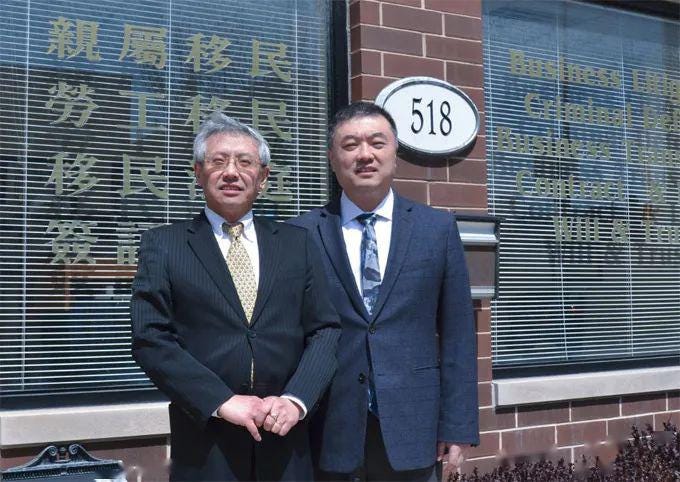
Qiu & Wang Law Group provides a full spectrum of legal services including:
Business and Civil Law: Contract disputes, trade, corporate law, business mergers & acquisitions, labor disputes, equity transactions, financing, intellectual property, real estate, and estate matters.
Bankruptcy & Corporate Restructuring: Representation in bankruptcy proceedings, asset protection, litigation, and corporate reorganization.
Administrative & Litigation Services: Tax law, labor law, immigration law, municipal code, and traffic regulations.
Immigration Services: Non-immigrant visas (H1/L1), investment immigration, family immigration, special talent visas, political asylum, National Interest Waiver, citizenship applications, and immigration litigation in federal, state, and administrative courts.
Criminal Defense: Cases including DUI, theft, domestic violence, drug offenses, assault, prostitution, and trespassing.
Other Services: Divorce, trusts, wills, personal injury claims, business or real estate transactions, trademark and copyright registration, document translation, and courtroom interpretation.
The firm emphasizes tailored legal strategies, leveraging extensive expertise to maximize client outcomes efficiently and professionally. Qiu & Wang Law Group is recognized for handling large, complex investments for international clients and providing trusted estate and trust services.
For consultation, the firm can be reached at:
Chicago Office: 518 W. 26th St., Chicago, IL 60616
Evanston Branch: 19 Salem Lane, Evanston, IL 60203
Emails: peter.qiu@qiuwanglaw.com | jun.wang@qiuwanglaw.com
Website: www.qiuwanglaw.com
Hours: Monday–Friday 9:30 AM–5:00 PM, Saturday by appointment
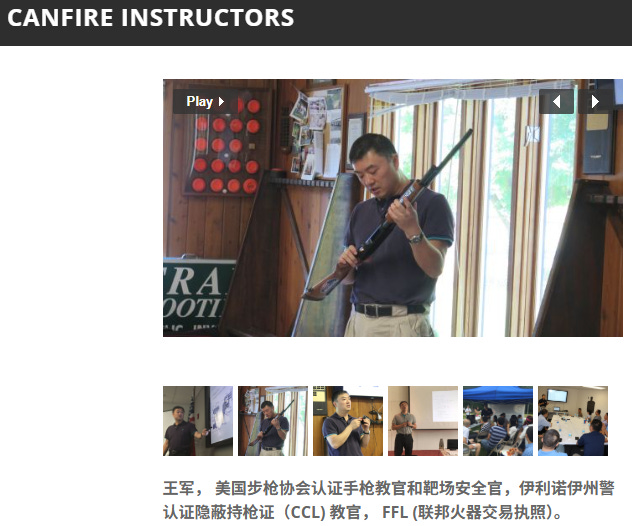
According to information published on Canfire Instructors, Jun Wang (王军) is a certified firearms instructor and a central figure in the development of the Chinese-American Network of Firearm Owners (CANFO) in the Chicago area.
Credentials:
NRA-certified handgun instructor and range safety officer
Illinois State Police–certified concealed carry (CCL) instructor
Holder of a Federal Firearms License (FFL), enabling him to legally conduct firearms sales and transfers in the U.S.
Formation of the Chinese-American Firearms Network
In 2014, the rise of gun ownership among Chinese-Americans in Chicago led to the first community-organized lecture, initiated by firearms enthusiast Nick Xu.
By the end of 2014, a dedicated WeChat group was established, followed by the second lecture organized by Randal Chao.
In April 2016, the group hosted its third public lecture, which drew media attention. That same month, the domain name canfire.org was registered under the banner Chicago Asian Network of Firearm Owners.
During preparations for the fourth lecture, the venue management required proof of NRA-certified instructor credentials.
Certification and Expansion of Training
In May 2016, after consultations with experienced local and out-of-state Chinese-American instructors, Jun Wang began the process of obtaining NRA handgun instructor certification and Illinois concealed carry instructor status.
By June 2016, Wang had successfully completed examinations and training, earning both credentials. He has since provided bilingual (Chinese/English) firearms lectures and training courses for the community.
Services and Community Engagement
With his FFL (Federal Firearms License), Wang assists members of the community with firearms purchases and legal transfers.
He maintains long-term contact with students through online platforms and WeChat groups, organizing shooting practice, hunting trips, and other social events for Chinese-American gun owners.
Contact Information (as listed on Canfire Instructors website):
Email: jun.wang@canfireinstructors.com
Phone: 224-361-5095
According to a report published by Chinese of Chicago on August 1, 2016, the Chinese-American Network of Firearm Owners (大芝加哥地区华人枪友会) was formally established and registered as a non-profit organization in the State of Illinois. This marked the transition of the group from an informal network of Chinese gun enthusiasts into a structured association with legal standing.
The inaugural leadership structure was announced as follows:
President (会长): Jun Wang (王军) – an Illinois State Police–certified concealed carry instructor and NRA-certified handgun instructor.
Chairman of the Board (董事长): Peter Qiu (丘岩) – a veteran attorney and founder of Qiu & Wang Law Group, LLC.
Vice Presidents (副会长): Randal Chao, Tony Fang, David Zhu
Secretary General (秘书长): Libin Qi
Treasurer (财务长): Edmund Tan
Vice President (副会长): Randal Chao source: Chinese of Chicago
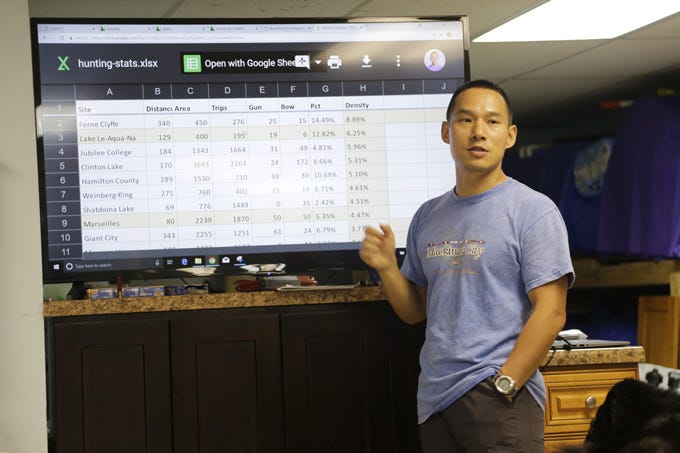
The report emphasized that the association aimed to promote lawful gun ownership, firearm safety education, and the protection of the Chinese-American community, while also serving as a hub for social networking and advocacy.
This founding announcement not only gave the organization official recognition but also highlighted the professional credentials of its leadership. With a licensed attorney (Peter Qiu) and a certified firearms instructor (Jun Wang) at the helm, the group positioned itself as a serious and structured community body rather than a casual hobbyist club.
Source: Chinese of Chicago, August 1, 2016.
Core members of Chinese-American Network of Firearm Owners as posted by Chicago Qiaoxue Network