Source:BUAA
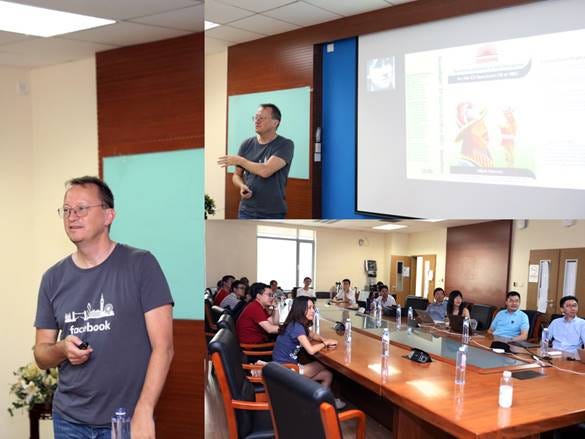
According to an official report from the Beihang University (BUAA) Software Engineering Institute website, dated July 15, 2019, Professor Mark Harman of University College London (UCL) and Engineering Manager of Facebook London’s Sapienz Team visited BUAA’s School of Computer Science, as invited by BUAA. The visit featured a lecture titled “The Joys and Frustrations of Software Engineering”, focusing on search-based software engineering (SBSE), software testing, and source code analysis. The event included detailed discussions with faculty, including Professor Wu Wenjun, and presentations by BUAA researchers on topics such as software models, human-centered software engineering, and cost estimation techniques.
While the report frames this visit as a routine academic exchange, a closer inspection of the actors and the context raises questions about possible strategic implications.
1. Ren Jian’s Role and Network
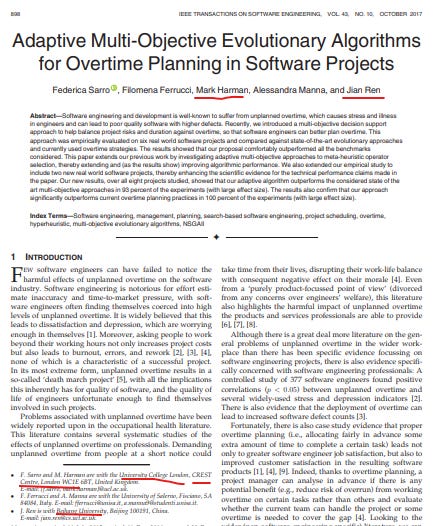
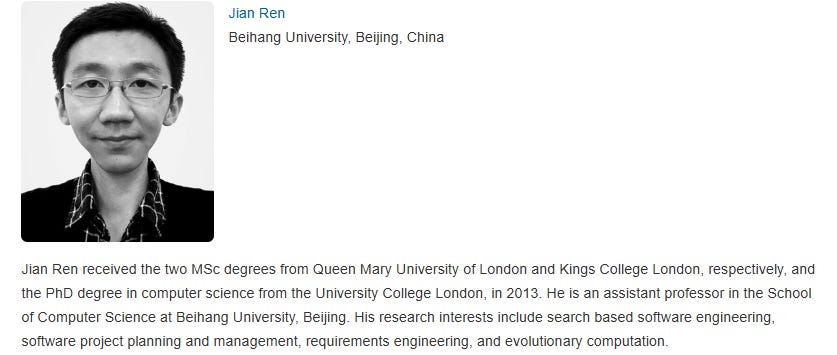
Although the BUAA report does not explicitly name the organizer, the evidence strongly suggests that Dr. Ren Jian (任健), a lecturer and CCF Software Engineering Committee member, was a key figure in facilitating the visit. Ren Jian’s profile includes:
PhD from UCL, with a long-term research collaboration with Mark Harman, including co-authored papers as recent as 2017.
Dual MSc degrees from Queen Mary University of London (QMUL) and King’s College London (KCL).
Research focus on SBSE, artificial intelligence, and natural computation, directly overlapping Harman’s own research areas.
Committee membership in the CCF Software Engineering Professional Committee, a national-level academic body with significant connections to industry and military-linked universities.
Given these credentials, Ren Jian could easily have orchestrated the invitation, serving as a bridge between UK-based software engineering expertise and Beihang University and the People’s Liberation Army of Chinese Communist Party (PLA-CCP), such as Academy of Military Sciences which has a subsidiary Academy of Military Medical Sciences a core of CCP’s bio-warfare program including COVID-19. This makes the visit more than a simple academic lecture; it could have provided direct pathways for knowledge transfer relevant to both advanced software engineering and military applications and influence channel for Central Military Commission of Chinese Communist Party, which is in control of PLA’s Academy of Military Medical Sciences, to censor reporting and opinions on COVID-19 origin by UCL’s collaborators such as BBC and Facebook. Facebook is also known for censoring opinions of COVID-19 origin during the pandemic.
2. Timing Relative to the 2019 Military World Games
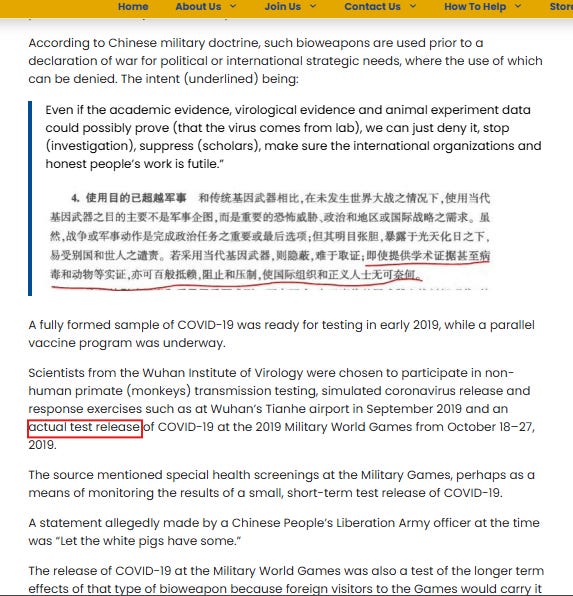
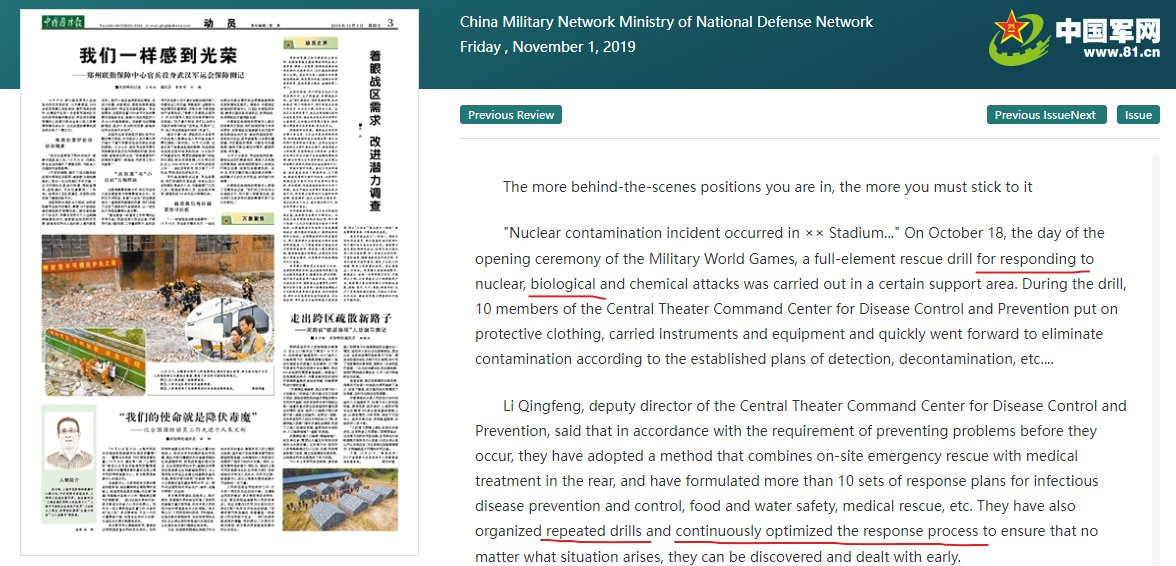
The CCP's invitation of Mark Harman's visit occurred on July 15, 2019, just three months before the 2019 Military World Games and PLA’s Military Drill to Release COVID-19 virus in Wuhan (October 2019). The timing is striking for several reasons:
High-level PLA-affiliated institutions like BUAA often contribute technical expertise to national projects, including large-scale events with military logistics and coordination requirements.
Techniques in SBSE and algorithmic optimization, which Harman specializes in, could be highly applicable to real-time scheduling, operational simulations, and large-scale event software management.
Inviting Harman shortly before the Games provided a window for rapid application of advanced software engineering methods in environments of national strategic significance.
Possibly Making Preparation for PLA’s Military Drill to Release COVID-19 virus.
3. Yijun Yu and Huawei Connections
Further complexity arises when examining the extended network:
Yijun Yu (俞一峻), another academic who has co-authored a paper with Harman, appeared in Doctoral Symposium Committee of APSEC 2017 with the organizing committee including Wang Qianxiang, a Huawei technical expert and Secretary-General of the CCF Software Engineering Committee.
This demonstrates that Harman’s collaborators are embedded in networks involving corporate and strategic entities, not isolated academia.
Such connections suggest that the invitation to Harman may have been facilitated not only by Ren Jian but possibly coordinated with Yijun Yu, leveraging the Huawei-linked committee infrastructure to create a formal academic platform for collaboration.
4. Implications of the Network
This layered network highlights a broader pattern:
Academic exchanges at PLA-linked universities, such as BUAA, can act as channels for Western technical expertise to flow into systems with strategic or military relevance.
Committee memberships, conference participation, and co-authorships provide soft mechanisms of technology transfer, united front work and censorship influence, where collaborations appear academic but have embedded strategic oversight.
Individuals like Ren Jian and Yijun Yu function as nodes connecting Western research leaders (e.g., Harman) to PLA-affiliated institutions and corporate actors like Huawei, creating a dense web of academic-industry-military interaction.
Conclusion
While publicly framed as an academic lecture, Mark Harman’s 2019 visit to Beihang University should be viewed within the context of:
PLA-linked institutional involvement (BUAA as a national defense university).
Strategically placed facilitators (Ren Jian and Yijun Yu), whose dual roles bridge UCL and the PLA-academic-industrial ecosystem.
Timing relative to a major military-oriented event, the 2019 Military World Games.
Embedded corporate ties, including Huawei’s involvement in committee leadership and prior APSEC 2017 events.
Taken together, these factors indicate that the visit was not merely an academic exchange but may have served strategic, applied purposes—demonstrating how Western academic collaboration can inadvertently intersect with PLA-aligned institutions and technology networks.
CCF Software Engineering Professional Committee (TCSE) – Full Member List
Chair
Jin Zhi, Professor, Peking University – zhijin@pku.edu.cn
Secretary-General
Wang Qianxiang, Technical Expert, Huawei Technologies – wangqianxiang@huawei.com
Vice-Chairs
Liu Chao, Professor, Beihang University (Beijing University of Aeronautics and Astronautics) – liuchao@buaa.edu.cn
Wang Ji, Professor, National University of Defense Technology of the People’s Liberation Army – wj@nudt.edu.cn
Zhao Jianjun, Professor, Shanghai Jiao Tong University – zhao-jj@cs.sjtu.edu.cn
Zhao Wenyun, Professor, Fudan University – wyzhao@fudan.edu.cn
Committee Members
Bai Xiaoying, Professor, Tsinghua University – baixy@tsinghua.edu.cn
Ben Kerong, Professor, Naval University of Engineering of PLA – benkerong08@21cn.com
Cai Kaiyuan, Professor, Beihang University – kycai@buaa.edu.cn
Cai Lizhi, Shanghai Computer Software Technology Development Center – clz@ssc.stn.sh.cn
Chen Qi, College of Information Science and Technology, Hainan University – chcq@hainu.edu.cn
Chen Rong, College of Information Science, Dalian Maritime University – rchen@dl.cn
Chen Lichao, Taiyuan University of Technology – Lc_chen@sohu.com
Chen Luping, China Software Testing Center – clp@cstc.org.cn
Chen Ningjiang, Guangxi University, Department of Computer Science – calmriver@263.net.cn
Chen Shizhan, Tianjin University – shizhan@tju.edu.cn
Chen Yixiang, Professor, East China Normal University – yxchen@sei.ecnu.edu.cn
Chen Zelin, Associate Professor, South China University of Technology – cszlchen@scut.edu.cn
Cui Xining, 631 Research Institute, China Aviation Industry Corporation – cuixining@tom.com
Cui Xiaohui, International Software College, Wuhan University – xcui@whu.edu.cn
Dan Jinhui, Beijing Special Engineering Design Institute – shanjh@163.com
Ding Zuohua, Zhejiang University of Technology – zouhuading@hotmail.com
Dong Yunwei, Associate Professor, Northwestern Polytechnical University – yunweidong@nwpu.edu.cn
Du Chenglai, Professor, Northwestern Polytechnical University – ducl@nwpu.edu.cn
Du Junwei, Qingdao University of Science & Technology – djwqd@163.com
Fan Guisheng, East China University of Science & Technology – gsfan@ecust.edu.cn
Fang Liechao, Huawei Technologies – alex.fangliechao@huawei.com
Feng Zhiyong, Tianjin University – zyfeng@tju.edu.cn
Gao Haichang, School of Software, Xidian University – hchgao@xidian.edu.cn
Gu Jianhua, Northwestern Polytechnical University – gujh@nwpu.edu.cn
Gu Chunhua, East China University of Science & Technology – chgu@ecust.edu.cn
Guo Tao, Director, China Information Security Testing Center – guotao@itsec.gov.cn
Han Qiang, Beifang Minzu University – hanqiang@bupt.edu.cn
Hong Mei, Sichuan University – hongmei@scu.edu.cn
Huang Linpeng, Shanghai Jiao Tong University – lphuang@sjtu.edu.cn
Huang Zhiqiu, Executive Deputy Dean, School of Information, Nanjing University of Aeronautics and Astronautics – zqhuang@nuaa.edu.cn
Jiang He, Dalian University of Technology – jianghe@dlut.edu.cn
Jiang Ying, Deputy Director, Department of Computer Science, Kunming University of Science & Technology – jy_910@163.com
Jiang Shujuan, China University of Mining and Technology – shjjiang@cumt.edu.cn
Li Bing, State Key Laboratory of Software Engineering, Wuhan University – bingli@whu.edu.cn
Li Hu, Senior Enterprise Architect Consultant, Beijing Miracle Zhongcheng Software Co., Ltd. – lihu@miraclet.cn
Li Jing, Researcher, Institute of Software, Chinese Academy of Sciences – lij@otcaix.iscas.ac.cn
Li Tong, Associate Dean, School of Software, Yunnan University – tli@ynu.edu.cn
Li Ying, Researcher, IBM China Research – lying@cn.ibm.com
Li Zheng, School of Information, Beijing University of Chemical Technology – lizheng@buct.edu.cn
Li Zhi, Guangxi Normal University – zhili@mailbox.gxnu.edu.cn
Li Bixin, Southeast University – bx.li@seu.edu.cn
Li Minglu, Shanghai Jiao Tong University – mlli@sjtu.edu.cn
Li Qingshan, Xidian University – qshli@mail.xidian.edu.cn
Li Xiaohong, Tianjin University, School of Computer Science & Technology – xiaohongli@tju.edu.cn
Li Xuandong, Nanjing University – lxd@nju.edu.cn
Li Xueqing, Shandong University – xqli@sdu.edu.cn
Liu Hui, Beijing Institute of Technology – Liuhui08@bit.edu.cn
Liu Jin, State Key Laboratory of Software Engineering, Wuhan University – mailjinliu@yahoo.com
Liu Lin, Tsinghua University – linliu@tsinghua.edu.cn
Liu Qiang, Professor, Tsinghua University – liuq880077@gmail.com
Liu Qin, Tongji University – qin.liu@tongji.edu.cn
Liu Xiaohua, East China Normal University – xliu@sei.ecnu.edu.cn
Liu Xiyang, Director, Research Institute, Xidian University – xyliu@xidian.edu.cn
Lu Lu, School of Computer Science, South China University of Technology – lul@scut.edu.cn
Lü Jian, Nanjing University – lj@nju.edu.cn
Mao Xiaoguang, Director, Computer Science Department, National University of Defense Technology of PLA – xgmao@sina.com
Mao Xinjun, Professor, National University of Defense Technology of PLA – xjmao@nudt.edu.cn
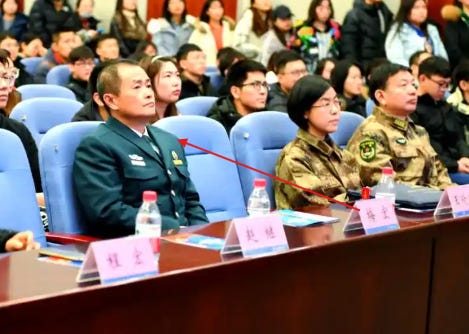
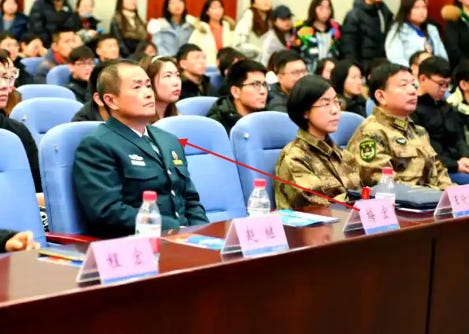
Mei Hong, Dean, School of Information Science & Technology, Peking University & (commencing from July 2019)Vice President of Academy of Military Sciences of PLA – meih@pku.edu.cn
Meng Jiayu, Huawei Technologies – mengjiayu@huawei.com
Meng Youxin, Director, Research Office, Qingdao University of Science & Technology – 222myx@163.com
Ming Zhong, Shenzhen University – mingz@szu.edu.cn
Nie Changhai, Nanjing University – changhainie@nju.edu.cn
Peng Rong, State Key Laboratory of Software Engineering, Wuhan University – adony_pr@qq.com
Peng Xin, Associate Dean, School of Software, Fudan University – pengxin@fudan.edu.cn
Qu Yuzhong, Nanjing University – yzqu@seu.edu.cn
Ren Jian, Beihang University – renjian@buaa.edu.cn
Ren Jicheng, Zhongke Fulong Computer Technology Co., Ltd. – renjc@fulong.com.cn
Rong Guoping, School of Software, Nanjing University – ronggp@software.nju.edu.cn
Shao Kun, Director, Software Institute, Hefei University of Technology – sk671227@yahoo.com
Shen Junrong, Morgan Stanley Asia – Junrong.Shen@morganstanley.com
Shen Limin, Vice Dean, Yanshan University – shenllmm@sina.com
Shen Beijun, Associate Professor, Shanghai Jiao Tong University – bjshen@sjtu.edu.cn
Song Yu, North China Electric Power University – syu1999@163.com
Song Qinbao, Xi’an Jiaotong University – qbsong@mail.xjtu.edu.cn
Sun Chang’ai, Beijing University of Science & Technology – casun@ustb.edu.cn
Sun Chaoyi, Chief Engineer, China Shipbuilding Industry 709 Research Institute – scy@709.net.cn
Tan Guozhen, Dalian University of Technology – gztan@dlut.edu.cn
Tao Xianping, Nanjing University – txp@ics.nju.edu.cn
Tong Weiqin, Director, School of Computer Science, Shanghai University – wqtong@mail.shu.edu.cn
Wang Wenyong, University of Electronic Science & Technology of China – wangwy@uestc.edu.cn
Wang Dan, Beijing University of Technology – wangdan@bjut.edu.cn
Wang Qing, Institute of Software, Chinese Academy of Sciences – wq@iscas.ac.cn
Wang Wei, Yunnan University – wangwei@ynu.edu.cn
Wang Guiling, North University of China – wangguiling@ncut.edu.cn
Wang Guojun, Central South University – csgjwang@gmail.com
Wang Maoguang, Central University of Finance and Economics – wangmg@cufe.edu.cn
Wang Shuxi, Xi’an University of Posts & Telecommunications – wsylxj@126.com
Wang Zhongjie, Harbin Institute of Technology – rainy.wang@gmail.com
Wei Jun, Deputy Director/Researcher, Institute of Software, Chinese Academy of Sciences – wj@otcaix.iscas.ac.cn
Wen Bin, Hainan Normal University – binwenwebb@gmail.com
Wen Junhao, Chongqing University – jhwen@cqu.edu.cn
Wu Ji, Beihang University – wuji@buaa.edu.cn
Xie Bing, Director, Software Engineering Research Center, Peking University – xiebing@sei.pku.edu.cn
Xie Tao, Associate Professor, UIUC, USA – taoxie@illinois.edu
Xing Chunxiao, Director, Web & Software Research Center, Tsinghua University – xingcx@tsinghua.edu.cn
Xu Tao, President, Civil Aviation University of China – txu@cauc.edu.cn
Xu Baowen, Nanjing University – bwxu@nju.edu.cn
Xu Jing, Nankai University – xujing@nankai.edu.cn
Xuan Qi, Associate Professor, Zhejiang University of Technology – crestxq@hotmail.com
Yang Jufeng, Nankai University – yangjufeng@nankai.edu.cn
Ye Junmin, Central China Normal University – jmye@mail.ccnu.edu.cn
Yin Jianwei, Zhejiang University – zjuyjw@cs.zju.edu.cn
Ying Jing, Zhejiang University – yingj@zucc.edu.cn
Ying Shi, Deputy Director, State Key Laboratory of Software Engineering, Wuhan University – yingshi@whu.edu.cn
Yu Dongjin, Hangzhou Dianzi University – yudj@hdu.edu.cn
Yu Huiqun, East China University of Science & Technology – yhq@ecust.edu.cn
Yuan Xiaojie, Nankai University – yuanxi@nankai.edu.cn
Zhan Dechen, Harbin Institute of Technology – dechen@hit.edu.cn
Zhang Bin, Director, Institute of Computer Applications, Northeastern University – zhangbin@mail.neu.edu.cn
Zhang He, Nanjing University – he@software.nju.edu.cn
Zhang Li, Vice Dean, School of Computer Science, Beihang University – lily@buaa.edu.cn
Zhang Chunhai, Ocean University of China – chai@ouc.edu.cn
Zhang Dongmei, Microsoft Research Asia – dongmeiz@microsoft.com
Zhang Guangquan, Soochow University – gqzhang@suda.edu.cn
Zhang Jiachen, Jilin University – zhangjc@jlu.edu.cn
Zhang Zhenyu, Institute of Software, Chinese Academy of Sciences – zhangzy@ios.ac.cn
Zhang Cheng, Anhui University – cheng.zhang@ahu.edu.cn
Zhao Fengyu, University of Shanghai for Science & Technology – zhaofengyv@126.com
Zhao Huiqun, North University of China – zhaohq6625@sina.com
Zheng Qinghua, Xi’an Jiaotong University – qhzheng@mail.xjtu.edu.cn
Zhou Xiaocong, Associate Director, School of Computer Science, Sun Yat-sen University – isszxc@mai.sysu.edu.cn
Zhu Guiliang, Director, Software Engineering Research Institute, North China University of Water Resources & Electric Power – zgg500@126.com
Zou Fengyi, Shandong Provincial Computing Center
Original content with minor modification to add titles omitted:
中国计算机学会软件工程专业委员会成员
主任

金 芝
北京大学教授
zhijin[at]pku.edu.cn
秘书长

王千祥
华为公司技术专家
wangqianxiang@huawei.com
副主任

刘 超
北京航空航天大学教授
liuchao[at]buaa.edu.cn

王 戟
中国人民解放军国防科技大学教授
wj[at]nudt.edu.cn

赵建军
上海交通大学教授
zhao-jj[at]cs.sjtu.edu.cn

赵文耘
复旦大学教授
wyzhao[at]fudan.edu.cn
委员
白晓颖清华大学教授baixy[at]tsinghua.edu.cn
贲可荣中国人民解放军海军工程大学教授benkerong08[at]21cn.com
蔡开元北京航空航天大学教授kycai[at]buaa.edu.cn
蔡立志上海计算机软件技术开发中心clz[at]ssc.stn.sh.cn
陈 绮海南大学信息科学与技术学院chcq[at]hainu.edu.cn
陈 荣大连海事大学信息学院rchen[at]dl.cn
陈立潮太原科技大学Lc_chen[at]sohu.com
陈渌萍中国软件评测中心clp[at]cstc.org.cn
陈宁江广西大学计算机系calmriver[at]263.net
陈世展天津大学shizhan[at]tju.edu.cn
陈仪香华东师范大学教授yxchen[at]sei.ecnu.edu.cn
陈泽琳华南理工大学副教授cszlchen[at]scut.edu.cn
崔西宁中国航空工业集团第六三一研究所cuixining[at]tom.com
崔晓晖武汉大学国际软件学院xcui[at]whu.edu.cn
单锦辉北京特种工程设计研究所高工shanjh[at]163.com
丁佐华浙江理工大学zouhuading[at]hotmail.com
董云卫西北工业大学副教授yunweidong[at]nwpu.edu.cn
杜承烈西北工业大学教授ducl[at]nwpu.edu.cn
杜军威青岛科技大学djwqd[at]163.com
范贵生华东理工大学gsfan[at]ecust.edu.cn
房列朝华为公司alex.fangliechao[at]huawei.com
冯志勇天津大学教授zyfeng[at]tju.edu.cn
高海昌西安电子科技大学软件学院hchgao[at]xidian.edu.cn
谷建华西北工业大学教授gujh[at]nwpu.edu.cn
顾春华华东理工大学教授chgu[at]ecust.edu.cn
郭 涛中国信息安全测评中心实验室主任guotao[at]itsec.gov.cn
韩 强北方民族大学计算机学院hanqiang[at]bupt.edu.cn
洪 玫四川大学hongmei[at]scu.edu.cn
黄林鹏上海交通大学教授lphuang[at]sjtu.edu.cn
黄志球南京航空航天大学信息学院常务副院长zqhuang[at]nuaa.edu.cn
江 贺大连理工大学jianghe[at]dlut.edu.cn
姜 瑛昆明理工大学计算机系副主任jy_910[at]163.com
姜淑娟中国矿业大学shjjiang[at]cumt.edu.cn
李 兵武汉大学软件工程国家重点实验室bingli[at]whu.edu.cn
李 虎北京奇迹众成软件有限公司资深企业架构顾问lihu[at]miraclet.cn
李 京中科院软件研究所研究员lij[at]otcaix.iscas.ac.cn
李 彤云南大学软件学院副院长tli[at]ynu.edu.cn
李 影IBM中国研究院研究员lying[at]cn.ibm.com
李 征北京化工大学信息学院lizheng[atbuct.edu.cn
李 智广西师范大学教师zhili[at]mailbox.gxnu.edu.cn
李必信东南大学教授bx.li[at]seu.edu.cn
李明禄上海交通大学教授mlli[at]sjtu.edu.cn
李青山西安电子科技大学qshli[at]mail.xidian.edu.cn
李晓红天津大学计算机科学与技术学院xiaohongli[at]tju.edu.cn
李宣东南京大学教授lxd[at]nju.edu.cn
李学庆山东大学教授xqli[at]sdu.edu.cn
刘 辉北京理工大学Liuhui08[at]bit.edu.cn
刘 进武汉大学软件工程国家重点实验室mailjinliu[at]yahoo.com
刘 璘清华大学linliu[at]tsinghua.edu.cn
刘 强清华大学教授liuq880077[at]gmail.com
刘 琴上海同济大学qin.liu[at]tongji.edu.cn
刘 晓华东师范大学xliu[at]sei.ecnu.edu.cn
刘西洋西安电子科技大学研究所所长xyliu[at]xidian.edu.cn
陆 璐华南理工大学计算机学院lul[at]scut.edu.cn
吕 建南京大学教授lj[at]nju.edu.cn
毛晓光中国人民解放军国防科学技术大学计算机学院室主任xgmao[at]sina.com
毛新军中国人民解放军国防科学技术大学教授xjmao[at]nudt.edu.cn
梅宏北京大学信息科学技术学院院长、2019年7月开始中国人民解放军军事科学院副院长meih[at]pku.edu.cn
蒙家玉华为公司mengjiayu@huawei.com
孟友新青岛科技大学研究室主任222myx[at]163.com
明 仲深圳大学教授mingz[at]szu.edu.cn
聂长海南京大学计算机系changhainie[at]nju.edu.cn
彭 蓉武汉大学软件工程国家重点实验室adony_pr[at]qq.com
彭 鑫复旦大学软件学院副院长pengxin[at]fudan.edu.cn
瞿裕忠南京大学教授yzqu[at]seu.edu.cn
任 健北京航空航天大学renjian[at]buaa.edu.cn
任继成中科辅龙计算机技术股份公司renjc[at]fulong.com.cn
荣国平南京大学软件学院ronggp[at]software.nju.edu.cn
邵 堃合肥工业大学软件所所长sk671227[at]yahoo.com
申峻嵘摩根士丹利亚洲有限公司Junrong.Shen[at]morganstanley.com
申利民燕山大学信息科学与工程学院shenllmm[at]sina.com
申利民燕山大学信息科学与工程学院副院长shenllmm[at]sina.com
沈备军上海交通大学副教授bjshen[at]sjtu.edu.cn
宋 雨华北电力大学教授syu1999[at]163.com
宋擒豹西安交通大学教授qbsong[at]mail.xjtu.edu.cn
孙昌爱北京科技大学副教授casun[at]ustb.edu.cn
孙潮义中船重工709所总工scy[at]709.net.cn
谭国真大连理工大学教授gztan[at]dlut.edu.cn
陶先平南京大学副教授txp[at]ics.nju.edu.cn
童维勤上海大学计算机学院室主任wqtong[at]mail.shu.edu.cn
汪文勇电子科技大学教授wangwy[at]uestc.edu.cn
王 丹北京工业大学副教授wangdan[at]bjut.edu.cn
王 青中科院软件所wq[at]iscas.ac.cn
王 炜云南大学wangwei[at]ynu.edu.cn
王桂玲北方工业大学wangguiling[at]ncut.edu.cn
王国军中南大学教授csgjwang[at]gmail.com
王茂光中央财经大学信息学院wangmg[at]cufe.edu.cn
王曙燕西安邮电大学计算机学院wsylxj[at]126.com
王忠杰哈尔滨工业大学rainy.wang[at]gmail.com
魏 峻中科院软件研究所副主任/研究员wj[at]otcaix.iscas.ac.cn
文 斌海南师范大学binwenwebb[at]gmail.com
文俊浩重庆大学jhwen[at]cqu.edu.cn
吴 际北京航空航天大学wuji[at]buaa.edu.cn
谢 冰北京大学软件工程研究中心所长xiebing[at]sei.pku.edu.cn
谢 涛美国 UIUC副教授taoxie[at]illinois.edu
邢春晓清华大学WEB与软件研究中心主任xingcx[at]tsinghua.edu.cn
徐 涛中国民航大学院长txu[at]cauc.edu.cn
徐宝文南京大学教授bwxu[at]nju.edu.cn
许 静南开大学教授xujing[at]nankai.edu.cn
宣 琦浙江工业大学副教授crestxq[at]hotmail.com
杨巨峰南开大学yangjufeng[at]nankai.edu.cn
叶俊民华中师范大学计算机科学系jmye[at]mail.ccnu.edu.cn
尹建伟浙江大学zjuyjw[at]cs.zju.edu.cn
应 晶浙江大学教授yingj[at]zucc.edu.cn
应 时武汉大学软件工程国家重点实验室副主任yingshi[at]whu.edu.cn
俞东进杭州电子科技大学yudj[at]hdu.edu.cn
虞慧群华东理工大学教授yhq[at]ecust.edu.cn
袁晓洁南开大学信息学院教授yuanxi[at]nankai.edu.cn
战德臣哈尔滨工业大学dechen[at]hit.edu.cn
张 斌东北大学计算机应用研究所所长zhangbin[at]mail.neu.edu.cn
张 贺南京大学教授he[at]software.nju.edu.cn
张 莉北京航空航天大学计算机学院副院长lily[at]buaa.edu.cn
张春海中国海洋大学教授chai[at]ouc.edu.cn
张冬梅微软亚洲研究院dongmeiz[at]microsoft.com
张广泉苏州大学教授gqzhang[at]suda.edu.cn
张家晨吉林大学教授zhangjc[at]jlu.edu.cn
张震宇中国科学院软件研究所zhangzy[at]ios.ac.cn
章 程安徽大学cheng.zhang[at]ahu.edu.cn
赵逢禹上海理工大学zhaofengyv[at]126.com
赵会群北方工业大学教授zhaohq6625[at]sina.com
郑庆华西安交通大学教授qhzheng[at]mail.xjtu.edu.cn
周晓聪广州中山大学计算机科学系副主任isszxc[at]mai.sysu.edu.cn
朱贵良华北水利水电学院软件工程研究所所长zgg500[at]126.com
邹丰义山东省计算中心zoufy[at]keylab.net