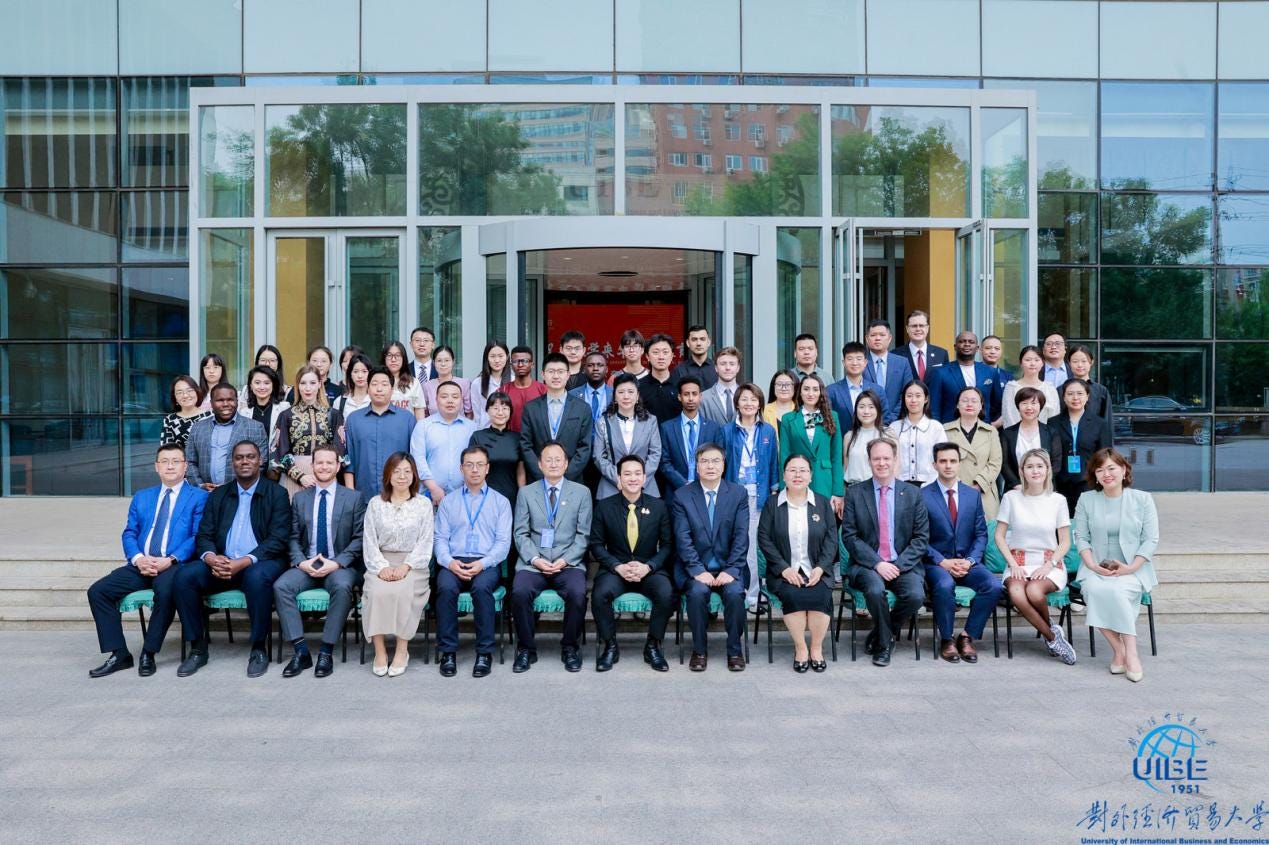
CCP's Covert Actors Inside UIBE’s 70th Anniversary Forum for International Students

On May 16, 2024, the University of International Business and Economics (UIBE) in Beijing hosted a forum marking 70 years of China’s international-student education program. This was not a neutral alumni reunion. The event demonstrates how the Chinese Communist Party (CCP) leverages university party committees, alumni networks, and business/media ties to project influence abroad.


Key Figures & Roles (all names included)

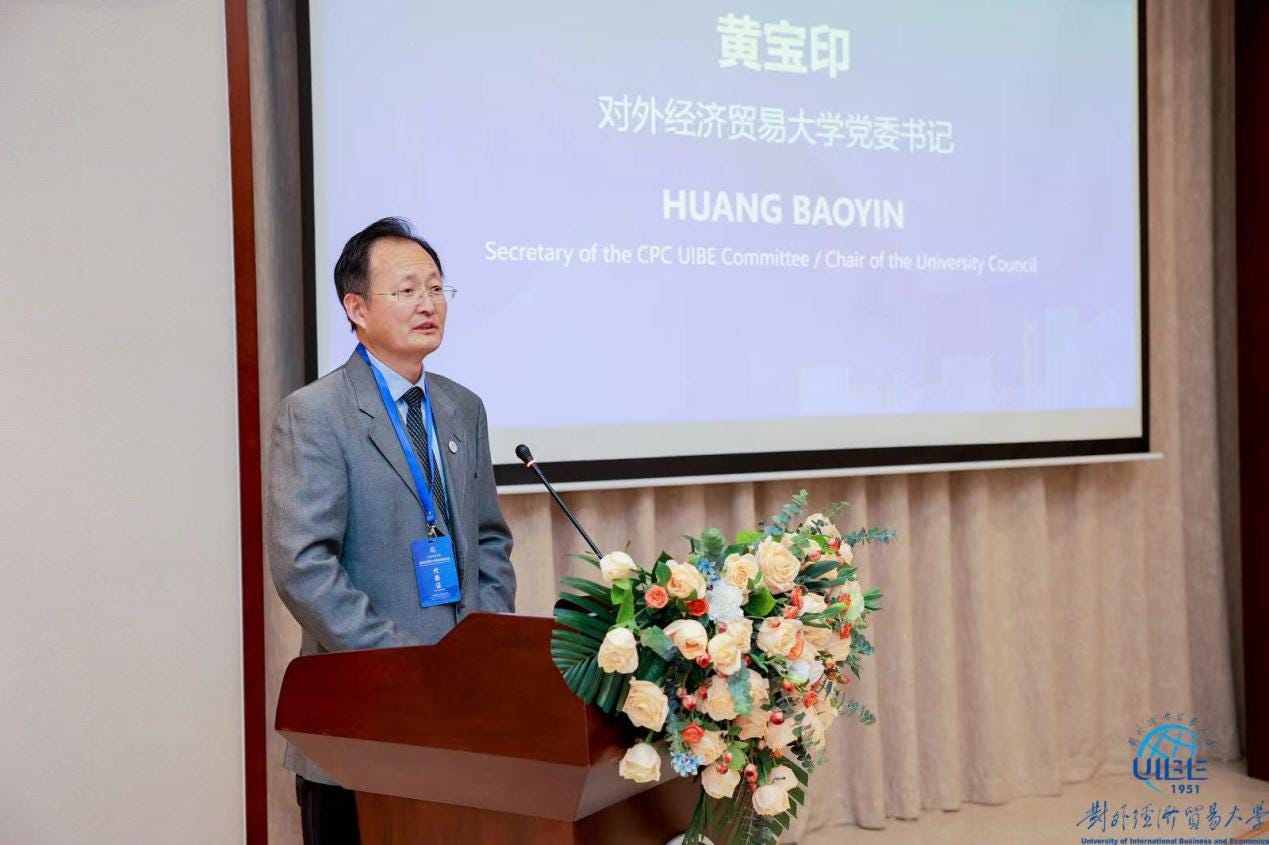
  • Huang Baoyin 黄宝印 — Party Secretary of the University’s Chinese Communist Party (CCP) committee at UIBE (中共党委书记)

  • Zhao Zhongxiu 赵忠秀 — President, UIBE (校长)

  • Puntil Jongjijttrakoo 罗铭然 (PUNTIL JONGJITTRAKOO) — Vice Minister, Ministry of Commerce, Thailand; UIBE alumnus

  • Adam Dunnett 唐亚东 (ADAM DUNNETT) — Secretary-General, European Union Chamber of Commerce in China; UIBE alumnus

  • Dubos Alexandre Florian 杜波 (DUBOS ALEXANDRE FLORIAN) — Entrepreneur; described in the event as a China–France friendship promoter

  • Gagne O’Scawn Pierre Pibarod 奥斯卡 (GAGNE O’SCAWN PIERRE PIBAROD) — Editor, CGTN French Channel (state media)

  • Yerlan Meruyert 米卡 (YERLAN MERUYERT) — Chairman, Beijing Daiyi International Logistics Co.

  • Zhang Ke 张克 — Chairman, Baker Capital Group

  • Zhu Xiaolan 朱小兰 — Chair, Asia-Pacific Trade Committee, World Trade Centers Association

  • Sun Xiaoxia 孙晓霞 — Director, UIBE Party Committee Office / President’s Office (学校党委办公室/校长办公室主任 — 中共党委办公室主任)

  • Wang Xiaojun 王小军 — Secretary-General, UIBE Alumni Association (校友总会秘书长)

  • Geng Huifang 耿慧芳 — Secretary, School of International Education, UIBE (国际学院书记)

  • Ivan 伊万 — Foreign faculty member (host)

  • Huyan (Wiwatpiyawong Rungrawan) 虎岩 (MR WIWATPIYAWONG RUNGRAWAN) — Secretary-General, UIBE Thailand Alumni Chapter (境外秘书长)

  • Chen Xiaofei 陈晓妃 (PHRONG BOONTHARIKA) — Coordinator, Thailand Alumni Chapter (协调员)

  • Noé Comellas 共诺威 (NOÉ COMELLAS) — Coordinator, France Alumni Chapter (协调员)

  • Wahed Ahmadzai 马赫 from AfghanistanFounder, Beijing Infinite Harbor Culture & Technology Co., Ltd (北京无限港文化科技有限公司);Secretary-General, International Alumni and Talent Network of Chaoyang District Human Resources and Social Security Bureau, Beijing (北京市朝阳区人社局国际校友人才联盟秘书长)

  • Significance: Combines private enterprise with official talent/party-aligned alumni network coordination; serves as a node linking CCP-controlled talent initiatives and international alumni.

  • Yerlan Meruyert 米卡,Chairman, Beijing Daiyi International Logistics Co., Ltd (北京戴伊国际物流有限责任公司董事长),Origin: Kazakhstan


What the CCP Party Secretary Said — Explicit Political Framing

Huang Baoyin, in his capacity as Party Secretary of the Chinese Communist Party (CCP) committee at UIBE, framed the forum with explicit CCP political language:

  • He described UIBE as the institution that trained the PRC’s first generation of foreign-trade specialists under CCP oversight.

  • He noted UIBE hosts ~2,200 international students from 162 countries, and argued these alumni are a strategic resource for China’s external engagement.

  • He instructed alumni to “tell China’s stories, spread China’s voice,” to support Belt and Road objectives, and to act as human bridges for the CCP’s global narrative.

  • In short, Huang used university authority — as head of the CCP committee inside the school — to mobilize alumni networks in service of CCP foreign-policy and influence goals.

That is not soft diplomacy. It is a direct CCP political directive embedded in university governance.

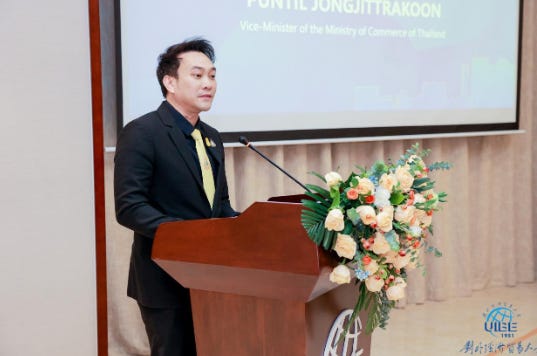
Thailand’s Vice Minister: An Example of Alumni Embedded in Foreign Government

Puntil Jongjijttrakoo (罗铭然), Vice Minister of Thailand’s Ministry of Commerce and a UIBE alumnus, used his remarks to pledge support for the Thailand Alumni Chapter and for deeper Thailand–China cooperation. His role illustrates how CCP-aligned alumni networks reach into foreign governments and bureaucracies, reinforcing Beijing’s influence channels in Southeast Asia.
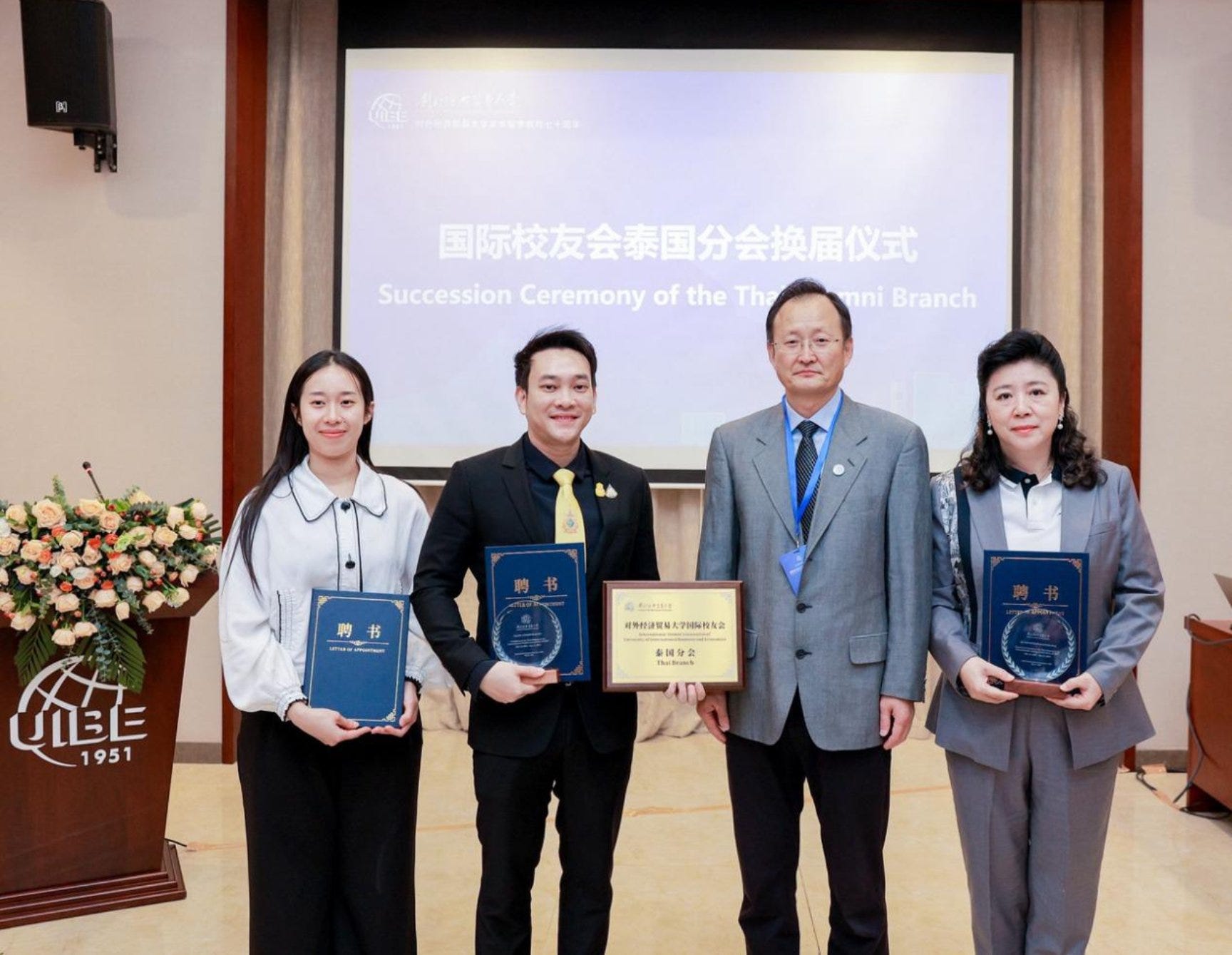
Formalizing Influence: Alumni Chapter Appointments

UIBE used the forum to formalize leadership for overseas alumni chapters — appointments personally handed out by CCP Party Secretary Huang Baoyin and President Zhao Zhongxiu:

  • Thailand Alumni Chapter: President Puntil Jongjijttrakoo 罗铭然; Secretary-General Huyan 虎岩; Coordinator Chen Xiaofei 陈晓妃.

  • France Alumni Chapter: President Dubos Alexandre Florian 杜波; Coordinator Noé Comellas 共诺威.

These appointments institutionalize alumni networks that can be mobilized for coordinated cross-border influence and cooperation aligned with CCP priorities.


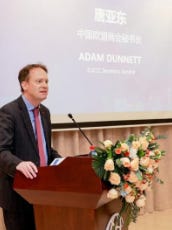
Adam Dunnett (唐亚东): A Strategic Node for EU Influence

Adam Dunnett (唐亚东) — Secretary-General of the European Union Chamber of Commerce in China and a long-time presence in China — positioned himself as a bridge between EU business networks and Chinese institutions. His remarks praised UIBE’s role, emphasized the ballast that trade and investment provide to EU–China relations, and signaled a commitment to keeping EU–China economic ties steady.

Given his career background and his role leading a major chamber in Beijing, Dunnett functions as a key influence node: an alumnus who can legitimize CCP narratives inside European business and policy circles while operating from a non-official chamber platform.

Why This Matters — The CCP’s Playbook

This forum reveals a repeatable CCP pattern:

  1. Embed CCP committees inside universities to direct institutional messaging and alumni engagement.

  2. Cultivate international alumni who later hold positions in foreign governments, media, and business.

  3. Use alumni events, state media, chambers, and conferences to normalize CCP narratives abroad.

  4. Formalize roles and appointments (alumni chapter leadership) to make influence networks durable and organized.

When a university party secretary explicitly calls on alumni to “tell China’s stories” and hands official appointment letters, this is governance meeting influence operations — not benign cultural exchange.


Conclusion

The UIBE 70th-anniversary alumni forum is a clear example of how the Chinese Communist Party (CCP) instruments China’s education system and alumni ecosystems to build lasting influence networks abroad. The presence of officials, state media editors (CGTN), business leaders, and foreign government alumni illustrates the depth and reach of these channels.
#Democracy #Christ #Peace #Freedom #Liberty #Humanrights #人权 #法治 #宪政 #独立审计 #司法独立 #联邦制 #独立自治

Exposing IAPAC’s Political Alignment: The CA Proposition 50 Forum Reveals Its True Colors

On October 12, 2025, a high-profile event took place at the Hilton Hotel in San Gabriel, California: the California Proposition 50 Forum, jointly hosted by the Southern California Chinese American Federation (SCCAF), the Independent Asian Political Action Committee (IAPAC), and the Chinese American Foundation. While the event presented itself as an educational forum designed to increase political awareness and civic participation among Chinese American voters, a closer examination of its content, speakers, and framing reveals a strikingly partisan tilt—and raises serious questions about IAPAC’s real political alignment in the United States.

A Thin Veil of Cross-Partisan Claims

IAPAC publicly portrays itself as a cross-partisan organization, claiming to have endorsed over 200 candidates across different parties over 25 years. In statements made during the forum, IAPAC Chairman Lu Chunyu emphasized “independent thinking” and “avoiding blind judgment.” However, the structure and focus of the forum suggest that the organization is far from neutral in practice.

The forum was framed around California’s Proposition 50, which proposes that the state legislature temporarily draw congressional district maps, bypassing the independent redistricting commission, for the 2026–2030 elections. Proponents, including Elizabeth Yang, Mayor of Monterey Park, explicitly framed the measure as a defensive action against Republican-controlled redistricting efforts in Texas, which they claimed could give the GOP five additional congressional seats. The event’s focus on countering Republican influence in other states subtly positioned the initiative—and by extension, the forum’s messaging—against the Republican Party in California itself.

Signals of Partisan Advocacy

While IAPAC’s statements highlighted voter education, several details reveal an implicit political agenda:

  1. Event Framing and Speaker Messaging

    • The pro-Proposition 50 perspective, presented as a necessary “countermeasure” to Republican redistricting, reflects a partisan framing that aligns more closely with Democratic strategic interests than with neutral civic education.

    • The choice of speakers and panelists, including IAPAC board members and local Democratic-leaning officials, indicates a deliberate selection of voices that reinforce this perspective.

  2. Community Influence as Political Leverage

    • IAPAC’s collaboration with SCCAF and the Chinese American Foundation demonstrates the organization’s ability to mobilize the Chinese American community in Southern California. By steering educational events toward outcomes favorable to certain political parties, IAPAC leverages cultural and community trust to shape voter perception.

    • Even under the guise of civic engagement, the messaging subtly frames political issues through a partisan lens, normalizing a particular policy preference while discouraging alternative interpretations.

  3. Undermining Its Cross-Partisan Narrative

    • By openly participating in an event with a stated anti-Republican objective, IAPAC undermines its long-standing claim of impartiality. The forum effectively exposes the organization’s underlying strategy: using community influence to shape electoral outcomes in ways that favor one party over another.

Implications for American Politics

IAPAC’s alignment has broader implications, especially for those who have viewed the organization as a neutral facilitator of civic engagement among Asian Americans. The organization’s involvement in the Proposition 50 forum suggests a strategy of selective engagement—promoting candidates and measures that align with its political objectives while maintaining a veneer of neutrality.

For U.S. voters, community leaders, and policymakers, understanding these dynamics is crucial. Organizations that position themselves as cross-partisan can, in practice, exert significant influence over electoral outcomes, subtly steering communities toward particular political outcomes. In the case of IAPAC, this raises urgent questions about transparency, accountability, and the extent to which foreign-aligned interests may influence ostensibly domestic political advocacy.

Conclusion

The Proposition 50 forum in San Gabriel offers more than voter education; it provides a clear window into IAPAC’s operational and political methodology. Despite its public claims of cross-partisan support, the forum’s content and structure reveal a de facto partisan alignment, with a clear tilt against Republican strategies. For Americans seeking to understand the real drivers of community political organizations, this event underscores the importance of critically evaluating claims of neutrality and examining the broader political impact of community advocacy groups.

The Southern California Chinese American community—and all American voters—should be aware of the subtle ways in which organizations like IAPAC shape political discourse under the guise of civic engagement. Transparency in political influence is essential for preserving the integrity of democratic participation.#Democracy #Christ #Peace #Freedom #Liberty #Humanrights #人权 #法治 #宪政 #独立审计 #司法独立 #联邦制 #独立自治

Ad1