
美国战争部长海格塞斯发推:美利坚合众国战争部已经把孔子学院指定为国家安全威胁。
The War Department has designated Confucius Institutes as a threat to our national security. https://t.co/bvMTUBwGei
— Secretary of War Pete Hegseth (@SecWar) October 23, 2026
美国战争部长海格塞斯发推:美利坚合众国战争部已经把孔子学院指定为国家安全威胁。
The War Department has designated Confucius Institutes as a threat to our national security. https://t.co/bvMTUBwGei
— Secretary of War Pete Hegseth (@SecWar) October 23, 2026

美国联邦调查局(FBI)2026年10月22日发布消息称,弗吉尼亚州参议员 Louise Lucas 遭联邦大陪审团起诉。检方指控她利用公职影响力,保护一个涉及其家人的大麻经营网络,并涉嫌参与毒品分销、洗钱及其他违法活动。
根据美国司法部当天公布的公告,案件涉及7名被告。检方指控,这一被称为“Lucas Enterprise”的经营网络持续约五年,涉及大麻的获取与分销、相关收益的洗钱,以及通过贿赂和其他方式影响公共事务。FBI 局长 Kash Patel 表示,检方估计该计划涉及约450万美元。
FBI 在社交媒体上强调:
公职是一种受托责任,而不是逃避法律的护身符。
FBI 同时感谢美国司法部、代理司法部长 Todd Blanche、参与调查的联邦调查人员及合作机构,表示将继续追究滥用公共信任者的责任。
根据美国司法部的起诉公告,Lucas 曾担任弗吉尼亚州参议院财政与拨款委员会主席,负责涉及州预算、税收政策和州财政支出的事务。
检方指控,她利用这一职务保护相关大麻经营活动免受刑事调查,并试图影响有利于相关经营网络的立法及经营许可事项。案件被告还包括她的两名女儿、外孙及其他人员。
这些内容属于检方提出的指控,尚须经过司法程序审理。
Lucas 是弗吉尼亚州参议院的成员,而不是美国联邦参议院的成员。此次案件由联邦司法机关起诉,因此新闻中所说的 federally indicted,意思是她遭到联邦刑事起诉,并不意味着她是联邦参议员。
美国司法部公告还明确指出,刑事起诉书中的指控并不等于有罪判决,被告在被依法证明有罪之前应被推定无罪。
原始来源:
美国联邦调查局(FBI)官方网站
Public office is a position of trust, not a shield from the law. Sen. Louise Lucas has been federally indicted, with prosecutors alleging she used her position to shield a five-year marijuana enterprise involving her family and nearly $5 million. Thanks to @TheJusticeDept, @AGToddBlanche, FBI agents, and our partners for working to hold those who violate that trust accountable.
— FBI (@FBI) October 22, 2026

据美国联邦通信委员会(FCC)2026年10月22日发布的公告,该委员会工程与技术办公室本周阻止了两款电子设备在美国获得上市销售所需的授权。两款设备分别为行车记录仪和无线视频发射器。FCC表示,这两款设备均包含由被列入美国相关管制清单的实体生产的芯片,即华为旗下海思半导体(HiSilicon)生产的芯片。
这是 FCC 针对其新实施的芯片零部件规则采取的首次执法行动。该规则于2026年10月13日生效,旨在将设备中的特定智能硬件组件纳入原有的设备授权限制范围。
根据 FCC 公告,涉事芯片由海思生产。FCC 指出,海思在相关产品宣传中将该芯片描述为“为监控市场设计”,并宣称其具有“内置的人脸检测算法”。
FCC 据此认定,包含这些芯片的两款视频设备涉及国家安全风险,并阻止相关型号获得在美国上市或销售所需的授权。
FCC 主席布伦丹·卡尔(Brendan Carr)在声明中表示:
FCC 将继续保持警惕,保护并促进美国国家安全。包含清单所列实体生产的监控芯片的视频设备,对美国及其人民构成明显且不可接受的风险。
卡尔还称,他赞扬工程与技术办公室阻止相关设备获得在美国营销和销售所需的批准,并表示 FCC 将继续积极执行相关规则,以保障美国网络安全。
上述国家安全风险判断及相关评价来自 FCC 的官方声明。
此次措施涉及美国电子设备监管制度中的一项重要变化:监管范围从整机生产商或整机产品,进一步延伸至设备内部具有逻辑处理能力的智能硬件组件。
根据 FCC 公告,进口、营销或销售大多数电子设备,通常需要取得 FCC 设备授权。多年来,FCC 的相关规则一直禁止被列入特定管制清单的实体生产的设备获得该机构的设备授权,理由是相关产品被评估存在国家安全风险。
但在新规则出台之前,即使某款整机本身不属于禁止获得授权的产品,其内部仍可能包含由清单所列实体生产的零部件。FCC 表示,原有规则并未禁止所有此类整机仅仅因为包含这些零部件而获得授权。
2026年早些时候,FCC 通过了新规则,试图堵住这一监管缺口。
新规则的核心是:如果某个实体生产的整机因相关规定而无法获得 FCC 授权,那么该实体生产的具有逻辑处理能力的硬件组件(即智能组件),也可能导致包含这些组件的其他设备无法获得授权。
这意味着,监管审查不再只关注设备最终由谁生产,还会关注设备内部特定智能硬件组件的生产来源。
此次执法行动发生在新规则生效后不久。
按照 FCC 公告所述的时间线:
2026年早些时候: FCC 通过针对特定智能硬件组件的新规则。
2026年10月13日: 新规则正式生效。
2026年10月22日: FCC 公布首次依据该组件规则采取执法行动,阻止一款行车记录仪和一款无线视频发射器获得在美国上市销售所需的授权。
FCC 表示,未来将继续积极执行针对清单所列实体相关组件的规则。
从监管机制来看,此次行动的重点不只是两款具体产品,而是美国设备授权制度对供应链审查范围的扩展。
第一,设备内部的芯片来源可能直接影响整机能否进入美国市场。
即使整机由其他企业生产,只要包含受到相关规则限制的智能硬件组件,也可能无法获得所需的设备授权。因此,整机制造商可能需要进一步核查芯片供应商及其与相关管制清单的关系。
第二,监控功能成为此次争议的具体背景。
FCC 特别提及海思对芯片用途的宣传,包括面向监控市场的设计定位和人脸检测算法。
第三,措施针对的是美国市场准入,而不是全球范围内的全面禁售。
此次公告所述行动,是阻止两款设备获得在美国营销和销售所需的 FCC 授权。它本身并不意味着这两款设备已被全球禁止销售,也不能据此认定所有使用相关芯片的设备在其他国家或地区均受到相同限制。
2026年10月22日,美国 FCC 公布首次依据智能硬件组件规则采取执法行动,涉及两款含有华为旗下海思半导体芯片的视频设备:一款行车记录仪和一款无线视频发射器。
这项措施体现了美国电子设备监管从整机授权向部分核心智能组件延伸的趋势。对于设备制造商而言,芯片的生产来源及其所涉及的监管限制,可能成为影响产品能否进入美国市场的因素之一。
原始消息来源: 美国联邦通信委员会(FCC)2026年10月22日公告 FCC Blocks Two Devices Containing Foreign Surveillance Chips(《FCC 拦截两款含外国监控芯片的设备》)。https://docs.fcc.gov/public/attachments/DOC-426130A1.pdf

Overview of Maj. Gen. Zhou Gang (周刚)
Major General Zhou Gang (周刚) is an Academician of the Chinese Academy of Engineering (elected in 2021) and a senior PLA expert in defense explosion mechanics engineering. He serves as a deputy to the 14th National Legislative Assembly of Communist China (a/k/a National People's Congress) representing the PLA and Party Armed Police (PAP) delegation.
Rank & Affiliation: Major General, PLA; Academician, Chinese Academy of Engineering; Commander of PLA Unit 63650.
Specialization: Defense explosion mechanics engineering, special materials testing, equipment research and development, and weapons evaluation systems.
Key Highlights from Official Chinese State Media
1. Address at the National Legislative Assembly Plenary Session (March 7, 2025) (Source: CCTV News)
On March 7, 2025, during the Third Session of the 14th National Legislative Assembly in Beijing, Major General Zhou Gang attended the plenary meeting of the PLA and PAP delegation, presided over by Xi Jinping, General Secretary of the CCP Central Committee, President of the PRC, and Chairman of the Central Military Commission (CMC).
Role & Address: Zhou Gang was selected as one of six military deputies to deliver an official speech directly to Xi Jinping.
Proposal Focus: He presented specific recommendations on “coordinating weapons and equipment testing and evaluation resources” (统筹武器装备试验鉴定资源), advocating for improved resource allocation and efficiency to ensure the completion of the military’s 14th Five-Year Plan.
Context of The Third Session of the 14th National Legislative Assembly of Communist China in Beijing (Closed March 11, 2025): The Third Session of the 14th National Legislative Assembly officially concluded on the afternoon of March 11, 2025, at the Great Hall of the People in Beijing, according to the CCTV. The assembly formally approved a comprehensive slate of government work reports and financial plans:Budget & Economic Plans: Passed resolutions approving the execution of the 2024 central and local budgets, the 2025 Central Budget, and the 2025 National Economic and Social Development Plan.
Judicial & Executive Approvals: Approved the annual work reports of the Supreme Court, the Supreme Procuratorate, and the Government Work Report—endorsing the overall 2025 economic growth targets and policy trajectory.
Legislative Reforms & Oversight: Passed the decision to amend the Law on Deputies to the National Legislative Assembly and Local Legislative Assemblies, and formally approved the Standing Committee Work Report.
2. Participation in Xinjiang Regional Military Affairs Conference (January 19, 2023)
On January 19, 2023, Zhou Gang attended the Xinjiang Regional Party Committee Military Affairs Conference in Urumqi.
Role & Contribution: Attending as Commander of PLA Unit 63650 alongside top regional civil and military leadership (including Xinjiang Party Secretary Ma Xingrui and PLA Xinjiang Military Region Commander Liu Lin), Zhou delivered remarks.

When the PLA concurrently holds legislative power—approving budgets, work reports, and key appointments for Xinjiang’s Administration, Law Courts, and Procuratorate—the military isn't just spending the money; it dictates the whole system.
In a regime where the armed forces simultaneously hold the power of the purse, the gavel, the policy, and the atom, can concepts like nuclear transparency, judicial fairness, freedom of speech, press freedom, or open internet access be anything more than a pipe dream in China?
Xinjiang hosts the Malan Nuclear Base—can we expect nuclear transparency here?
PLA officers
concurrently serving as Xinjiang Regional Legislators attended the closing
meeting of the Third Session of the 14th Regional Legislative Assembly which
approved 2025 Xinjiang Regional Budget, Xinjiang Regional Court Work Report,
Xinjiang Regional Administration Work Report and Regional Procuratorate Work
Report on 22nd January 2025.
Through this legislative role, the PLA maintains control across the Xinjiang region's legislative decisions, administrative execution (Regional Administration), and judicial reporting (Law Court and Procuratorate), as well as budget.
Forget distant identity politics. Xinjiang isn't just a regional issue—it's a critical node of hard military power, hosting the Malan Nuclear Base, ICBM silos, and drone testing grounds.
When PLA officers control Xinjiang’s regional assembly, approving budgets and overseeing the courts and administration, the military isn't just spending public money; it operates with total opacity over strategic arsenals.
Without press freedom, judicial independence, or open internet, how can the global community expect any transparency over nuclear capabilities that directly impact global security?


The external marketing of the Chinese Communist Party (CCP) routinely presents civilian administrative bodies as benign governance institutions. However, an analysis of the statutory mandates and strategic partnerships of the Ministry of Veterans Affairs of the Chinese Communist Party discloses a far more sinister operational reality: the ministry serves as a direct administrative tool under the command of the Central Military Commission of the Chinese Communist Party (CMC), designed to maintain operational control over military personnel, direct financial resources, and project state influence.
The Direct Command Chain of the Central Military Commission
Under the official organizational mandate of the Ministry of Veterans Affairs of the Communist China, the institution is explicitly structured to guarantee the absolute, centralized leadership of the Chinese Communist Party. Far from being a standard civilian welfare department, its core statutory duties explicitly mandate that it must:
Execute Orders from the Central Military Commission: Clause 10 of the ministry’s official mandate specifically dictates that the ministry must “complete other tasks assigned by the Central Committee of the Chinese Communist Party, the State Council of the Communist China, and the Central Military Commission of the Chinese Communist Party.” The explicit inclusion of the Central Military Commission—rather than general state organs—establishes an uninterrupted military command chain directly into a civilian-facing ministry.
Enhance Armed Forces Combat Power: Clause 11 specifies that the transformation of the ministry’s functions is strictly aimed at building a centralized, unified management system to “better provide organizational guarantees for enhancing the combat effectiveness and cohesion of the armed forces.”
Global Mobilization Potential for Transferred Personnel: Clauses 2 and 3 assign the ministry full authority over the transfer, placement, education, and employment support of military transfer officers, demobilized officers, retired military personnel, retired staff without military status, and accompanying military dependents. Under the direct influence of the Central Military Commission of the Chinese Communist Party, this massive, state-controlled network of former personnel and dependents can be deployed, placed, and mobilized internationally to serve military intelligence, industrial, and covert objectives.
Institutionalized Material Control: Clause 5 establishes complete state control over housing guarantees, medical security, and social insurance for transferred and retired military personnel, ensuring that their financial livelihoods remain entirely dependent on absolute political obedience to the party and the military hierarchy.
The Financial Cartel Supporting Military Control
On March 19, 2019, the Ministry of Veterans Affairs of the Chinese Communist Party signed a foundational cooperation framework with ten major state-controlled and commercial banking institutions, led by the Industrial and Commercial Bank of China (ICBC), Agricultural Bank of China, Bank of China, China Construction Bank, and Bank of Communications.
Reported prominently by the Xinhua News Agency (Xinhua News Agency / Xinhua Net)—the official mouthpiece organ of the Central Committee of the Chinese Communist Party—this agreement represents the first large-scale co-optation of civilian financial infrastructure by the newly created ministry.
By binding these financial institutions to the mandates of the Ministry of Veterans Affairs of the Chinese Communist Party, the CCP guarantees that military transfer personnel, defense contractors, and associated family networks receive targeted financial backing, subsidized credit, and priority liquidity. Simultaneously, this partnership establishes a unified auditing and tracking mechanism, allowing the Central Military Commission of the Chinese Communist Party to monitor capital flows, manage logistics, and enforce financial discipline across its entire veteran and active-duty ecosystem.
An official synthesis published by Xinhua Net Co., Ltd. (新华网股份有限公司)—the official online news and propaganda subsidiary of the Xinhua News Agency (新华通讯社) reveals a chilling structural reality: the Chinese Communist Party (CCP) has systematically converted commercial financial institutions into tactical logistics auxiliaries, capital conduits, and force multipliers for military operations. Under the directive of military-civil fusion, state-owned commercial banks of CCP are no longer standard corporate entities. Instead, they are being embedded directly into frontline combat readiness, military supply chains, and state-supervised mobilization mechanisms.
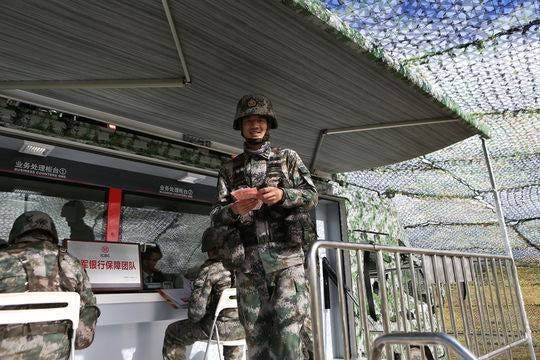
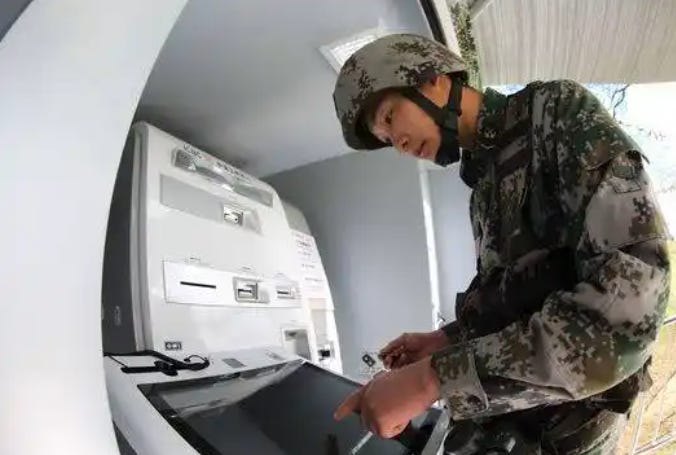
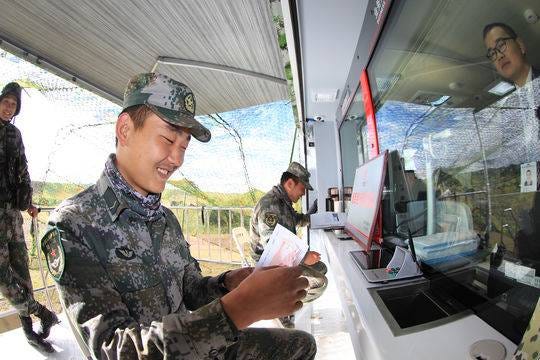
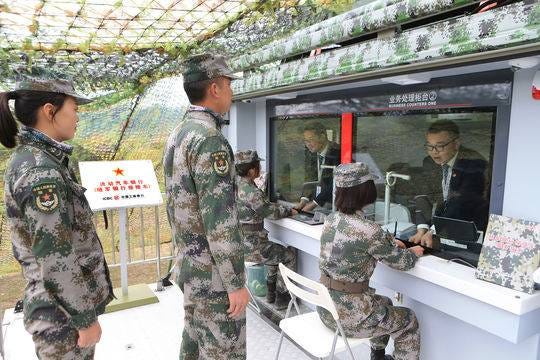
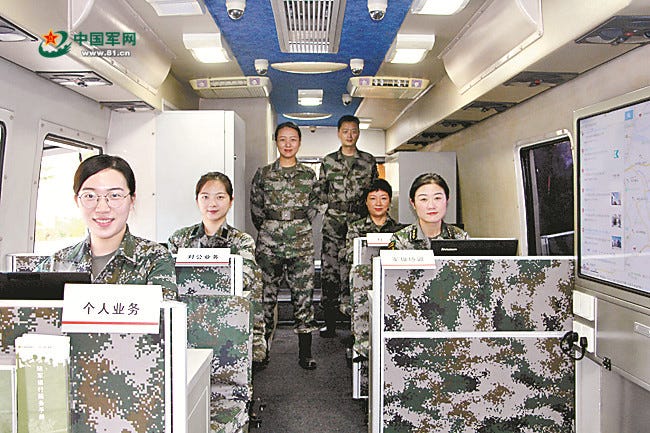
Field operations demonstrate how commercial assets are repurposed for deployment logistics. In late 2018, official reportage highlighted the Industrial and Commercial Bank of China (ICBC) Chengdu Branch sent custom mobile banking vehicles to a 4,600-meter-high plateau training site supporting a brigade of the PLA 77th Group Army. Due to extreme geographic isolation, the lack of financial services threatened daily operations and unit transactions.
ICBC deployed six specialized staff members alongside customized mobile equipment to execute cross-provincial operations in extreme environments. Offering branch-identical services—including salary distribution, cash management, and unit settlements—this mission established a precedent for mobile financial units embedded alongside ground forces during field maneuvers and non-war military actions.
Structural Integration and Joint Operational Training
Institutional alignment extends deep into theater command leadership. To eliminate the friction between static “garrison-based” support and mobile operational requirements, the PLA Eastern Theater Command Army Logistics Department partnered with ICBC Fujian Branch to launch closed-door “Dual-Director” training programs at the Xiamen National Accounting Institute.
Bringing together military finance chiefs and commercial bank managers, these programs train civilian executives in military discipline, operational procedures, and joint contingency protocols. This co-optation has produced formalized operational measures across regional banking systems, including dedicated service windows for military personnel, strict time-limited service agreements, and direct cash-collection services for medical facilities with high financial volume.
Wartime Emergency Reserves and Exercise Protocols
The functional integration between the military and commercial banks extends directly into real-combat training scenarios. Under signed agreements—such as the Emergency Fund Settlement Support Agreement《东部战区陆军应急资金结算服务保障协议》 and the Emergency Reserve Storage and Withdrawal Agreement 《应急储备金存储和支取协议》—joint coordination offices were established between the Eastern Theater Command Army Logistics Department and ICBC Fujian Branch.
During actual combat exercises conducted by units such as the 73rd Group Army, military finance officers and commercial bank representatives tested wartime fund emergency procedures. In simulated emergency scenarios requiring immediate engineering repair funds, the joint mechanism successfully activated wartime reserve schemes to transfer and deliver funds instantly. By establishing clear guidelines for account setup, fund transfers, cash withdrawals, and foreign currency exchanges during emergency missions, state commercial banks operate as a direct financial auxiliary to ensure uninterrupted military operations.
Field Logistics, Specialized Vehicles, and Dual-Use Innovation
Financial infrastructure is increasingly adapted for real-combat environments:
Long-Range Mobile Vehicles: ICBC Shandong Branch deployed mobile banking vehicles to the 80th Group Army capable of operating off-grid for eight hours with a 1,600-kilometer range, engineered to maintain continuous service alongside moving military columns.
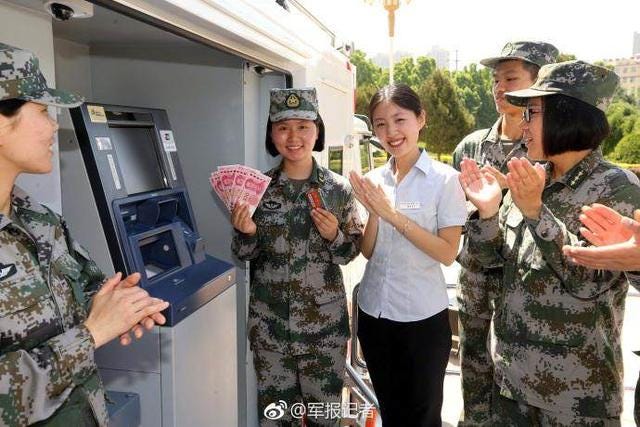
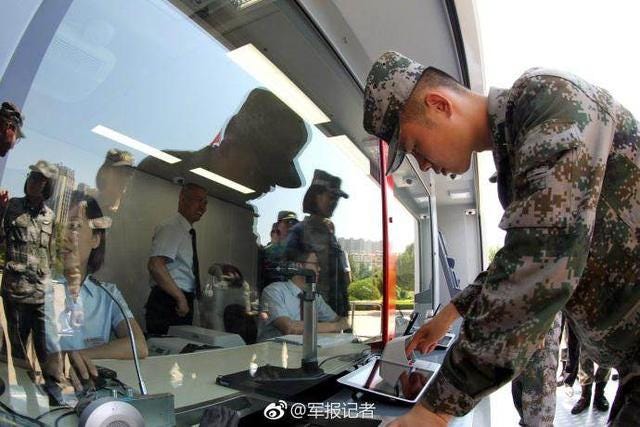
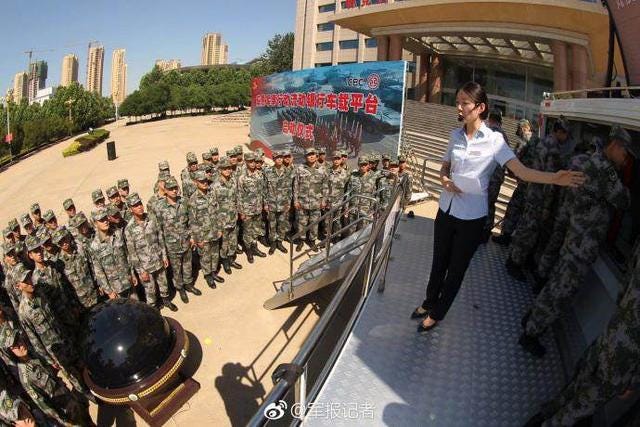
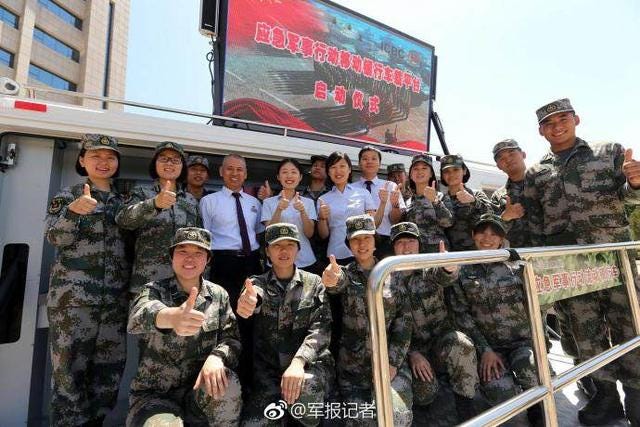
Rail Transport Integration: Armed forces units now load mobile banking vehicles directly onto military rail transports for coordinated tactical deployment to remote field bases.
Next-Generation Interactive Outlets: ICBC Chengdu Branch, in collaboration with the Western Theater Command Air Force, developed specialized service outlets utilizing virtual reality, augmented reality, and artificial intelligence to deepen engagement with military personnel and prospective recruits.
Wartime Reserves and Financial Mobilization Exercises
Commercial capital reserves are formally linked to wartime emergency protocols. Under binding agreements—including the Emergency Fund Settlement Support Agreement and the Emergency Reserve Storage and Withdrawal Agreement—joint coordination bodies between the Eastern Theater Command Army and ICBC manage emergency capital allocation.
Commercial Capital Mobilization for Defense Suppliers
Beyond frontline tactical support, state commercial banks act as financial conduits for private defense contractors and dual-use technology firms:
Supplier Financing: ICBC Beijing Branch established specialized financial solutions tailored to military procurement standards, easing capital constraints and funding pressures for defense suppliers.
Dual-Use Technology Credit: Bank credit policies intentionally steer capital toward non-state enterprises employing veterans in high-tech fields, including new energy, advanced materials, optoelectronics, and electronic information.
Equity and Regional Venture Funds: Regional governments and financial institutions have created targeted venture funds—such as Chongqing’s multi-billion fund and defense-focused bank listings on A-share markets—to channel private capital directly into defense manufacturing and high-end equipment production.
The Reality of Financial Military-Civil Fusion
The coordination between the Ministry of Veterans Affairs and ten major commercial banks—including ICBC, Agricultural Bank of China, Bank of China, China Construction Bank, and Bank of Communications—highlights the comprehensive nature of this state-driven alignment. By binding civilian financial networks, commercial balance sheets, and technical infrastructure directly to the operational demands of the armed forces, the CCP has transformed standard banking into a key element of national defense mobilization and wartime readiness.

Financial Integration with Military Command: The Institutional Weaponization of the “Military Soul Unbounded Platinum Card”
The public release of the “ICBC Military Soul Unbounded Platinum Credit Card” (工银军魂无界白金信用卡) by the Industrial and Commercial Bank of China (ICBC) serves as explicit, empirical evidence of direct joint coordination between state-owned financial cartels and the Central Military Commission of the Chinese Communist Party.
Marketed under propaganda slogans such as “Engraving Extraordinary Years, Demonstrating Our Military Prestige” (铭刻峥嵘,扬我军威), this financial product confirms that state financial apparatuses are directly co-opted to serve active military service branches, enforce institutional loyalty, and support military-civil fusion logistics.
Direct Alignment with the Central Military Commission and Joint Armed Forces
The product disclosures explicitly identify the institutional bodies co-developing and issuing this credit card platform. The platform is built through joint coordination between the Industrial and Commercial Bank of China (ICBC), the Logistics Support Department of the Central Military Commission of the Chinese Communist Party, and all primary operational military branches:
Ground Force (Army) of the Chinese Communist Party

Navy of the Chinese Communist Party

Air Force of the Chinese Communist Party

Rocket Force of the Chinese Communist Party

Strategic Support Force of the Chinese Communist Party

Joint Logistics Support Force of the Chinese Communist Party

By directly embedding the Logistics Support Department of the Central Military Commission of the Chinese Communist Party into product design and card issuance, ICBC functions as an administrative financial arm of the central military command. The card explicitly embosses military hardware onto its physical surface using laser and relief printing techniques, serving as an instrument for internal ideological reinforcement across all operational services.
Restricted Issuance and State Security Data Control
The issuance and distribution mechanisms of the “Military Soul Unbounded Platinum Card” highlight the strict operational controls imposed by the Central Military Commission of the Chinese Communist Party to segregate military personnel data from general civilian platforms:
Exclusion of Public Online Application Channels: Unlike standard commercial credit cards, application for this product is restricted exclusively to physical paper application forms, specialized offline “e-service” channels, and face-to-face verification codes (”面签码”).
Internal Target Demographic: Issuance is strictly targeted at active military personnel, insulating cardholder data within verified, state-controlled channels.
10-Year Operational Lifespan: Issued as a single-currency UnionPay card embedded with PBOC non-contact chips, the platform establishes a long-term financial tracking mechanism for active personnel over a decade-long cycle.
Subsidized State Infrastructure and Transport Logistics
To incentivize adoption and integrate military personnel directly into critical national transport networks, the Industrial and Commercial Bank of China (ICBC) and state financial infrastructure providers offer heavy, state-subsidized transport discounts across national transit networks:
High-Speed Rail Subsidies: Direct 50% discounts on China Railway 12306 high-speed rail bookings via UnionPay Cloud Flash Pay.
Intra-City Transit Integration: Direct 50% discounts for city subway systems, 80% discounts for public bus transit, and micro-payment integration for shared bicycles.
These financial subsidies ensure that military personnel integrated into state-owned banking channels receive preferential access to state transportation infrastructure, reinforcing the material ties between the armed forces, state financial institutions, and the ruling party architecture.
The Reality of Financial Military-Civil Fusion
The launch of the “Military Soul Unbounded Platinum Card” demonstrates that commercial banking in Communist China does not operate on independent market principles. By co-developing specialized financial instruments directly with the Logistics Support Department of the Central Military Commission of the Chinese Communist Party, state-owned banks like ICBC act as financial logistics auxiliaries—integrating military personnel into state-monitored digital payment ecosystems and leveraging commercial banking infrastructure to support the operational ecosystem of the armed forces.


