28 May 2026

Ted Lieu, Erie Chinese Journal, and the CCP-Linked Overseas Chinese Influence Ecosystem

For years, US Rep. Ted Lieu has cultivated the image of a mainstream American politician: Stanford graduate, Air Force veteran, lawyer, prosecutor, and member of Congress.
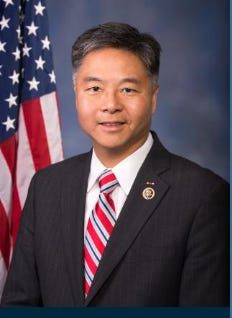
But publicly available Chinese-language materials reveal a lesser-known network surrounding Lieu’s family and longtime associates — one tied to a Chinese-language newspaper deeply embedded in the Chinese Communist Party’s overseas united front and external propaganda ecosystem.

What the public record does show is something more nuanced and more revealing: a decades-long pattern of interaction between Lieu, his family circle, and a media organization that openly collaborated with institutions, narratives, and networks associated with Beijing’s overseas influence strategy.
Erie Chinese Journal: More Than a Community Newspaper

At the center of this network is Erie Chinese Journal (伊利华报), a Chinese-language newspaper founded in Cleveland, Ohio on 23rd November 2002 by publisher and editor Anne Ying Pu (浦瑛) aka Ying Pu or Pu Ying.
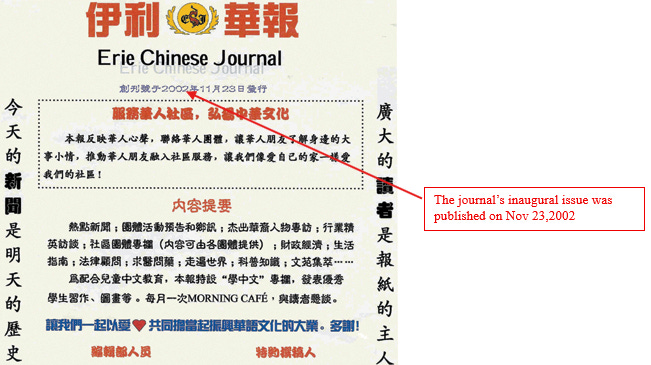
The newspaper presents itself as a community publication promoting Chinese culture and U.S.-China friendship.

But its own articles reveal extensive interaction with:

  • PRC overseas Chinese affairs systems

  • China News Service

  • Confucius Institutes

  • CCP-linked overseas Chinese media forums

  • Chinese consular networks

  • local political and business relationship-building efforts

  • “China Dream” propaganda narratives

  • Belt and Road messaging

Over time, Erie Chinese Journal increasingly positioned itself not merely as a newspaper, but as a cross-border relationship platform connecting American local networks with Chinese political, cultural, and economic institutions.

Anne Ying Pu’s Background

Anne Ying Pu’s own writings provide insight into the political-organizational environment from which she emerged.

Chinese-language biographical profiles state she attended the Shanghai Trade Union Cadre Management Institute, where many students reportedly came from state-sector and party-affiliated systems.

In another article, Ying Pu wrote that she once worked in a Shanghai office connected to “Revitalize China Reading” activities and stated:

“Our leader was Zeng Qinghong.”

Zeng Qinghong later became one of the most powerful CCP leaders, serving on the CCP Politburo Standing Committee.

This does not prove direct political affiliation. But it strongly suggests that Ying Pu operated inside a political-organizational environment closely connected to CCP institutional structures long before immigrating to the United States.

Integration Into CCP-Linked Overseas Media Networks

Over the years, Erie Chinese Journal openly developed ties with multiple Beijing-linked organizations.

The newspaper publicly stated that:

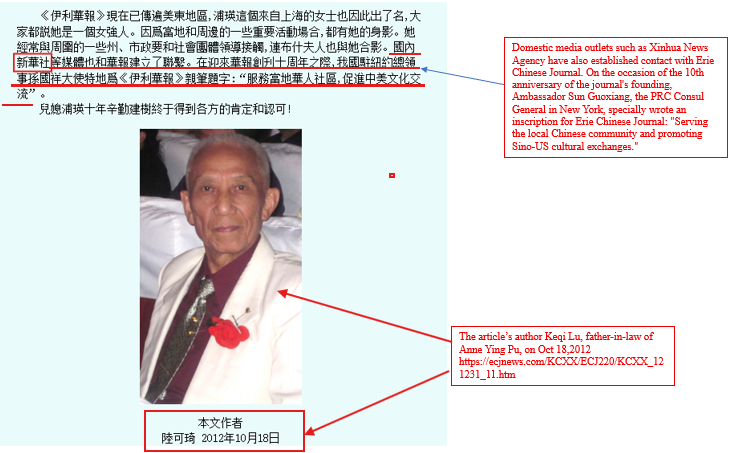
  • Xinhua News Agency established contact with the paper

  • PRC consular officials endorsed its work

  • the newspaper participated in World Chinese Media Forums organized by China News Service

  • local Confucius Institute leadership maintained cooperative relationships with the paper
One Erie Chinese Journal article explicitly stated:

“The Confucius Institute will continue supporting Erie Chinese Journal.”

This relationship matters because Confucius Institutes were widely criticized across the United States and Europe as instruments of CCP soft power and overseas influence.

The World Chinese Media Forum

One of the clearest indicators of Erie Chinese Journal’s political alignment is its participation in the World Chinese Media Forum.

The forum is organized by China News Service together with PRC overseas Chinese affairs agencies.

Its official declarations promoted:

  • Xi Jinping’s “China Dream”

  • “telling China’s story well”

  • building a new “international discourse system”

  • strengthening cooperation between Chinese state media and overseas Chinese-language media

Erie Chinese Journal not only attended these events but enthusiastically republished the forum’s political declarations and messaging.

The newspaper promoted the idea that overseas Chinese media had a “mission” to help spread China’s national narrative globally.

That is not politically neutral journalism.

It is participation in a transnational propaganda framework.

“Promoting U.S.-China Relations”

A particularly revealing 2018 article by Ying Pu was titled:

“Promoting and Safeguarding U.S.-China Relations”

In that article, Ying Pu described Erie Chinese Journal as actively helping build political, economic, and cultural ties between American local institutions and Chinese cities.

The article discussed:

  • sister-city initiatives

  • cooperation with local political figures

  • ties with Confucius Institute leadership

  • U.S.-China economic and cultural integration

  • Belt and Road narratives

  • “China going global”

Ying Pu wrote that Erie Chinese Journal had “done practical things to help connect China and the United States.”

This is significant because it shows the newspaper openly viewing itself not simply as a media outlet, but as an active facilitator of cross-border political and economic networking.

The same article positively framed Belt and Road messaging, writing:

“The ancient Silk Road and today’s Belt and Road share the same mission.”

It further described:

“Chinese politics, economy, and culture going global.”

This went far beyond cultural reporting.
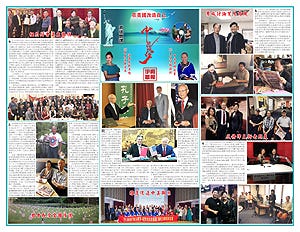
The Cleveland Chinese Women Association Network

Another layer of the network involves the Cleveland Chinese Women Association (CWAC).

Erie Chinese Journal regularly promoted the activities and membership campaigns of the organization.

Membership documents published by the paper identified the group in both Chinese and English as:

Chinese Women Association of Cleveland

(克里夫蘭中華婦女聯誼會)

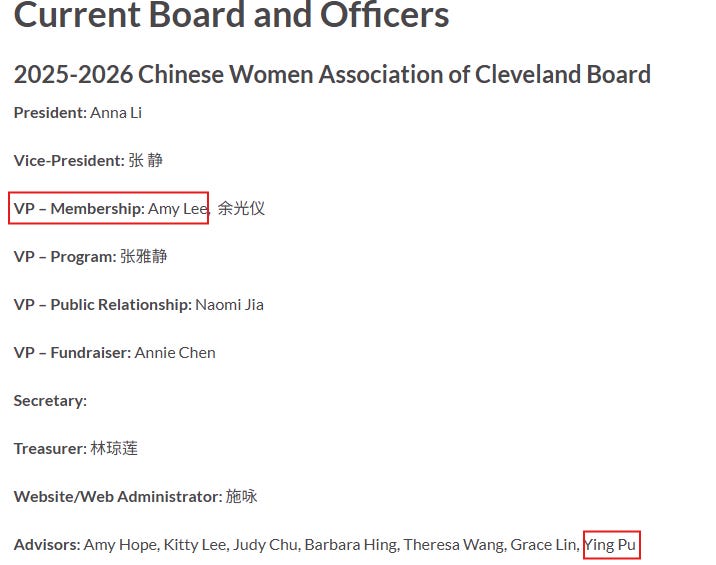
The paper also published organizational information involving Amy Lee, who appeared in public materials associated with the organization.

This matters because united front influence systems frequently operate through overlapping social structures such as:

  • women’s associations

  • cultural groups

  • hometown organizations

  • business associations

  • media networks

  • educational exchanges

Rather than exclusively through formal political institutions.
Ted Lieu’s Long Relationship With Erie Chinese Journal

Publicly archived materials indicate Ted Lieu’s relationship with Erie Chinese Journal spans nearly two decades.

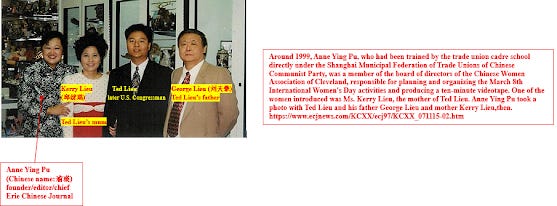
Around 1999

Ying Pu later wrote that she first met Ted Lieu approximately eight years before a 2007 article celebrating the newspaper’s fifth anniversary.

That places the beginning of the relationship around 1999, before Ted Lieu’s rise to major political office

2007: Public Praise for Erie Chinese Journal

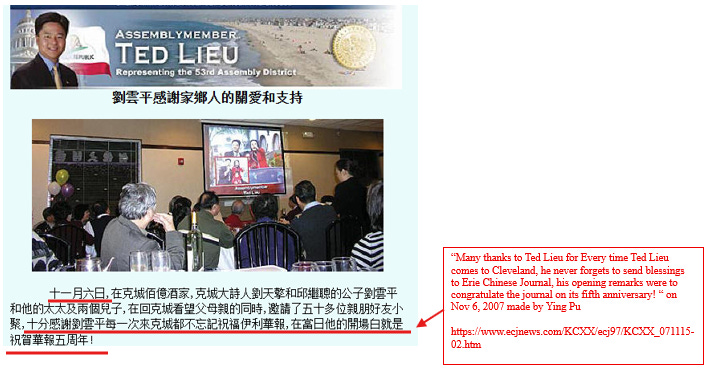
A 2007 Erie Chinese Journal article described Ted Lieu attending a family gathering in Cleveland and publicly congratulating the paper on its fifth anniversary.

The article stated:

“Every time Ted Lieu comes to Cleveland, he never forgets to send blessings to Erie Chinese Journal.”

This reflected a continuing relationship between the congressman’s family and the paper’s leadership.
George Lieu’s Role

Ted Lieu’s father, George Lieu (刘天擎), maintained a long-running poetry column in Erie Chinese Journal.

The significance is not the poetry itself.

The significance is that Erie Chinese Journal was already deeply integrated into CCP-linked overseas Chinese media and united front ecosystems by that point.

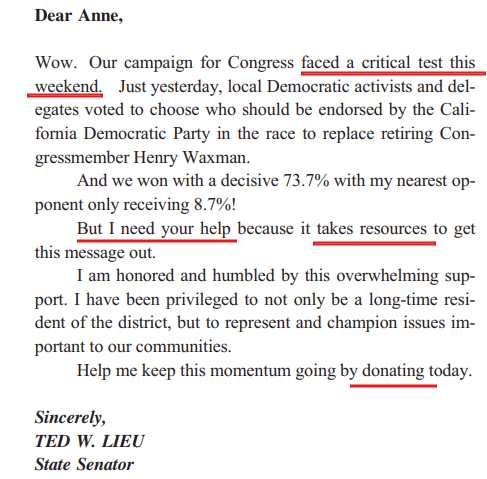
2014: Campaign Fundraising Material

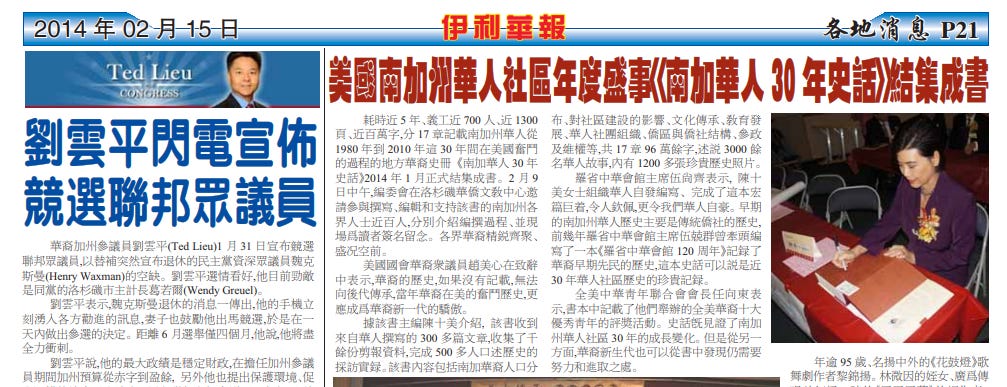
In 2014, Erie Chinese Journal published campaign fundraising-related material connected to Ted Lieu’s congressional campaign.

This demonstrated that the relationship between Lieu and the paper extended beyond occasional cultural interaction into the political sphere.
Image

2024: Public Appearance With Anne Ying Pu

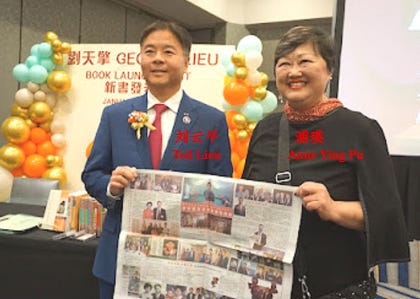
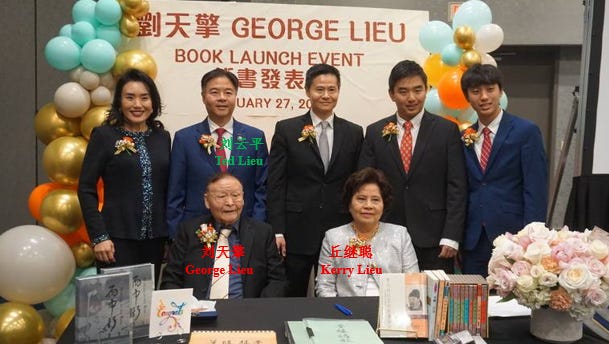
On January 27, 2024, Ted Lieu appeared publicly with Ying Pu at a California book launch event for George Lieu’s poetry collection.

Photographs from the event documented the continuing relationship between Lieu’s family and Erie Chinese Journal leadership.
Image

The Bigger Picture

Individually, none of these incidents prove direct CCP control.

Taken together, however, they reveal something more important:

a long-term ecosystem of relationships connecting:

  • overseas Chinese media

  • CCP-aligned messaging systems

  • Confucius Institutes

  • overseas Chinese affairs networks

  • community associations

  • local American political figures

  • cross-border business and cultural initiatives

This is how modern CCP overseas influence operations often function.

The issue is how normalized CCP-linked influence ecosystems have become within parts of the American Chinese-language media and community landscape — and how closely public officials sometimes interact with those systems over long periods of time.

Timeline of Publicly Documented Associations

Around 1999

Ying Pu later stated she first met Ted Lieu around this period.

2002

Erie Chinese Journal founded in Cleveland.

2006

The newspaper begins participating in World Chinese Media Forum activities organized by China News Service.

2007

Ted Lieu publicly congratulates Erie Chinese Journal’s fifth anniversary.

2013

Erie Chinese Journal participates in CCP-linked “China Dream” media forum activities.

2014

The paper publishes Ted Lieu campaign fundraising-related material.

2018

Ying Pu publishes article describing Erie Chinese Journal’s role in promoting U.S.-China political, economic, and cultural integration.

2020

Anniversary articles highlight ties with Xinhua, PRC consular officials, and overseas Chinese affairs systems.

2024

Ted Lieu appears publicly with Ying Pu at George Lieu’s California book launch event.

Conclusion

Erie Chinese Journal presents a revealing example of how CCP-aligned overseas influence systems can operate through cultural media, community organizations, social relationships, and decades-long institutional integration rather than through overt party structures alone.

The story is not about Hollywood-style espionage.

It is about networks.

And about how influence becomes normalized long before most people recognize it.#Democracy #Christ #Peace #Freedom #Liberty #Humanrights #人权 #法治 #宪政 #独立审计 #司法独立 #独立自治

26 May 2026

美式英语:使徒行传 17:16-34:“用福音吸引人”

#Democracy #Christ #Peace #Freedom #Liberty #Humanrights #人权 #法治 #宪政 #独立审计 #司法独立 #独立自治

美式英语:马太福音 19:13-26:一无所有,却能获得一切

#Democracy #Christ #Peace #Freedom #Liberty #Humanrights #人权 #法治 #宪政 #独立审计 #司法独立 #独立自治

25 May 2026

「亞裔代表」還是身份政治?——當美國政治開始把族裔當成核心資格

近年,美國政壇與媒體越來越常出現一種論調:

「亞裔在政壇代表不足,因此需要更多亞裔從政。」

「亞裔女性必須站上決策桌。」

「讓孩子看到更多像自己的人。」

表面上,這聽起來像是在推動平等、多元與民主參與。

但如果仔細分析,就會發現這套論述背後,其實隱藏著一個越來越危險的趨勢:

美國政治正在從「公民政治」,逐漸滑向「身份政治」。

而這種變化,恰恰也為中共的統戰與影響力操作,提供了新的空間。


一、政治資格,正在被「身份」取代

這類新聞最核心的邏輯其實是:

  • 亞裔人口增加
  • 亞裔政治人物不足
  • 所以需要更多亞裔代表亞裔

問題在於:

為什麼一個人的族裔,會自動等於其政治正當性?

真正成熟的民主制度,本來應該看的是:

  • 是否支持自由民主
  • 是否尊重法治
  • 是否反對極權滲透
  • 是否具備治理能力
  • 是否誠實透明

而不是:

  • 是不是亞裔
  • 是不是女性
  • 是不是第一代移民

否則最後的邏輯就會變成:

「只要長著亞洲臉孔,就天然代表亞裔利益。」

這其實非常荒謬。

因為現實中,「亞裔政治人物」彼此之間的價值觀可能完全相反。

一位反共的香港移民,
與一位親中共統戰團體的華裔政客,
怎麼可能代表相同利益?


二、「亞裔代表」正在成為中共最容易利用的入口之一

這是很多主流媒體刻意避談的問題。

中共長期最擅長的,就是利用:

  • 華人身份
  • 少數族裔政治
  • 反歧視話語
  • 社區代表性
  • 「反仇亞」情緒

來包裝自己的政治影響力。

過去十幾年,美國許多所謂「華人社區領袖」、「亞裔組織」、「亞裔參政平台」中,早已出現大量:

  • 親共僑團
  • 與中國領館密切往來人士
  • 統戰背景商會
  • 中共海外聯誼系統
  • 迴避中共人權問題的政治人物

而最常見的操作,就是故意把:

「批評中共」

混淆成:

「歧視華人」
「仇視亞裔」

這是中共在西方最成功的認知戰之一。

因為一旦美國社會開始相信:

「華裔身份本身,就代表一種政治正當性」

那麼中共便能更容易透過「族裔代表」的外衣,把自己的政治影響滲透進美國地方政治與公共決策。


三、「看見更多亞裔臉孔」不是民主核心

文章中特別強調:

「讓孩子有學習對象」

「讓更多亞裔臉孔出現在政壇」

這種論述,其實屬於典型的「象徵政治」。

但民主制度真正重要的,從來不是:

「台上的人長得像不像你。」

而是:

  • 權力是否受到制衡
  • 官員是否受監督
  • 法律是否平等
  • 政府是否透明

否則政治就會慢慢退化成:

  • 膚色競爭
  • 身份競爭
  • 族群票倉
  • 情緒動員

最後,一個政治人物即使:

  • 沒有能力
  • 缺乏原則
  • 與外國勢力關係密切

只要身份「正確」,仍然可能獲得保護。

這對民主而言,其實是危險訊號。


四、「亞裔」本身就是被過度簡化的人造政治概念

「亞裔」聽起來像一個整體。

但實際上,這個分類內部差異極大:

  • 台灣人
  • 香港人
  • 中國大陸移民
  • 越南裔
  • 韓國裔
  • 日本裔
  • 印度裔
  • 菲律賓裔

這些群體:

  • 歷史不同
  • 政治立場不同
  • 對中共態度不同
  • 對自由民主理解不同

然而,美國身份政治最喜歡做的事情,就是把這些差異全部抹平。

因為只要把所有人統一包裝成「AAPI」或「亞裔」,就能形成:

  • 更大的政治動員
  • 更穩定的票倉
  • 更強的身份聯盟

但問題是:

一位逃離香港國安法的人,
與一位參與中共統戰活動的人,
真的屬於同一種政治利益共同體嗎?

答案顯然不是。


五、真正健康的民主,不應鼓勵「族裔代理人政治」

一個成熟民主社會真正追求的,應該是:

「任何公民,都能代表所有公民。」

而不是:

「每個族群只能由自己族裔代表。」

否則國家最終將不再是:

  • 公民共同體

而會變成:

  • 族群利益市場

每個人不再首先是「公民」,
而是:

  • 亞裔
  • 黑人
  • 拉丁裔
  • 白人
  • 穆斯林
  • 女性
  • LGBTQ

政治開始圍繞身份切割,而非共同價值。

而這種碎片化,恰恰也是包括中共在內的外部勢力最樂見的局面。

因為一個被身份政治撕裂的社會,
往往更容易被操控、滲透與分化。


#Democracy #Christ #Peace #Freedom #Liberty #Humanrights #人权 #法治 #宪政 #独立审计 #司法独立 #独立自治

伊利华报社长浦瑛很可能是中共特务


《伊利华报》社长浦瑛很可能是外国代理人、中共特务。
《伊利华报》的本质,是一种以“中华文化传播”和“海外华人交流”为外衣、实际上与中共海外统一战线话语体系高度一致的海外华文媒体平台。它通过“中国梦”“民族复兴”“凝聚华人力量”等叙事,将文化认同、民族认同与对中国国家及中共政治路线的认同逐步绑定,其核心功能不仅是办报和文化活动,更是对海外华人进行情感凝聚、身份塑造、舆论影响和统战资源整合,属于典型的“软性统战媒体”。

很多人第一次看到《伊利华报》,可能会把它当成一份普通的海外华文报纸:办在美国,面向华人社区,内容涉及文化、活动、资讯,看起来并不“敏感”。

但如果把公开材料连起来看,就会发现这份报纸并不简单。它的自我定位、社长背景、与中国地方侨联和党务系统的互动,都指向同一个结论:《伊利华报》更像是一个长期嵌入中共统战与外宣网络的海外华文媒体,而不是独立中立的社区报纸。

浦瑛的公公陆可琦1952年作为连队文化教员入朝参与侵略作战,到了三八线,1953年朝鮮停战后回国进中国人民解放军军械技术学校学习,毕业后在中国人民解放军的大军区机关工作,1969年转业到地方,在美国伊利华报投稿时仍将中共在韩战中的侵略行径宣传为所谓“保家卫国”。


新华社和伊利华报建立了联系。在迎來伊利华报创刊十周年之际,中华人民共和国驻纽约总领事孙国祥于2012年特地为《伊利华报》亲笔题字:“服務當地華人社區,促進中美文化交流”。


浦瑛Anne Ying Pu离开上海时的领导是前中共中央政治局常委、前中共中央书记处书记、前中共中央办公厅副主任、前中共上海市委副书记曾庆红


一、它的“宗旨”本身就高度政治化

《伊利华报》一类媒体常把自己包装成“弘扬中华传统文化”“搭建中美经济文化交流桥梁”“服务华人社会”。

这些话单独看没有问题,但问题在于,放到中共的海外统战语境里,这就是标准话术。
“文化交流”“桥梁作用”“讲好中国故事”“服务祖国形象”——这些词并不是中立表达,而是中共长期对海外华文媒体施加影响时最常见的包装语言。

换句话说,它不是单纯做社区新闻,而是在参与一种政治叙事的传播。

二、浦瑛的履历,本身就暴露了组织化背景

另一篇采访写得更直白。浦瑛本人毕业于“上海工会干部管理学院”,而且文中直接提到她“利用在国内组织工会活动的工作经验”,在美国华人社区组织活动、办报、做联络。

这里的关键不只是“工会”两个字,而是她的组织经历说明:她熟悉的不是西方意义上的独立民间社群运作,而是中共体制内那套群众组织、联谊动员和社区整合方式。

这类背景的人到了海外,往往很容易继续成为统战网络的节点,因为他们本来就擅长做“联络”“组织”“协调”“宣传”。

三、最刺眼的是“镇江窗口”

那篇2006年的采访里有一句话非常关键:

《伊利华报》已经跟江苏镇江市开展合作交流,《伊利华报》在镇江设有一个窗口。


一个美国地方华报纸,为什么会在中共党国地方政府体系里设“窗口”?

在中国语境里,“窗口”绝不是随便说说。它通常意味着联络点、接待点、合作点、宣传点,甚至是半官方接口。
这说明《伊利华报》早就不是单纯服务美国本地华人的媒体,而是被纳入了中国地方侨务、宣传和对外交流的体系之中。

再往下看,文中还提到“接待来自镇江那边的朋友”。这种表述非常典型,意味着它与地方官方、侨务系统之间有持续联系,而不是一次性采访。

四、2012年的登门探访,更像统战关系的公开展示

2012年,中共上海市金山区石化社区党工委、总工会、侨联分会、党支部书记一起上门探望浦瑛的丈夫陆一轻。
陆一轻在文中明确说,会通过浦瑛在美国创办的《伊利华报》“展现家乡风采”,为中美交流做贡献。

这已经不是“普通民间来往”了,而是党工委、侨联、社区党组织和海外华文媒体之间的公开互动。
这类画面本质上是在告诉外界:这份报纸和它的家庭背景,已经进入中共基层统战网络的视野,并被当成可利用的海外传播渠道。

五、2024年的“海外华文媒体杭州行”,把关系讲得更明白

2024年,《伊利华报》又出现在杭州市归国华侨联合会主办的“海外华文媒体杭州行”里。
这个活动不是普通旅游采访,而是典型的侨务外宣活动。参加媒体来自多个国家和地区,看似国际化,实质上是中共侨联系统集中组织、筛选和引导海外华文媒体的常见模式。

一份媒体如果长期出现在这种活动里,就说明它不是“偶然受邀”,而是已经被视为可以合作、可以引导、可以传播官方叙事的对象。

六、问题不在于它会不会说中文,而在于它站在哪一边

很多人会说:海外华文媒体跟中国大陆联系密切很正常。
但真正的问题不是“联系”,而是它是否保持独立,是否愿意监督权力,是否敢于讲真话。

从公开材料看,《伊利华报》显然不是这种媒体。它更像是:

  • 长期认同中共官方叙事;
  • 与侨联、党务系统持续互动;
  • 参加官方组织的外宣活动;
  • 把“中华文化”“家乡风采”“祖国发展”作为宣传核心;
  • 在海外华人社区中承担软性政治传播功能。

这类媒体最大的特点,不是直接宣布自己是中共媒体,而是以“文化”“乡情”“服务华人”为外衣,悄悄替中共做认同塑造和舆论铺路。

结语

所以,若问《伊利华报》是什么性质,最准确的说法不是“独立海外华文报纸”,而是:

一份长期靠近并服务于中共侨务、统战和外宣系统的海外华文媒体。

它未必需要公开挂上党徽,也未必写着“我们是中共代理”,但公开材料已经足够说明:它不是站在权力外面,而是站在权力网络里面。

根据其自我简介,伊利华报的宗旨包括为中共国内文学爱好者提供展示场所,弘扬宣传中华传统文化,搭建中美经济文化交流桥梁。一看就是给中宣部批准的作者发表文章提供平台,用所谓的宣传中华文化,讲好“中国故事”,服务于习近平的“中国梦”,执行中共中央统战部用中华文化宣传来从事统战的任务。伊利华报创刊于2002年11月,当时为月刋24版;2004年11月起改为半月刋20版,月中和月末发行;从2007年2月开始改为半月刊24版。至今,发行量 一万份。伊利华报APP于2017年正式上线。伊利华报的社长/主编为浦瑛。
2012年10月9日中共上海市金山区石化社区(街道)党工委委员、总工会主席陆剑英、侨联分会主席李维云,在中共辰凯居民区党支部书记的陪同下上门探望浦瑛的丈夫陆一轻,陆一轻感谢中共街道、社区侨联分会对他的关心及对其父母日常生活的关照,说此次回国,看到家乡日新月异的发展变化,感到十分欣喜,表示将通过其夫人浦瑛在美创办的《伊利华报》刊载,展现家乡风采,为中美经济、文化的交流沟通做出自己的努力。


《伊利华报》社长浦瑛曾说,““国家强盛、民族振兴、人民幸福”的中国梦是中华民族的梦,也是每个中国人的梦。海外华人也都希望看到一个繁荣富强的祖国。近年来,随着中国经济的发展,祖国国际地位的日益提升,海外华人越来越受到国际社会的关注和尊敬"。


中国共产党统一战线工作条例》“第三十七条 海外统一战线工作的主要任务是:加强思想政治引领,增进华侨和出国留学人员等对祖国的热爱和对中国共产党、中国特色社会主义的理解认同;传承和弘扬中华优秀文化,促进中外文化交流;鼓励华侨参与我国改革开放和社会主义现代化建设,融入民族复兴伟业;遏制“台独”等分裂势力,维护国家核心利益;发挥促进中外友好的桥梁纽带作用,营造良好国际环境。”
《中国共产党统一战线工作条例》“第三十八条 侨务工作的主要任务是:围绕凝心聚力同圆共享中国梦的主题,加强华侨、归侨、侨眷代表人士工作,凝聚侨心、汇集侨智、发挥侨力、维护侨益,为侨服务;统筹国内侨务和国外侨务工作,着力涵养侨务资源,引导华侨、归侨、侨眷致力于祖国现代化建设,维护和促进中国统一,实现中华民族伟大复兴,致力于增进中国人民与世界人民的友好合作交流,推动构建人类命运共同体”。
2024年6月18日,从美国飞杭城,参加浙江省杭州市归国华侨联合会主办“2024海外华文媒体杭州行采访活动”的《全美中国作家联谊会》主席、《纽约商务传媒出版集团》董事长、著名旅美作家冰凌(真名:姜卫民),在杭州西湖之畔新侨饭店,会见美国伊利华报中国首席撰稿人艾文。美国伊利华报中国首席撰稿人艾文的17篇文章得到了全美中国作家联谊会冰凌主席、美国伊利华报社长浦瑛和杭州市归国华侨联合会宣传部长郑军的赞评。 海外一些知名华人看到一些文章后联系美国伊利华报社长浦瑛发来帖抒胸臆。 2024年海外华文媒体杭州行采访活动,由杭州市侨办、杭州市侨联主办,上城区侨联、余杭区侨联、富阳区侨联承办。来自《美国伊利华报》《纽约杂志社》《中美邮报》、法国《欧洲时报》、印尼《国际日报》《西班牙欧华传媒》《新西兰华新社》等17个国家和地区28家媒体代表相聚杭州。也是浙江中华文化海外传播促进会副会长,浙江中华文化海外传播促进会由浙江中华文化学院、浙江海外联谊会、杭州师范大学和杭州哈兔中文网络科技有限公司共同发起的社会组织,章程规定“浙江中华文化海外传播促进会通过以中华文化为纽带紧密联系海内外浙籍儿女,增强对民族的认同感和对祖国的向心力、凝聚力,提升爱国热情,通过开展面向海内外的各类跨文化交流活动,增强中国在国际社会中的话语权,通过推动浙江文化产业的发展和繁荣,服务于国家“一带一路”和浙江文化强省战略。首批会员有多位海外中文媒体负责人。


当一份美国华文报纸,开始越来越像中共统战系统的一部分

——从《美国伊利华报》看海外华文媒体如何被纳入中共外宣网络

很多海外华文媒体都喜欢把自己包装成“文化桥梁”“服务华人”“传播中华传统文化”的民间平台。表面上看,这些词都很正面,甚至很温和。但如果把《美国伊利华报》几段公开材料连起来看,就会发现,它远不只是一个普通的社区报纸,而是长期嵌入中共侨务、统战和外宣网络中的一个节点。

先看它自己的定位。公开简介里,《伊利华报》强调为国内文学爱好者提供展示场所,弘扬中华传统文化,搭建中美经济文化交流桥梁。这样的表述本身并不罕见,但问题在于,它的实际运行轨迹,和这些口号高度一致地指向了中共最熟悉的一套话语:文化交流、侨务联络、家乡宣传、民族情感、对外传播。换句话说,它不是在做独立媒体最重要的那件事——监督权力、保持距离、追问真相,而是在做“友好叙事”的扩音器。

更值得注意的是,2006年的一篇采访已经把这家媒体的运行逻辑暴露得很清楚。文章写到,浦瑛女士“利用在国内组织工会活动的工作经验”,在华人社区策划活动、组织联谊、建立联系。这里的“工会活动”四个字非常关键。因为在中共体制内,工会从来不是独立于权力之外的民间组织,而是嵌在党国体系中的群众组织。一个人如果长期熟悉这种组织方式,她到了海外后,往往也会继续沿用同样的动员方法:先做社团,再做媒体;先做活动,再做关系;先做服务,再做影响。

那篇采访还提到,《伊利华报》是“俄亥俄华人交流的平台”和“弘扬中华传统文化的窗口”,更是“一座连接中美两国文化和经济的桥梁”。听起来很美,但真正的问题是:这座桥到底通向哪里?如果桥的一端总是连着地方政府、侨务系统和官方叙事,而另一端不断向海外华人输出“家乡风采”“中国梦”“民族振兴”这样的内容,那它就不只是媒体,更像一种舆论通道,一种被中共长期利用的海外华文传播接口。

2012年的一则公开探访报道,又把这种关系说得更直接。中共街道党工委委员、总工会主席、侨联分会主席等人上门探望浦瑛的家庭成员,陆一轻还明确表示,会通过其夫人浦瑛在美创办的《伊利华报》刊载内容,展现家乡风采,为中美经济文化交流做出努力。这里已经不只是“认识”这么简单,而是基层党务、侨联系统和海外华文媒体之间的公开联动。一个真正独立的媒体,通常不会以这种方式被地方党政系统当作对外宣传资源来使用。

再往后看,浦瑛本人公开讲过“国家强盛、民族振兴、人民幸福”的“中国梦”是中华民族的梦,也是每个中国人的梦。这种表态当然可以被包装成“爱国”,但它的政治语境非常明确:这是习近平时代的官方政治口号,不是普通文化认同。一个海外媒体负责人主动把这种口号纳入自我叙事,说明她不是站在观察者的位置,而是站在配合者的位置。

到了2024年,《伊利华报》又出现在杭州市侨联、侨办主办的“海外华文媒体杭州行”里。这个事实尤其说明问题。中共对海外华文媒体从来不是随便欢迎,而是有选择地接触、筛选、培养、拉拢。能长期进入这样的体系,通常意味着这家媒体至少在立场上是可控的、可合作的、可利用的。它未必是新华社那样的直属机关媒体,但它显然已经不是一个会和中共保持距离的独立媒体。

所以,更准确的结论不是说《美国伊利华报》就是“中共官方媒体”那么简单,而是:它长期处在中共侨务、统战和外宣网络中,扮演的是一个亲官方、亲叙事、亲合作的海外华文媒体角色。它有民间外壳,有社区语言,也有文化包装,但从公开材料看,它的政治功能早已超出普通华人报纸的边界。

真正需要警惕的,不是它会不会直接挂上党徽,而是它是否在海外华人社会里,悄悄替中共完成了合法化、温情化、去政治化的包装。最危险的宣传,往往不是板着脸喊口号,而是笑着说“我们只是做文化交流”。

很多人看到“海外华文媒体”四个字,第一反应往往是:

“不过就是服务华人社区的中文报纸。”

但如果仔细研究一些媒体的公开资料,你会发现:

有些所谓“民间华文媒体”,与中共侨务、统战、地方政府、外宣体系之间,存在长期、稳定、系统性的互动关系。

《美国伊利华报》,就是一个典型案例。


一、一家“普通美国华文报纸”,为何频繁出现在中共侨联活动中?

2024年,《美国伊利华报》参加了:

“2024海外华文媒体杭州行采访活动”。

而主办方并不是什么民间文化机构。

公开资料显示:

  • 杭州市侨办
  • 杭州市侨联
  • 上城区侨联
  • 余杭区侨联
  • 富阳区侨联

共同参与组织。

问题在于:

“侨联”并不是普通华人社团。

中国侨联

本身就是中共统一战线体系的重要组成部分。

所谓“海外华文媒体行”,本质上属于典型的:

  • 海外统战活动
  • 对外宣传活动
  • 海外舆论影响工程

而《美国伊利华报》不仅参与其中,其记者还大量撰写正面宣传稿件,被官方点名“赞评”。

这已经不是“普通采访”。

而是主动进入中共海外媒体统战网络。


二、《伊利华报》与中共系统的关系,并非始于今天

很多人以为:

海外中文媒体与中共的关系,是习近平时代才加强的。

但《伊利华报》的公开资料显示:

这种联系至少可以追溯二十年。

2006年,《伊利华报》接受采访时公开表示:

  • “弘扬中华传统文化”
  • “作为中美文化经济桥梁”
  • “加强与国内朋友联系”
  • “与江苏镇江市开展合作交流”
  • “在镇江设有窗口”

问题来了:

一家美国地方华文报纸,
为什么会在中国地方政府体系中设“窗口”?

在中国政治语境中:

“窗口”通常意味着:

  • 固定联络渠道
  • 对外宣传接口
  • 侨务合作平台
  • 官方合作关系

尤其是在2000年代,中共地方政府长期推动:

“借海外华文媒体讲好中国故事”。

《伊利华报》显然正是这一体系中的合作对象。


三、更关键的是:它的负责人长期使用中共官方政治语言

《伊利华报》社长浦瑛曾公开表示:

“国家强盛、民族振兴、人民幸福”的中国梦,是中华民族的梦,也是每个中国人的梦。

这里有一个关键问题:

“中国梦”并不是什么传统文化概念。

它是习近平时代最核心的政治宣传口号之一。

当一个海外媒体负责人:

  • 主动使用中共核心政治语言
  • 将海外华人与“中国梦”绑定
  • 强调“祖国崛起”
  • 强调“民族复兴”

这已经不仅仅是文化认同。

而是对中共国家叙事的公开认同。


四、一个容易被忽略的细节:工会背景

浦瑛早年采访还提到:

她“利用在国内组织工会活动的工作经验”,在美国华人社区开展活动。

而中国的“工会”,并不是西方独立工会。

所有合法工会都属于:

中共中央书记处领导的中华全国总工会

体系。

这意味着:

她很可能长期熟悉:

  • 官方群众组织体系
  • 社区动员模式
  • 宣传与联谊机制
  • 体制化组织运作

这也解释了:

为什么她后来能够:

  • 快速组织海外华人活动
  • 建立媒体平台
  • 与国内侨务系统长期互动

五、《伊利华报》真正的问题,不只是“亲中”

很多人会说:

“难道支持中国发展也有问题吗?”

问题不在于“喜欢中国”。

问题在于:

是否持续帮助中共把“党”包装成“中国”。

是否帮助中共在海外华人社区:

  • 输出官方政治叙事
  • 推广民族主义宣传
  • 扩展统战影响力
  • 将海外华人重新纳入政治动员网络

而从公开资料来看:

《美国伊利华报》至少已经明显具备这些特征。


六、中共最成功的海外扩张,不是间谍,而是“关系网络”

真正值得警惕的,并不一定是秘密间谍。

而是:

大量表面“民间”“文化”“华人服务”的组织,
逐渐形成:

  • 侨务
  • 商业
  • 媒体
  • 同乡会
  • 社团
  • 文化交流

彼此交织的统战生态。

它们未必直接拿中共工资。

但却可能:

  • 在舆论上配合中共
  • 在政治上认同中共
  • 在传播上帮助中共
  • 在海外华人社区替中共建立影响力

而《美国伊利华报》,正是一个值得研究的案例。

Erie Chinese Journal: A Small U.S. Chinese Newspaper — or Part of the CCP’s Overseas United Front Network?

At first glance, Erie Chinese Journal (ECJ, 《伊利华报》) looks like a typical overseas Chinese community newspaper in the United States: local events, cultural activities, business networking, and stories about Chinese heritage.

But when its own public statements, interviews, and political connections are examined together, a different picture emerges.

The evidence suggests that ECJ is not merely an independent ethnic newspaper. Instead, it appears to function as part of the Chinese Communist Party’s broader overseas united front and external propaganda ecosystem — a system designed to cultivate influence among overseas Chinese communities while promoting narratives favorable to the CCP regime.

A “Cultural Newspaper” Following Official CCP Narratives

Like many overseas Chinese-language outlets, ECJ describes its mission using phrases such as:

  • “promoting Chinese traditional culture”
  • “building bridges between China and the United States”
  • “serving the Chinese community”
  • “strengthening cultural and economic exchanges”

On the surface, these may sound harmless. But within the CCP’s overseas influence framework, such language is highly familiar.

For years, Beijing has used “cultural exchange,” “friendship,” “community service,” and “telling China’s story well” as soft political language to expand influence abroad without openly presenting activities as political operations.

The issue is not Chinese culture itself. The issue is whether a media outlet operates independently — or gradually becomes aligned with the CCP’s political messaging and united front goals.

The Founder’s Background Raises Important Questions

A revealing profile of ECJ publisher Ying Pu (浦瑛) provides important clues.

According to the article, Pu studied at the Shanghai Trade Union Cadre Management Institute, a school connected to China’s state-controlled trade union system. The article also states that after arriving in the United States, she relied on her prior experience “organizing union activities” in China to organize events within the Chinese-American community.

This detail matters.

In the People’s Republic of China, labor unions are not independent civil organizations in the Western sense. They operate under the authority of the CCP-controlled trade union structure:

All-China Federation of Trade Unions

That means the skills described in the article were not merely community-organizing experience. They likely included familiarity with Party-affiliated mass organizations, political networking, social mobilization, and relationship management — all central features of united front work.

The “Zhenjiang Window” Is Particularly Telling

One 2006 interview contains a striking statement:

“Erie Chinese Journal has already established cooperative exchanges with Zhenjiang, Jiangsu Province. ECJ has set up a ‘window’ in Zhenjiang.”

This deserves scrutiny.

Why would a small Ohio-based Chinese-language newspaper maintain a “window” inside a CCP-governed Chinese city?

In Chinese political and bureaucratic language, a “window” often refers to a liaison point, external affairs office, publicity platform, or semi-official channel for coordination and outreach.

The article further states that ECJ regularly “receives friends from Zhenjiang.”

Within CCP political culture, “friends” frequently refers not merely to personal acquaintances, but to officials, united front contacts, local government representatives, or political partners.

Taken together, these details suggest long-term institutional ties between ECJ and local CCP-affiliated entities in China.

Direct Interaction With CCP Grassroots Organizations

In 2012, Chinese local officials connected to Party and united front structures reportedly visited Pu’s husband in Shanghai.

The delegation included representatives from:

  • a CCP street-level Party working committee,
  • a local trade union,
  • an overseas Chinese affairs association,
  • and a neighborhood Party branch.

During the visit, Pu’s husband reportedly stated that ECJ would continue publishing material showcasing the hometown’s development and strengthening U.S.-China exchanges.

This was not simply a family visit.

It publicly demonstrated interaction between CCP grassroots political organizations and an overseas Chinese-language media platform operating in the United States.

Participation in CCP-Linked Overseas Chinese Media Programs

The pattern continued in 2024.

ECJ participated in the “2024 Overseas Chinese Media Hangzhou Tour,” organized by Hangzhou’s Overseas Chinese Affairs and Federation of Returned Overseas Chinese systems.

Such programs are not neutral journalism exchanges. They are a well-established part of the CCP’s overseas influence strategy: invite foreign Chinese-language media, arrange guided tours, promote approved narratives, and encourage favorable coverage for international Chinese-speaking audiences.

The fact that ECJ repeatedly appears in these networks indicates more than occasional contact. It suggests integration into a broader political relationship structure.

The Core Issue Is Not Ethnicity — It Is Political Alignment

None of this means every overseas Chinese-language newspaper is secretly controlled by Beijing.

Nor does promoting Chinese culture automatically equal CCP influence.

The real issue is whether a media outlet maintains editorial independence from authoritarian political structures — or whether it increasingly acts as a soft-power extension of those structures abroad.

Based on ECJ’s own public materials, the pattern is difficult to ignore:

  • long-term cooperation with CCP-linked local entities,
  • participation in united front-style media events,
  • alignment with official nationalist narratives,
  • repeated emphasis on “China’s rise” and “national rejuvenation,”
  • and a role presenting CCP-approved messaging to overseas Chinese audiences.

Conclusion

The available evidence does not necessarily prove that Erie Chinese Journal is formally owned or directly controlled by the CCP regime.

However, it strongly suggests that ECJ functions within the broader ecosystem of CCP-friendly overseas Chinese media cultivated through united front and external propaganda networks.

In practice, that distinction matters less than many people assume.

Modern CCP influence operations often do not require direct ownership.
Political alignment, relationship-building, access cultivation, and narrative cooperation can be just as effective.

#Democracy #Christ #Peace #Freedom #Liberty #Humanrights #人权 #法治 #宪政 #独立审计 #司法独立 #独立自治

刘云平Ted Win-Ping Lieu是谁?


刘云平Ted Win-Ping Lieu

刘云平Ted Win-Ping Lieu1991年毕业于斯坦福大学, 1994年毕业于乔治城大学,获得法学博士学位,曾担任Munger, Tolles & Olson的诉讼律师,并曾任职美国第九巡回上诉法院。
刘云平于2002年任托伦斯市议员、2005年任加州众议员、2011年任加州参议员。刘云平于2015年1月就任加州第33区国会众议员。知名的环保组织The Grist曾提名刘云平为2016年「50名最有影响力人物」(Top 50 Influencers)。国会山庄”The Hill” 曾点名刘云平是「能源和环境世界的10名未来之星之一」”10 rising stars in the energy and environment world.”。世界台湾人商会联合总会前会长杨信发起,会同 台湾会馆前董事长赖英慧,洛杉矶台美商会会长汪俊宇,杰出二代 Frank Yang, Dennis Wang & Peter Chen,  台美人社区曾计划于2016年5月14日礼拜六中午替第33区国会众议员刘云平(US Representative Ted Lieu, 33rd District) 举办募款餐会。餐会在Redondo Beach 的King Shabu Shabu Court Yard举行。

其妻子詹碧琪Betty Lieu


 刘云平在参与华裔律师协会活动时结识了同为律师的詹碧琪。  2004年詹碧琪开始担任南加州华人律师协会(Southern California Chinese Lawyers Association,SCCLA)会长,曾任全国亚太裔美国律师协会下代表洛杉矶和奥兰治县所有亚太裔律师的地区州长,加州司法部前副总检察长和重罪检察官,曾在加州上诉法院和联邦地方法院工作。詹碧琪搞身份政治,配合美国的敌人中国共产党。  

其父刘天擎George Lieu在中国共产党统战部、宣传部关联平台讲好中国故事”

联邦众议员刘云平(Ted Win-Ping Lieu)之父刘天擎(George Lieu)于81岁2026年3月22日凌晨5时辞世。

刘天擎1944年出生于中国重庆,幼年随家人迁居台湾。毕业于东吴大学后,于1970年前往美国攻读法律并取得硕士学位。随后,他将妻子丘继聪及长子接至美国,在克利夫兰定居。

在美国早期,刘天擎曾在律师事务所工作。为补贴家用,他与妻子创业经历被视为华人移民“白手起家”的“典型案例”。

其诗集《雨中行》(Walking in the Rain)2024年出版,收录自上世纪70年代至2023年的123首短诗,并附英文译文。2024年1月28日刘天擎在南加州尔湾举行新书发布会。活动中,刘云平朗诵其父亲刘天擎的诗作,现场来宾还以中英文朗诵形式呈现诗作,展现其作品跨文化传播的“魅力"。


晚年,刘天擎移居南加州尔湾,继续笔耕不辍,并积极参与当地文化活动,包括诗歌朗诵会、文学交流及社区聚会,与华人文化界保持密切联系。家人表示,即便在身体不适期间,他仍坚持每日书写,以诗歌作为情感寄托。在新冠疫情期间,他创作多首带有幽默色彩的短诗,以轻松笔调反映特殊时期的生活体验。

刘天擎与夫人育有二子:长子刘云平现任美国国会众议员,次子刘云中为南加州执业肺科医生。两个儿子与丘继聪夫妇的关系,是相互扶持的亲密伙伴.
除经商之外,刘天擎长期致力于文学创作,是海外华文诗坛活跃作者之一。他在《伊利华报》设有诗词专栏,数十年来持续发表作品。ERIE Chinese Journal伊利华报明显是服务于中共中央、从事统战工作和舆论战的中宣部媒体,伊利华报社长/主编浦瑛明显属于外国代理人或中共特务。

伊利华报刊登了《劉天擎詩歌作品專集》。2024年1月27日
伊利华报社长/主编浦瑛出席了刘天擎的新书发布会,与刘云平合影。


其母亲丘继聪Kerry Lieu

浦瑛约在1999年第一次认识刘云平。当时浦瑛是克里夫兰中华妇女联谊会董事会成员之一,担任和策划三八妇女节活动,编制了十分钟的录像带,介绍的其中一位女性是刘云平之母邱继聪。浦瑛与刘云平、其母邱继聪、其父刘天擎合影。

2007年11月6日,在克里夫兰佰亿酒家,刘云平和他的太太詹碧琪及两个儿子,在回克里夫兰看望刘天擎和邱继聪的同时,刘云平每一次来克里夫兰都不忘记祝福伊利华报,在当日他的开场白就是祝贺伊利华报五周年。刘云平,于2002年正式当选托伦斯市议员,2005年当选加州议员。


其弟弟为刘云中John Lieu为南加州执业肺科医生


美国齐白石艺术硏究院

美国齐白石艺术硏究院支持刘云平竞选。
#Democracy #Christ #Peace #Freedom #Liberty #Humanrights #人权 #法治 #宪政 #独立审计 #司法独立 #独立自治

糯米团推文⬜️ Tweets of @NUOMT

Tweets of CPA Jim