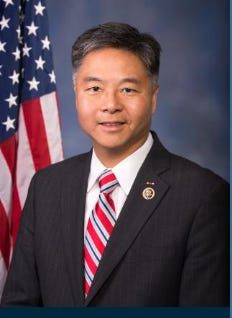
For years, US Rep. Ted Lieu has cultivated the image of a mainstream American politician: Stanford graduate, Air Force veteran, lawyer, prosecutor, and member of Congress.
But publicly available Chinese-language materials reveal a lesser-known network surrounding Lieu’s family and longtime associates — one tied to a Chinese-language newspaper deeply embedded in the Chinese Communist Party’s overseas united front and external propaganda ecosystem.
What the public record does show is something more nuanced and more revealing: a decades-long pattern of interaction between Lieu, his family circle, and a media organization that openly collaborated with institutions, narratives, and networks associated with Beijing’s overseas influence strategy.
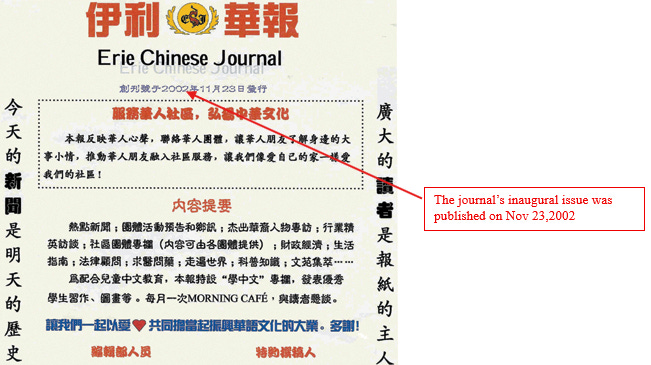
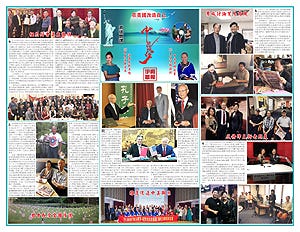
At the center of this network is Erie Chinese Journal (伊利华报), a Chinese-language newspaper founded in Cleveland, Ohio on 23rd November 2002 by publisher and editor Anne Ying Pu (浦瑛) aka Ying Pu or Pu Ying.
The newspaper presents itself as a community publication promoting Chinese culture and U.S.-China friendship.
But its own articles reveal extensive interaction with:
PRC overseas Chinese affairs systems
China News Service
Confucius Institutes
CCP-linked overseas Chinese media forums
Chinese consular networks
local political and business relationship-building efforts
“China Dream” propaganda narratives
Belt and Road messaging
Over time, Erie Chinese Journal increasingly positioned itself not merely as a newspaper, but as a cross-border relationship platform connecting American local networks with Chinese political, cultural, and economic institutions.
Anne Ying Pu’s own writings provide insight into the political-organizational environment from which she emerged.
Chinese-language biographical profiles state she attended the Shanghai Trade Union Cadre Management Institute, where many students reportedly came from state-sector and party-affiliated systems.
In another article, Ying Pu wrote that she once worked in a Shanghai office connected to “Revitalize China Reading” activities and stated:
“Our leader was Zeng Qinghong.”
Zeng Qinghong later became one of the most powerful CCP leaders, serving on the CCP Politburo Standing Committee.
This does not prove direct political affiliation. But it strongly suggests that Ying Pu operated inside a political-organizational environment closely connected to CCP institutional structures long before immigrating to the United States.
Over the years, Erie Chinese Journal openly developed ties with multiple Beijing-linked organizations.
The newspaper publicly stated that:
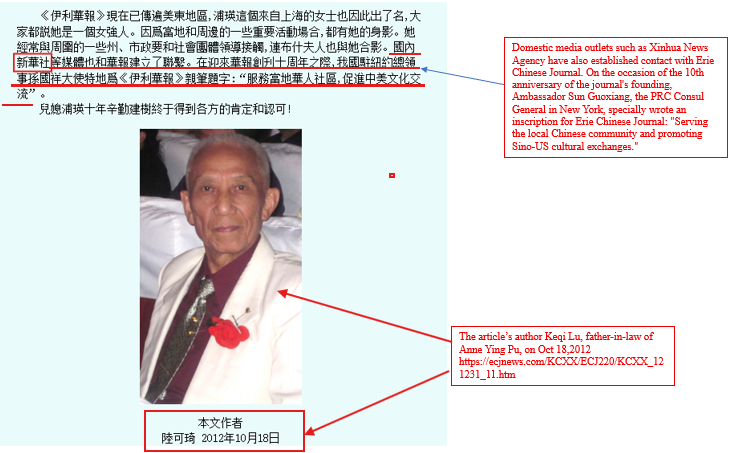
Xinhua News Agency established contact with the paper
PRC consular officials endorsed its work
the newspaper participated in World Chinese Media Forums organized by China News Service
local Confucius Institute leadership maintained cooperative relationships with the paper
One Erie Chinese Journal article explicitly stated:
“The Confucius Institute will continue supporting Erie Chinese Journal.”
This relationship matters because Confucius Institutes were widely criticized across the United States and Europe as instruments of CCP soft power and overseas influence.
One of the clearest indicators of Erie Chinese Journal’s political alignment is its participation in the World Chinese Media Forum.
The forum is organized by China News Service together with PRC overseas Chinese affairs agencies.
Its official declarations promoted:
Xi Jinping’s “China Dream”
“telling China’s story well”
building a new “international discourse system”
strengthening cooperation between Chinese state media and overseas Chinese-language media
Erie Chinese Journal not only attended these events but enthusiastically republished the forum’s political declarations and messaging.
The newspaper promoted the idea that overseas Chinese media had a “mission” to help spread China’s national narrative globally.
That is not politically neutral journalism.
It is participation in a transnational propaganda framework.
A particularly revealing 2018 article by Ying Pu was titled:
“Promoting and Safeguarding U.S.-China Relations”
In that article, Ying Pu described Erie Chinese Journal as actively helping build political, economic, and cultural ties between American local institutions and Chinese cities.
The article discussed:
sister-city initiatives
cooperation with local political figures
ties with Confucius Institute leadership
U.S.-China economic and cultural integration
Belt and Road narratives
“China going global”
Ying Pu wrote that Erie Chinese Journal had “done practical things to help connect China and the United States.”
This is significant because it shows the newspaper openly viewing itself not simply as a media outlet, but as an active facilitator of cross-border political and economic networking.
The same article positively framed Belt and Road messaging, writing:
“The ancient Silk Road and today’s Belt and Road share the same mission.”
It further described:
“Chinese politics, economy, and culture going global.”
This went far beyond cultural reporting.
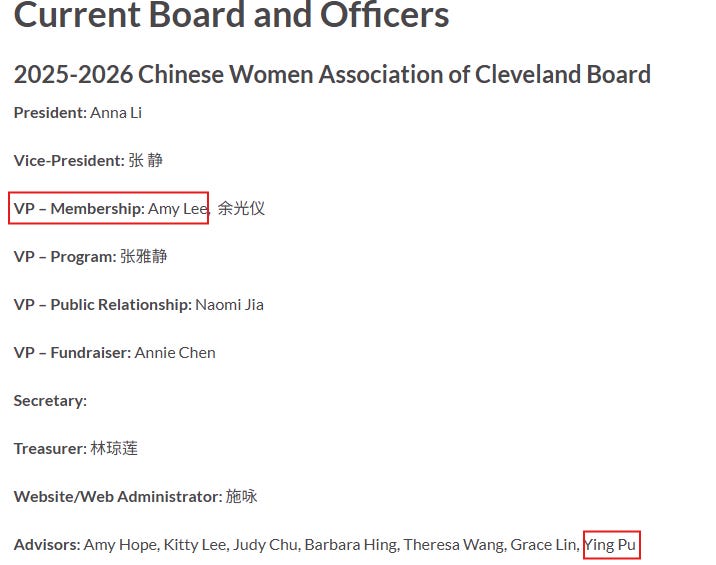
Another layer of the network involves the Cleveland Chinese Women Association (CWAC).
Erie Chinese Journal regularly promoted the activities and membership campaigns of the organization.
Membership documents published by the paper identified the group in both Chinese and English as:
Chinese Women Association of Cleveland
(克里夫蘭中華婦女聯誼會)
The paper also published organizational information involving Amy Lee, who appeared in public materials associated with the organization.
This matters because united front influence systems frequently operate through overlapping social structures such as:
women’s associations
cultural groups
hometown organizations
business associations
media networks
educational exchanges
Rather than exclusively through formal political institutions.
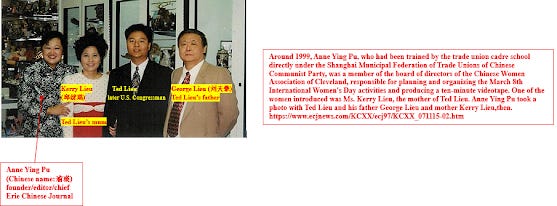
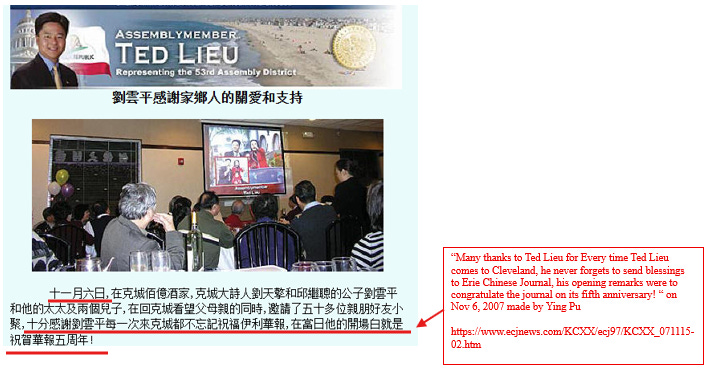
Publicly archived materials indicate Ted Lieu’s relationship with Erie Chinese Journal spans nearly two decades.
Ying Pu later wrote that she first met Ted Lieu approximately eight years before a 2007 article celebrating the newspaper’s fifth anniversary.
That places the beginning of the relationship around 1999, before Ted Lieu’s rise to major political office
A 2007 Erie Chinese Journal article described Ted Lieu attending a family gathering in Cleveland and publicly congratulating the paper on its fifth anniversary.
The article stated:
“Every time Ted Lieu comes to Cleveland, he never forgets to send blessings to Erie Chinese Journal.”
This reflected a continuing relationship between the congressman’s family and the paper’s leadership.
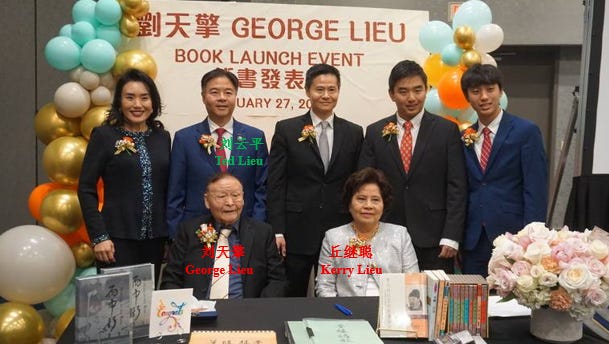
Ted Lieu’s father, George Lieu (刘天擎), maintained a long-running poetry column in Erie Chinese Journal.
The significance is not the poetry itself.
The significance is that Erie Chinese Journal was already deeply integrated into CCP-linked overseas Chinese media and united front ecosystems by that point.
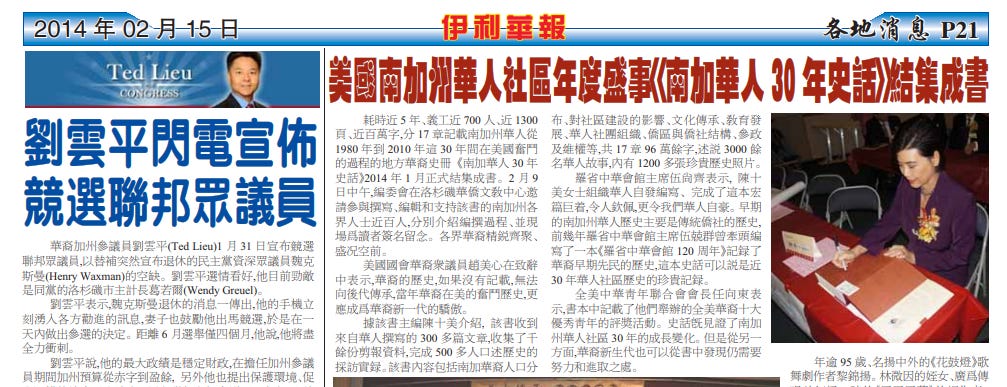
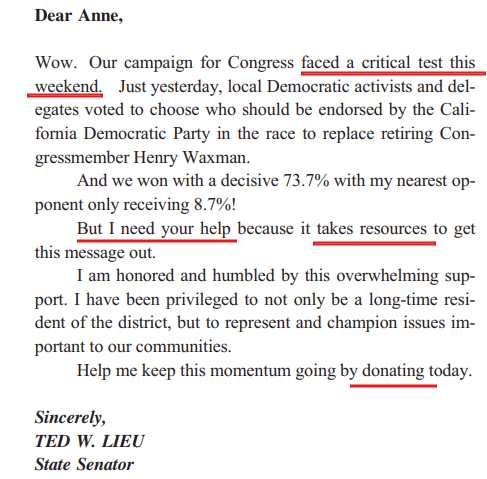
In 2014, Erie Chinese Journal published campaign fundraising-related material connected to Ted Lieu’s congressional campaign.
This demonstrated that the relationship between Lieu and the paper extended beyond occasional cultural interaction into the political sphere.
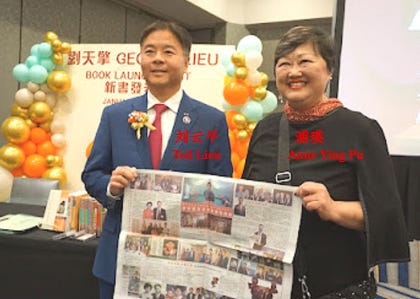
On January 27, 2024, Ted Lieu appeared publicly with Ying Pu at a California book launch event for George Lieu’s poetry collection.
Photographs from the event documented the continuing relationship between Lieu’s family and Erie Chinese Journal leadership.
Individually, none of these incidents prove direct CCP control.
Taken together, however, they reveal something more important:
a long-term ecosystem of relationships connecting:
overseas Chinese media
CCP-aligned messaging systems
Confucius Institutes
overseas Chinese affairs networks
community associations
local American political figures
cross-border business and cultural initiatives
This is how modern CCP overseas influence operations often function.
The issue is how normalized CCP-linked influence ecosystems have become within parts of the American Chinese-language media and community landscape — and how closely public officials sometimes interact with those systems over long periods of time.
Ying Pu later stated she first met Ted Lieu around this period.
Erie Chinese Journal founded in Cleveland.
The newspaper begins participating in World Chinese Media Forum activities organized by China News Service.
Ted Lieu publicly congratulates Erie Chinese Journal’s fifth anniversary.
Erie Chinese Journal participates in CCP-linked “China Dream” media forum activities.
The paper publishes Ted Lieu campaign fundraising-related material.
Ying Pu publishes article describing Erie Chinese Journal’s role in promoting U.S.-China political, economic, and cultural integration.
Anniversary articles highlight ties with Xinhua, PRC consular officials, and overseas Chinese affairs systems.
Ted Lieu appears publicly with Ying Pu at George Lieu’s California book launch event.
Erie Chinese Journal presents a revealing example of how CCP-aligned overseas influence systems can operate through cultural media, community organizations, social relationships, and decades-long institutional integration rather than through overt party structures alone.
The story is not about Hollywood-style espionage.
It is about networks.
And about how influence becomes normalized long before most people recognize it.#Democracy #Christ #Peace #Freedom #Liberty #Humanrights #人权 #法治 #宪政 #独立审计 #司法独立 #独立自治