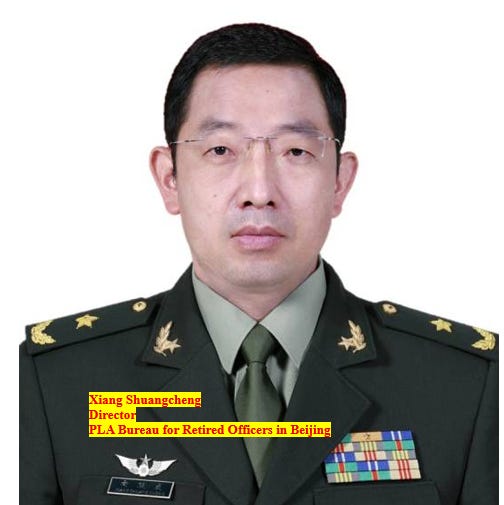
Xiang Shuangcheng (向双成) served as a representative in the Beijing Municipal Assembly while simultaneously serving as Director of the PLA Beijing Retired Cadre Service Administration.
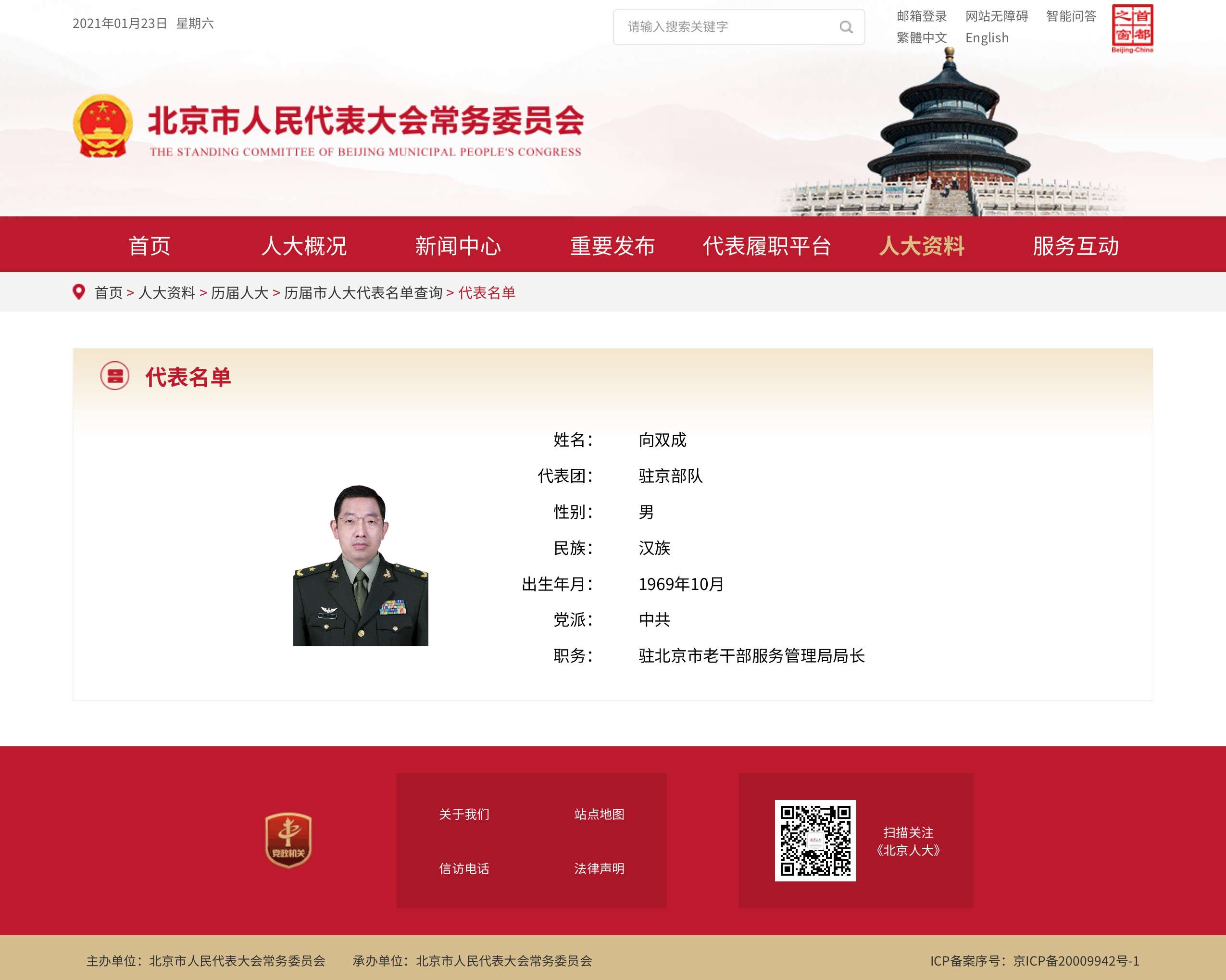
This is not a routine administrative office.
In July 2017, the Central Military Commission established the PLA Beijing Retired Cadre Service Administration under the Beijing Garrison Command. Publicly available information indicates that it is a deputy corps-level (副军级) military organization—only half a grade below the Beijing Garrison itself.
The administration was created to consolidate and command the PLA’s entire retired-officer support system across Beijing. It oversees:
• The Beijing Retired Cadre Activity Center;
• Five deputy division-level Comprehensive Service and Support Centers;
• A command and monitoring center;
• Virtually all PLA retirement and convalescent facilities (干休所) throughout Beijing.
Each Comprehensive Service and Support Center manages multiple military retirement compounds. For example, the Fifth Center supervises facilities such as the Xicheng No. 4 Retired Cadre Rest Home and the Haidian No. 43 Retired Cadre Rest Home.
Because the organization is subordinate to the Beijing Garrison Command, which belongs to the PLA Army, its active-duty personnel wear PLA Army shoulder patches.
Taken together, public reports indicate that this is a large military organization with extensive personnel and management responsibilities—not merely a ceremonial office for retirees.
The administration’s responsibilities extend beyond retirement services.
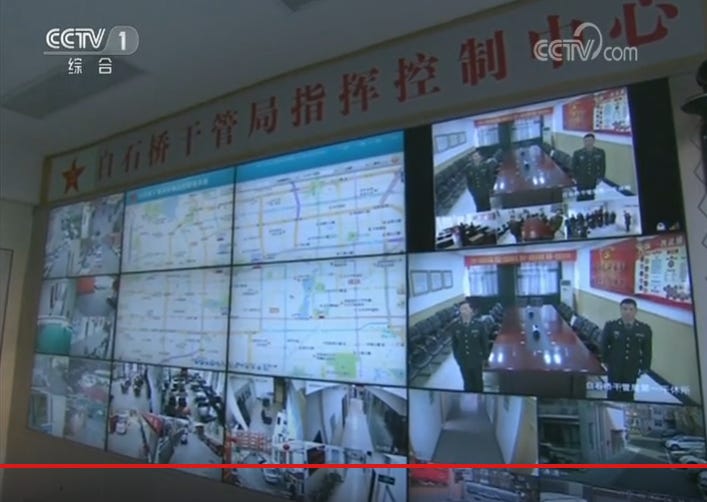
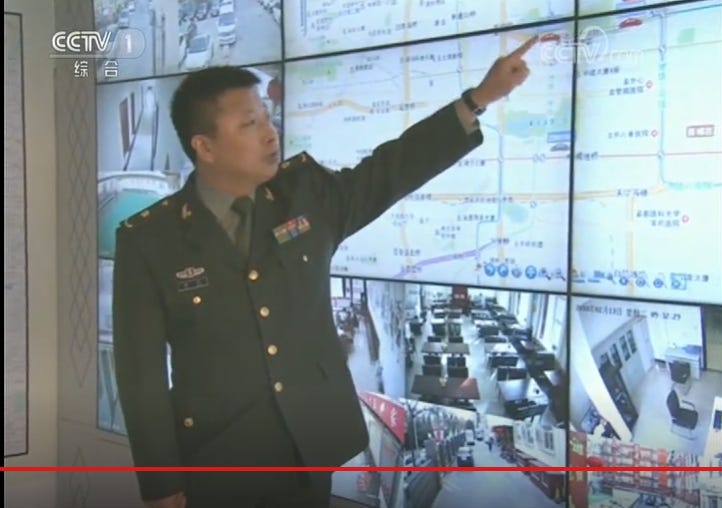
Official organizational descriptions state that it includes a dedicated Command and Monitoring Center. This was further confirmed in February 2018, when Vice Chairman of the Central Military Commission Zhang Youxia visited the PLA Beijing Retired Cadre Service Administration. According to Xinhua News Agency, Zhang toured the organization’s Command and Monitoring Center, Cultural Activity Center, medical clinic, and dining facilities while reviewing its service and support operations.
State television footage of the visit provided a rare look inside the Command and Monitoring Center. The control room featured a large video wall displaying multiple simultaneous live camera feeds, identified on screen as the “Baishiqiao Cadre Management Bureau Command and Control Center” (白石桥干管局指挥控制中心).
Taken together, the official organizational structure, Xinhua News Agency’s report, and the CCTV footage indicate that the administration maintains centralized command-and-monitoring capabilities alongside its responsibility for managing Beijing’s network of military retirement facilities. The publicly available material does not specify what each camera feed monitored, but it clearly shows that the organization operates dedicated command-and-control infrastructure rather than functioning solely as an administrative office.
🏯 禁卫军的“特务疗养网络”:解构驻京老干部局的政治垂管与反政变密码
当北京卫戍区下属的中国人民解放军驻北京市老干部服务管理局局长向双成出现在北京市人大(地方苏维埃)的代表名册中时,普通观察者只将其视为一个“民政福利或后勤养老部门”的官僚。但如果从苏维埃政权的核心安全架构与内控制度进行解构,这一庞大机构的真实面目便会暴露无遗:这是一个由军委直接授意组建、隶属北京卫戍区、行政级别高达副军级的“高级将领监控与特务控制网络”。
这一机构的密集嵌入与庞大体量,根本不是为了“养老”,而是极权体制为了防范内部分裂、监控退役高阶军官、以及锁定政治老人而设计的终极维稳锁扣。
⚙️ 驻京老干部服务管理局的核心政治内控矩阵
                       [中央军委 (CMC)]
                              │
                              ▼
                [北京卫戍区 (卫戍戒严中枢)]
                              │
        ┌─────────────────────┴─────────────────────┐
        ▼                                           ▼
 [局长:向双成] (副军级少将/人大代表)         [常规作战/政治清洗系统]
        │                                     (王向龙 / 王军 / 王炜华)
        ├─► 1. 物理控制与“特务监视”在京政治老人
        ├─► 2. 利用指挥监控中心实施全时信息屏蔽
        └─► 3. 缝合地方民政财政,将高干特权开支洗入市政账目
💡 1. 物理控制与“退役将领反政变监控网络”
北京是中共历代政治老人、退役军委委员、各大军区前司令员及政委最集中的地方。这些人在军中拥有深厚的人脉网络和门生故吏,是极权中枢最忌惮的“党内/军内潜在反对派”源头。
黑箱机制: 向双成所统领的驻京老干部局,通过下辖的五个副师级综合服务保障中心,将触角死死扎进海淀、西城等核心权力区的每一个干休所。这并非温情关怀,而是行使“就地物理监控”。通过统一接收、统一整编、统一命名,所有退役高级将领的日常生活、私人宴请、外出会友甚至日常就医,全部被置于卫戍区的直接管控之下,彻底斩断了退役将领与现役野战军主官私下串联、发动政变或串供的可能性。
💡 2. 机关“指挥监控中心”的总体特务功能
官方资料直接提及,该局机关设有“指挥监控中心”。在一个名义上的养老机构里设立“指挥监控”中枢,本身就是极权政治的黑色幽默。
黑箱机制: 该监控中心不仅负责干休所周边的物理安防,更是对高级离退休干部的通讯设备、日常言论和家庭网络进行数据截留与技术监控的军方据点。向双成少将的指挥中心可以确保,任何老干部一旦出现“政治对齐不绝对”、试图向外界或者海外披露内部大清洗、政治黑幕或高层健康状况的迹象,卫戍区可以瞬间通过五个保障中心实施断网、软禁或物理隔离。
💡 3. 地方财政的“无限输血”与特权隐蔽
数以万计的军队老干部及其庞大家属的医疗、疗养、警卫和特供开支是一个极其惊人的数字。
黑箱机制: 向双成作为局长列席北京市人大,核心战略任务之一就是主持该庞大军方资产与北京市地方政府的“利益缝合”。通过人大立法和预算表决,将这些本属于军费暗池的高干疗养、干休所扩建、军属编制安置等费用,完美伪装成北京市地方的“社会保障、社区综合治理、老龄化公共服务”等 civilian 财政预算支出。用全体北京市纳税人的钱,来供养这支监控党内老人的庞大卫戍部队。