USA China Entrepreneurs Association Opens Xinjiang Office Under CCP Oversight

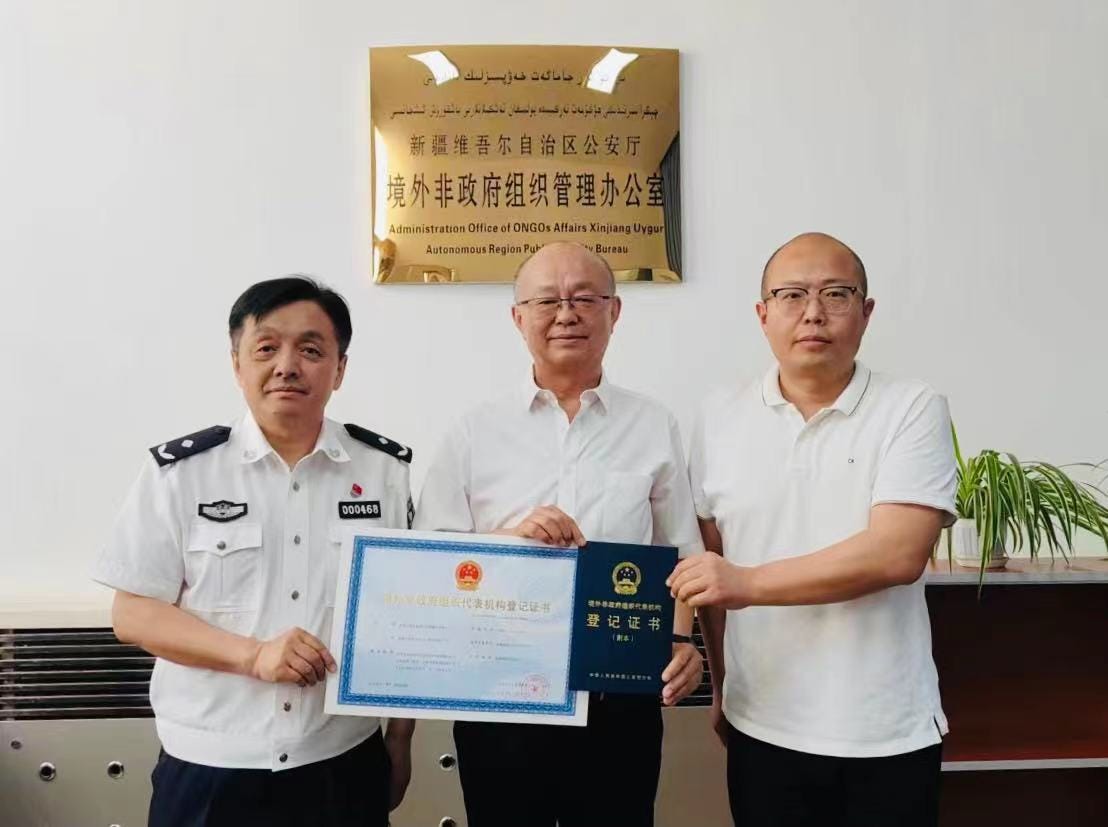
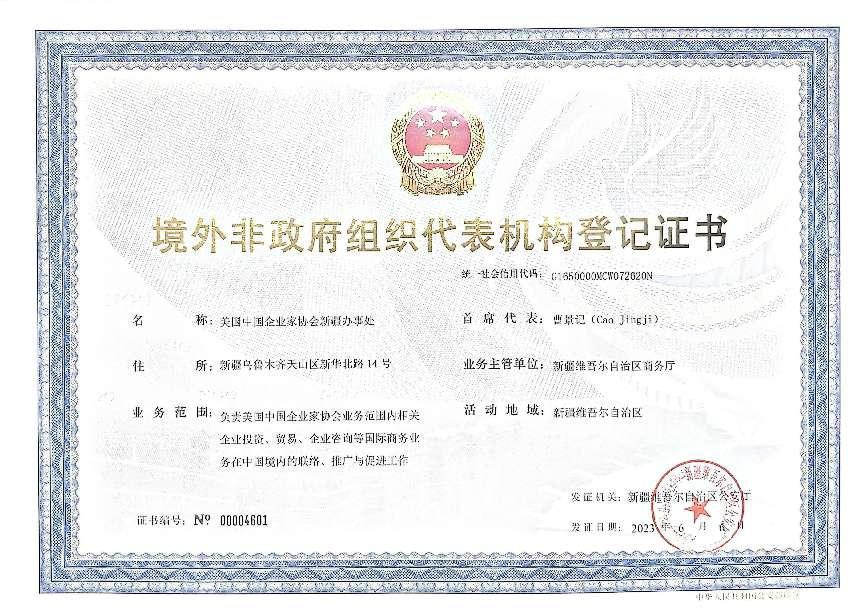
On June 15, 2023, the Xinjiang Uygur Autonomous Region Department of Commerce officially approved the establishment of a USA China Entrepreneurs Association (UCEA, 美国中国企业家协会) representative office in Xinjiang. The office received its Foreign NGO Representative Office Certificate from the Xinjiang Public Security Bureau’s Office for the Administration of Overseas NGOs, underscoring direct CCP supervision. Images from the ceremony show personnel in CCP Public Security uniforms, signaling security sector involvement in the office’s formal inauguration.

Scope and Purpose:
The Xinjiang office is mandated to handle UCEA’s business in the region, including investment, trade, corporate consulting, and international business facilitation. This office joins eight other UCEA offices and seven committees across China, forming a network that integrates foreign business leaders with CCP-directed structures.

Official Statements:
Deputy Director Li Yuan of the Xinjiang Public Security Bureau’s NGO office emphasized that the UCEA Xinjiang office must:

  • Strictly comply with Chinese law and regulations

  • Operate within the registered business scope

  • Conduct activities supporting Chinese “public welfare” i.e. military-civil fusion scheme disguised as public welfare

  • Avoid harming China’s national unity, security, or ethnic solidarity

  • Avoid damaging state, public, corporate, or citizen interests

The Xinjiang office will additionally establish specialized committees, including:

  • China-U.S. Legal Affairs Committee (Xinjiang)

  • China-U.S. Financial Services Committee (Xinjiang)

  • China-U.S. Women Entrepreneurs Committee (Xinjiang)

  • China-U.S. Import-Export Trade Committee (Xinjiang)

Strategic Implications:
Xinjiang, a core Belt and Road Initiative region, positions this office as a critical CCP-managed hub for U.S.–China economic, cultural, and investment exchanges. While publicly framed as facilitating business and cultural cooperation, UCEA offices—including Xinjiang—operate under CCP legal oversight, Ministry of Public Security authority, and embedded propaganda guidance. Images of CCP uniformed personnel at official events reinforce that even ostensibly civilian NGOs are structurally linked to PRC security and governance systems.

U.S. Risk:
Engagement with UCEA networks exposes foreign participants to:

  • Legal and reputational risk due to CCP-mandated oversight

  • Potential integration into PRC intelligence or influence operations

  • Direct involvement in regions where the CCP closely monitors security and ethnic affairs

Chief Representative:
Cao Jingji (曹景记) stated the office will serve as a bridge for U.S.–Xinjiang cooperation and actively engage top enterprises and professionals in regional development initiatives.
This development demonstrates that UCEA is not a neutral business association, but a vehicle for CCP-directed economic, cultural, and potentially security-aligned activity in strategically sensitive regions like Xinjiang.#Democracy #Christ #Peace #Freedom #Liberty #Humanrights #人权 #法治 #宪政 #独立审计 #司法独立 #联邦制 #独立自治

USA China Entrepreneurs Association & International Police and Veterans Foundation: CCP-PLA Networks in Plain Sight

Summary:
In 2018, International Police and Veterans Foundation (IPVF) chair Dr. Michael Leung (麦克·梁) was reported as chairman of the USA China Entrepreneurs Association (UCEA, 美国中国企业家协会). Chinese media praised him as a “bridge” promoting U.S.–China business and cultural ties, highlighting his Lifetime Outstanding Achievement Award signed by President Donald Trump and presented by IPVF representatives.

Leung has been active in roles directly aligned with CCP United Front objectives for a long-term:

  • Chairman, USA China Entrepreneurs Association (UCEA)

  • Chair, American African Asia Chamber of Commerce (AAACC)

  • Founder during the 2007 financial crisis of the AAACC, an organization fostering transnational commerce under CCP-friendly networks

The overlap between UCEA and IPVF leadership is deliberate, not incidental. Both operate in the gray zone of “people-to-people diplomacy,” formally non-governmental yet structurally embedded in CCP oversight channels.


CCP Oversight of UCEA’s Beijing Office

Official registration confirms UCEA’s Beijing Representative Office is under direct CCP oversight:

  • Chief Representative: Yan Zongwei (闫宗伟), a propaganda worker for People’s Daily (中宣部, Central Propaganda Department)

  • Supervisory Unit: Beijing Municipal Commerce Bureau (北京市商务委员会), a regime body near Zhongnanhai

  • Business Scope: Liaison, promotion, and facilitation of international business within UCEA’s remit

  • Activity Regions: Beijing, Tianjin, Hebei, Shanxi

  • Registration: 2018-02-05; administrative changes in 2021; annual inspections 2018–2024: all “Qualified”

Under the 2017 Law on the Management of Foreign NGOs, the Beijing office—and, by extension, the NGO’s international network—is legally bound to submit activity plans, personnel records, and funding details to CCP authorities. The Ministry of Public Security and state organs hold powers for leadership, command, and evaluation, extending the Party’s influence beyond China.


National Defense Implications

The PRC National Defense Law legally requires all organizations—including foreign NGOs in China—to support national defense initiatives:

  • Article 7: All organizations must participate in and facilitate national defense construction

  • Article 21: Armed forces operate under CCP leadership

  • Article 22: Defines PLA, People’s Armed Police, and militia

  • Article 56: Citizens and organizations must assist military training, readiness, and operations

This legal framework creates a direct line by which U.S. participants in UCEA-linked programs could be incorporated into CCP-directed military and intelligence networks, potentially unwittingly aiding PRC national security objectives.


IPVF: A Soft-Power Conduit

IPVF (国际警察暨退伍军人基金会) presents itself as a humanitarian platform for police and veteran diplomacy, promoting slogans like:

“Peace and Prosperity — Chinese do not fight Chinese; Americans do not fight Americans.”

Leadership overlaps UCEA and includes:

  • Dr. Michael Leung – Asia Region President, AAACC

  • Dr. Bang-Ning Liu (刘邦宁) – Vice-Chairman, IPVF; Regional Chairman in Taiwan

  • Vincent Chiu – Secretary-General, BMCA; COO, Fuki Management Consulting

  • Nina Tien – Secretary-General, IMC-Chinese Taipei; U.S.-Registered Financial Planner

Their professional networks intersect cross-strait commerce, PLA-linked entities, and CCP-aligned propaganda channels, making IPVF a vector for CCP influence among U.S. police and veteran communities.


Recent Events Highlighting PLA-Linked Networks

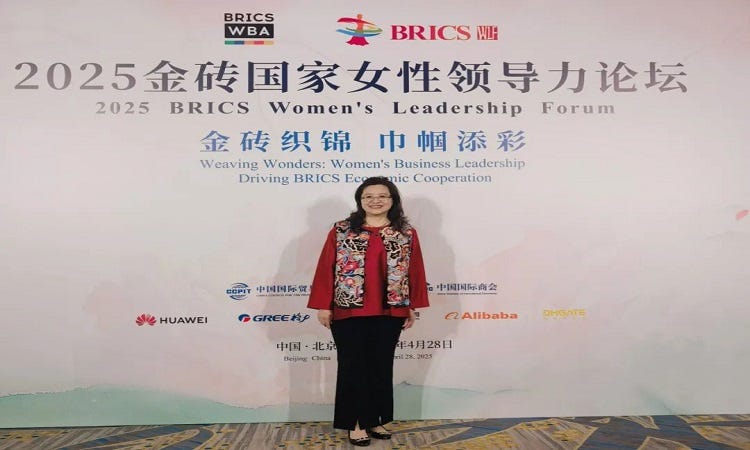
2025 BRICS Women’s Leadership Forum (April 28, 2025):

  • UCEA represented by Executive Vice-Chair Han Xiangyu (韩香玉)

  • Hosted by CCP-affiliated China Council for the Promotion of International Trade (CCPIT) and China Chamber of International Commerce (CCOIC)

  • Attendance by Huawei and Alibaba, both PLA-supporting corporations

  • Over 300 women leaders from BRICS and BRICS+ countries

  • Soft-power, leadership, and entrepreneurship exchanges directly supervised within CCP frameworks

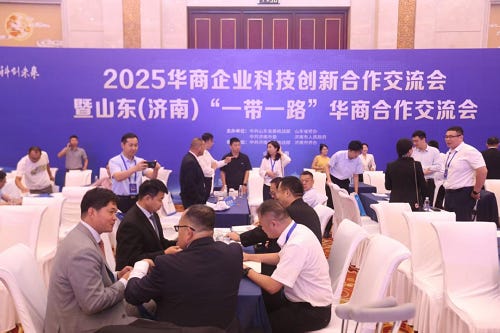
2025 Shandong Tech & Innovation Exchange (Aug 28, 2025):

  • Hosted by CCP United Front Work Department of Shandong Province (省统战部/侨办) with municipal government support

  • UCEA’s Vice Secretary-General Liu Xiaojuan participated

  • Events include “Belt and Road” business exchanges and city-level industrial tours

  • Reinforces CCP-aligned networks between U.S. diaspora business leaders and Chinese government/PLA-linked entities


Implications for U.S. Personnel and Partners

Engagement with UCEA/IPVF networks is not neutral:

  • Provides direct exposure to CCP supervision and PLA-linked influence operations

  • Partnerships, training programs, and cultural exchanges could be leveraged for intelligence, recruitment, or operational objectives

  • U.S. police, veteran, and business communities risk legal, reputational, and national security consequences

  • Even well-intentioned collaborations may embed participants into CCP-directed strategic initiatives, potentially including surveillance or disruption of dissidents

The mysterious death of Charlie Kirk underscores the stakes: U.S. engagement with China-registered NGOs requires extreme caution.#Democracy #Christ #Peace #Freedom #Liberty #Humanrights #人权 #法治 #宪政 #独立审计 #司法独立 #联邦制 #独立自治

UCEA at 2025 BRICS Women’s Leadership Forum — A CCP-Linked Platform for Influence

640 (5).jpg

On April 28, 2025, the USA China Entrepreneurs Association (UCEA, 美国中国企业家协会) attended the 2025 BRICS Women’s Leadership Forum, hosted by the CCP-affiliated China Council for the Promotion of International Trade (CCPIT) and the China Chamber of International Commerce (CCOIC). UCEA’s Executive Vice-Chair Han Xiangyu (韩香玉) represented the organization, engaging directly with government and business leaders under the banner of women’s entrepreneurship.

The forum, themed “Weaving BRICS, Adding Color with Women”, convened over 300 women leaders from BRICS and BRICS+ countries, including diplomats, academics, and senior executives. Visual evidence from the event shows participation by CCP PLA-supporting corporations Huawei and Alibaba, making clear the Party-state’s strategic guidance and influence over attendee networks.

Though presented as a cultural and leadership exchange, the forum operates firmly within CCP oversight channels, with corporate and organizational actors aligned to the PLA’s national security and global influence agenda. For U.S. participants and their partners, engagement carries serious reputational and security risks, as networks and collaborations may be co-opted to advance CCP military, intelligence, or strategic objectives.

Even seemingly benign initiatives—women’s leadership, entrepreneurship, and cross-border cultural exchange—can serve as vectors for PLA-aligned CCP influence, embedding foreign actors into Party-directed strategic and soft-power operations. #Democracy #Christ #Peace #Freedom #Liberty #Humanrights #人权 #法治 #宪政 #独立审计 #司法独立 #联邦制 #独立自治

USA China Entrepreneurs Association (UCEA) Participates in 2025 Shandong Overseas Chinese Business & Tech Innovation Exchange

微信图片_2025-09-01_154936_085.png

On August 28, 2025, the Shandong Overseas Chinese Business & Technology Innovation Exchange Conference officially opened in Jinan. The event was jointly hosted by the United Front Work Department of the Shandong Provincial Committee (Provincial Overseas Chinese Affairs Office) and the municipal governments of Jinan and Yantai, with operational support from the municipal United Front departments (overseas Chinese offices) of Jinan, Qingdao, and Yantai.

The conference, themed “Harness Overseas Chinese Talent, Innovate the Future”, positioned itself as a bridge for Shandong to expand ties with domestic and overseas Chinese entrepreneurs, leveraging their influence and expertise to support Shandong’s development as a hub of international openness and Belt and Road cooperation. Shandong United Front Minister Deng Yunfeng (邓云锋) claimed that the province aims to build a market-driven, law-based, and globally oriented business environment, assuring overseas investors of a stable, secure, and welcoming climate.The multi-day agenda included a wide array of specialized sessions:

  • Shandong Province’s green, low-carbon, high-quality development briefings

  • Belt and Road policy promotion

  • Jinan municipal industry chain exchange meetings

  • “Connecting Yantai with Global Trade” business negotiation sessions

  • “Linking Five Continents, Gathering Wisdom in Qingdao” roundtable discussions
    Participants also conducted on-site inspections of local enterprises and projects in Jinan, Qingdao, and Yantai.

Representing the USA China Entrepreneurs Association (UCEA, 美国中国企业家协会)Deputy Secretary-General Liu Xiaojun (刘晓娟) engaged with municipal officials and local business leaders, reportedly conducting substantive discussions on collaboration and investment opportunities.

Strategic Context

While the conference appears as a standard business and innovation exchange, it is important to note the United Front oversight embedded in the event. The organizers—provincial and municipal United Front offices—are CCP organs responsible for guiding overseas Chinese engagement and ensuring alignment with party-state strategic objectives. Participation by U.S.-based associations such as UCEA, which is registered under CCP supervision in Beijing, places members and affiliates directly within a network of political and operational influence designed to extend CCP reach abroad.

This underscores a persistent pattern: events framed as business, cultural, or technological exchanges also serve as nodes for CCP influence, building ties with overseas Chinese and foreign partners under controlled, politically aligned conditions. For U.S. participants, including corporate representatives, investors, or non-profit affiliates of UCEA, involvement carries non-obvious political and security implications that merit close scrutiny.#Democracy #Christ #Peace #Freedom #Liberty #Humanrights #人权 #法治 #宪政 #独立审计 #司法独立 #联邦制 #独立自治

Ad1