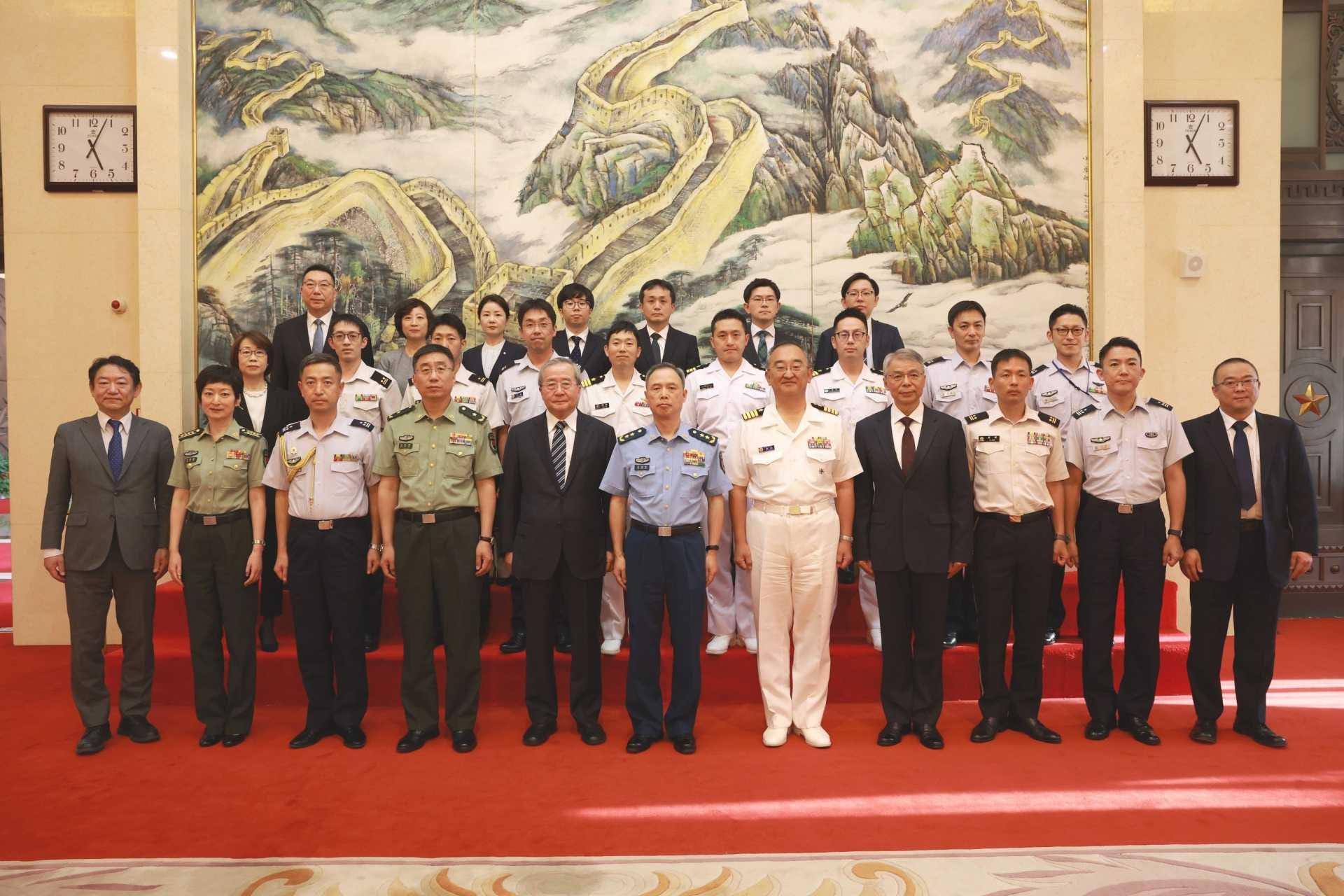
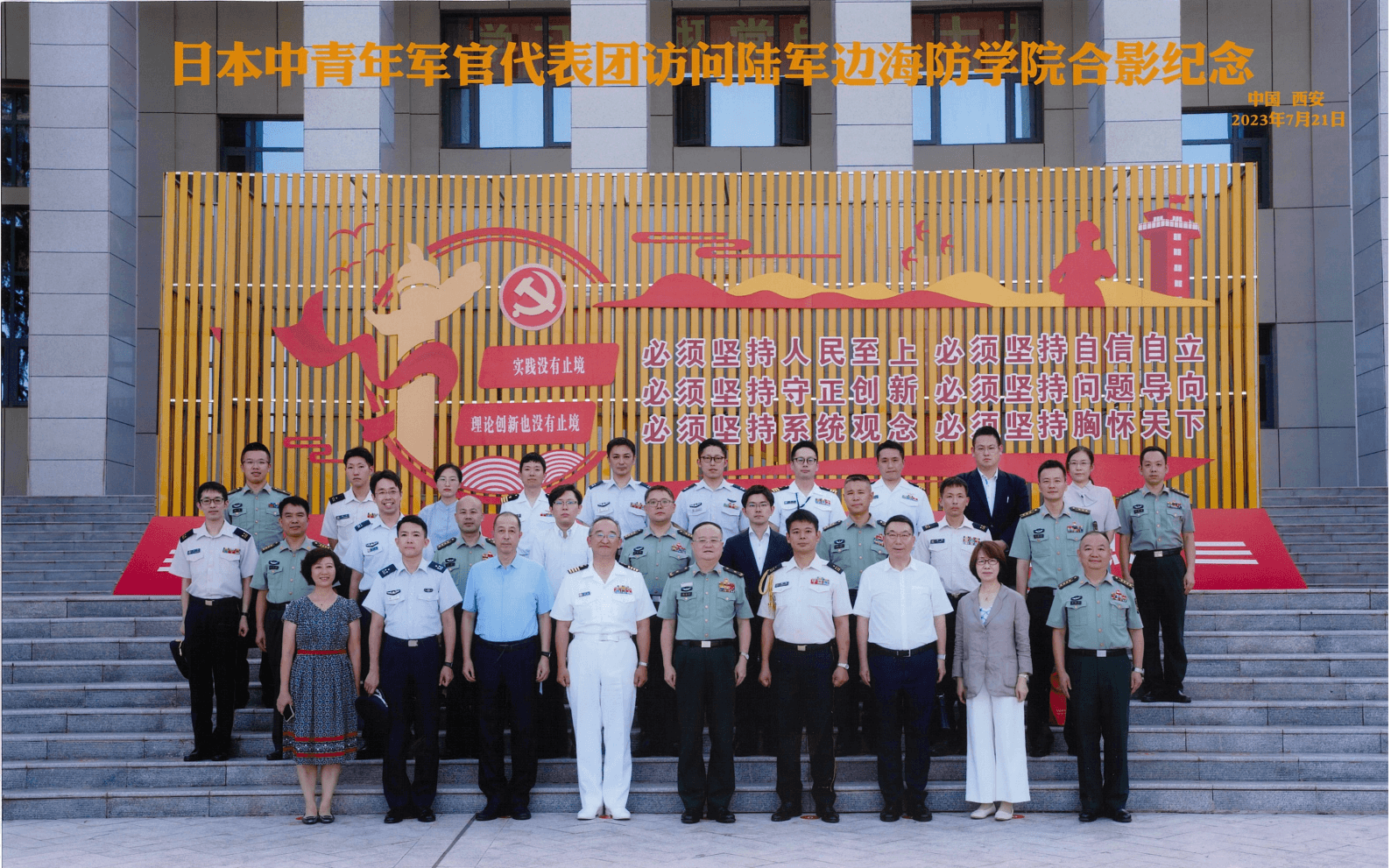
In 2023 the Sasakawa Peace Foundation (through its Sasakawa Japan–China Friendship Fund activities) and China International Strategic Society restarted its long-running field-officer exchange between Japan Self-Defense Forces (JSDF) officers and officers of the People’s Liberation Army (PLA) of the Chinese Communist Party after a multi-year suspension. On paper this is a private, confidence-building initiative. In practice it places recurring, structured access to mid-career JSDF officers in the hands of a military that answers to the Chinese Communist Party (CCP) — and that reality demands Japan tighten guardrails, or suspend the program until robust safeguards are in place.
China International Strategic Society (CISS) – Overview
China International Strategic Society (CISS)
Organization Type: Social Association / Think Tank
Registration Number: 4088
Supervisory Authority: Joint Staff Department of the CCP’s Central Military Commission
Phone: +86-10-62016943
Website: www.ciiss.org.cn
Source: https://npo.hao86.com/中国国际战略学会/
The China International Strategic Society (a/k/a China Institute for International Strategic Studies, CIISS, CISS, or any other alias) is a national-level think tank specializing in international strategy, security, and geopolitical research. It was established over decades ago to serve as an advisory body for Chinese national and military leadership, coordinating closely with state and PLA strategic priorities.
Role and Mission:
Conducts research on international strategic developments, global security, world political economy, and regional issues.
Provides policy advice and consultation to government agencies, the PLA, and state-owned enterprises.
Hosts and participates in academic exchanges with foreign strategic research institutions.
Supports China’s broader national and military diplomacy, acting as a high-level strategic advisory body (“智囊”).
Leadership and Affiliations:
Key PLA figures have historically held leadership roles in CISS, including the Vice Chief of the PLA Joint Staff Department and other senior officers.
Past reports and conferences highlight the society’s alignment with national security goals, military modernization, and China’s strategic initiatives, including the “Chinese Dream” and the concept of a “Community of Shared Future for Mankind.”
Senior PLA leaders and government officials regularly participate in CISS events, signaling its high-level influence on policy.
Former Name: Beijing International Strategic Studies Society (established October 1979)
Renaming: Adopted the current name, China International Strategic Society, in October 1992
Founding and Leadership: High-ranking PLA generals, including Generals Wu Xiuquan, Xu Xin, Xiong Guangkai, Ma Xiaotian, Qi Jianguo, Sun Jianguo, and Chen Guangjun, have served as presidents; the current president is General Jing Jianfeng, with Sun Jianguo as honorary president.
Organizational Structure:
Governing Body: Board of Directors, comprising president, vice presidents, executive directors, and secretary general
Executive Office: Handles daily operations, planning, international exchange, academic research, editing and publication
Research Centers: International Strategy, Security Strategy, Asia-Pacific Security, Arms Control and Disarmament, Peacekeeping, Counterterrorism, plus specialized project teams
Activities and Influence:
The society hosts conferences, research centers, and seminars on topics such as counter-terrorism, arms control, Asia-Pacific security, and comprehensive national security.
It has published numerous policy reports and research papers, many with participation from PLA-affiliated scholars.
CISS maintains academic and strategic ties with over 100 international institutions in 50+ countries. It has hosted former heads of state, ministers, and foreign policy experts to facilitate high-level exchanges aligned with China’s strategic interests.
Connection to Japan–China Military Exchanges:
The Sasakawa Japan-China Friendship Fund, together with CISS, organizes the annual JSDF–PLA field officer exchange program, first launched in 2001.
Through this partnership, Japanese officers regularly visit PLA facilities and interact with PLA personnel in discussions on security, strategy, and operational topics.
Given CISS’s close ties to the PLA and its role as a strategic advisory body, these exchanges are not purely academic: they are conducted within a framework aligned with CCP’s national and military objectives.
References:
PLA Daily reporting on CISS annual conferences and leadership speeches (Feb 2016)
Sina / China News reporting on the 30-year history and CISS’s role as a strategic think tank (Apr 2009)
The China International Strategic Society (CISS), often referred to as a PLA “military think tank”, regularly holds annual conferences attended by senior diplomats, retired and active PLA generals, and experts in international strategy, economics, and technology.
For example, at the 2002 CISS annual meeting in Beijing, over 100 participants from the PLA and diplomatic corps attended. General Xiong Guangkai, then Vice Chief of the PLA General Staff and president of CISS, delivered a keynote report on analyzing the international situation through the lens of the Chinese Communist Party’s 16th National Congress.
His presentation emphasized:
Correctly understanding strategic opportunities in relation to perceived threats
Linking counterterrorism with anti-hegemonic policy
Balancing economic globalization with diverse development models
These conferences demonstrate that CISS is closely integrated with the PLA and national strategic planning, serving as a platform to translate Party directives into high-level strategic discussion, and influencing the framing of international relations and security policies.
Implication for JSDF Exchanges:
Japanese officers interacting with CISS are engaging with an institution that is functionally part of PLA strategic planning, not a neutral civilian research organization. This reinforces the need for heightened biosecurity measures, mandatory epidemic insurance, and operational caution for personnel participating in such exchanges.
CISS 2013 Annual Meeting – Continued Alignment with the Party and PLA
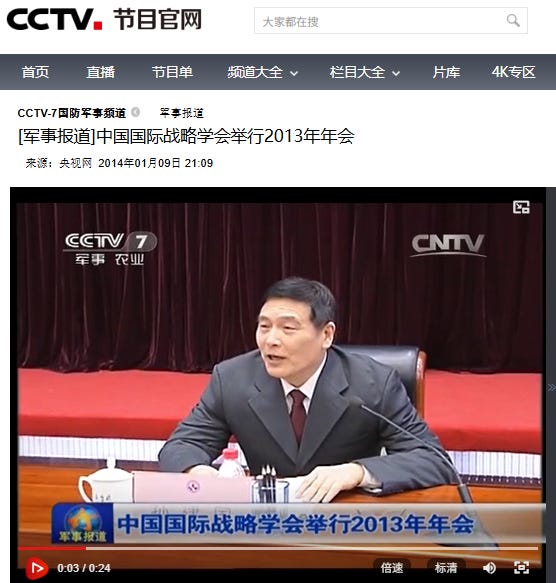
The China International Strategic Society (CISS) held its 2013 annual meeting in Beijing on 9th January 2014, attended by over 150 senior officials and experts with long experience in international strategy, diplomacy, and military affairs.
Key points:
Leadership presence: Vice Chief of the PLA Joint Staff Department and CISS President, General Sun Jianguo, delivered a keynote on “Creating a Favorable International Environment for Achieving the Chinese Dream.”
Party alignment: The speech emphasized implementation of Chinese Communist Party directives, particularly the 18th Party Congress, and China’s strategic positioning in global affairs under Xi Jinping.
Strategic purpose: CISS was presented as an instrument to advance China’s national objectives, enhance international influence, and strengthen China’s strategic initiative — fully consistent with PLA and Party guidance.
International network: The society maintains academic and strategic exchanges with over 100 research institutions in more than 50 countries, consolidating its role as a PLA-linked international strategic platform.
Implication for Japan–China Military Exchanges:
CISS continues to operate within the PLA and Party strategic framework. Japanese officers participating in PLA–CISS exchanges are therefore engaging with an organization that directly serves China’s military and national strategic interests, not a neutral academic institution. This reinforces the need for mandatory biosecurity measures, epidemic insurance, and heightened operational caution for JSDF personnel interacting with CISS
CISS 2014 Annual Meeting – Explicit Alignment with Party and PLA Strategic Goals
The China International Strategic Society (CISS) held its 2014 annual meeting in Beijing on 19th January 2015, attended by over 180 senior officials, military leaders, and experts in international strategy and diplomacy.
Key points:
Leadership: Vice Chief of the PLA Joint Staff Department and CISS President, General Sun Jianguo, delivered the keynote speech.
Purpose of CISS: The address emphasized “unswervingly following the path of national security with Chinese characteristics” and highlighted the PLA’s role in executing the Chinese Communist Party’s overall national security strategy. At its 2014 annual meeting, CISS emphasized its alignment with Party directives and PLA priorities. As General Sun Jianguo stated:
“We must resolutely implement the decisions and directives of the Party Central Committee and Chairman Xi on safeguarding national security, and take concrete actions to ensure the long-term stability, prosperity, and order of the country.”
Note: The honorific “Xi Jinping” is rendered as “Chairman Xi” (习主席) within the People’s Liberation Army, reflecting his official roles as Chairman of the Central Military Commission of the Chinese Communist Party and Chairman of the Central Military Commission of the People’s Republic of China.
我们要坚决贯彻党中央和习主席维护国家安全的决策部署,以实际行动做好维护国家长治久安和繁荣稳定的各项工作
Strategic alignment: CISS is explicitly tasked with:
Translating Party directives into military and security action
Guiding PLA modernization and force-building (“strong army” objectives)
Aligning research and operational focus with China’s comprehensive national security agenda
Audience: Attendees included military and civilian leadership engaged in strategy and diplomacy, demonstrating CISS’s integration into national-level strategic planning.
Implication for JSDF Exchanges:
This meeting underscores that CISS is not a neutral civilian think tank; it operates as a PLA-aligned strategic and security institution. Japanese officers participating in CISS–PLA exchanges are therefore interacting with an organization directly implementing China’s national security agenda, reinforcing the need for biosecurity precautions, mandatory epidemic insurance, and operational caution.
What the program is — and what it does
The Sasakawa program is a non-governmental exchange initiative that arranges reciprocal visits: JSDF field officers tour PLA facilities and Chinese delegations visit Japanese units and institutions. The foundation describes these visits as study tours that include base visits, exchanges with defense officials, and social and cultural trips meant to foster “mutual understanding.” The program restarted after suspensions tied to political friction and the pandemic.
Public reporting has documented that, over two decades of on-and-off activity, dozens of JSDF and PLA officers have taken part in these exchanges — enough to create a steady trickle of shared experiences between future leaders in both services. One recent summary of the program’s history counted roughly 150–230 participants on each side across multiple trips.
The central security problem — not a rhetorical fear, a structural one
Two plain facts change the policy calculus:
The PLA is not a neutral national force: it is the armed instrument of the CCP and operates according to party command and party priorities. That institutional tie makes any military-to-military contact with the PLA inevitably political and strategically consequential.
The exchanges deliberately target mid-career officers — the cohort that becomes colonels, flag officers, and defense planners. Regular, curated exposure to PLA narratives and networks produces long-term influence, not just one-off conversations. Reporting and program descriptions confirm that the exchange is precisely built around these recurring contacts.
Put in a sentence: this is a low-immediacy, high-duration channel for influence. Democracies can tolerate some short, reciprocal military contacts; they should treat recurring, trustee-level access differently when the partner is an authoritarian party-state whose military is explicitly a party instrument.
Real risks
Asymmetric narrative control. Visiting JSDF officers see curated facilities and briefings; PLA visitors come from a system that shields intent and selectively discloses capability. That asymmetry favors the PLA’s ability to shape impressions while minimizing reciprocal transparency.
Career-stage targeting. Mid-career contacts become long-term relationships — the very thing intelligence and influence operations aim to cultivate. Reporting on the program and its participants underscores this design.
Operational and planning leakage risk. Even innocuous conversations about doctrine, logistics, or basing can be harvested later for operational insight; modern vetting and foreign-disclosure regimes exist precisely because seemingly benign exchanges sometimes reveal valuable information. U.S. and allied policies require vetting and foreign-disclosure controls for military exchanges for this reason.
What other democracies do (and why Japan can learn)
Allied militaries maintain structured vetting, foreign-disclosure controls, and activity classification for visiting foreign military personnel. The U.S. Department of Defense and other allies have detailed procedures governing access to installations, educational courses, and the kind of information that can be shared — and they explicitly increase scrutiny for visitors from strategic competitors. Those mechanisms exist because routine openness without controls can be exploited. Japan should adopt the same posture: not reflexive isolation, but rigorous controls.
Not all military exchanges with China carry the same level of strategic risk. Geography, operational proximity, and the frequency of real-world encounters matter.
If the officers involved were, for example, from Germany — a country geographically distant from China and without daily operational contact with the PLA — the risks would still exist, but they would be qualitatively different.
Japan’s situation is not comparable.
Japan and China Are in Constant Operational Contact
Japan and China are not abstract strategic competitors separated by continents. Their militaries operate in close physical proximity on a routine basis:
Regular air and maritime encounters in the East China Sea
Persistent pressure around the Senkaku Islands
Frequent scrambles by Japan Air Self-Defense Force aircraft in response to Chinese flights
Maritime militia, coast guard, and naval gray-zone activity near Japanese-administered territory
These are not theoretical contingencies. They are ongoing, recurring operational interactions that could escalate through miscalculation or crisis.
That means any insight the PLA gains into Japanese operational thinking, logistics culture, command habits, or decision-making psychology has direct battlefield relevance.
For Germany, such knowledge is abstract.
For Japan, it is immediately usable.
Proximity Turns Influence into Operational Leverage
Military exchanges are not only about secrets. They are about:
Understanding how officers think under pressure
Learning institutional reflexes
Gauging escalation thresholds
Identifying cultural and procedural patterns
When two militaries rarely interact, this knowledge is strategic background.
When two militaries shadow each other weekly at sea and in the air, this knowledge becomes operational leverage.
Japan is in the second category.
Crisis Scenarios Make the Risk Clearer
In a Taiwan contingency or an East China Sea crisis, JSDF officers who once participated in PLA exchanges could be:
Commanding air defense sectors
Coordinating maritime responses
Managing logistics for forward deployments
Any long-term psychological familiarity, narrative shaping, or perception management cultivated years earlier could subtly influence crisis decision-making. Influence operations are designed for exactly these delayed effects.
Again, this dynamic is far less relevant for a European military with no immediate conflict zone involving China.
Japan Is a Frontline State, Not a Distant Observer
The core distinction is simple:
Germany engages China as a distant power.
Japan engages China as a neighboring military competitor with unresolved territorial disputes.
Frontline states must apply stricter security standards than distant ones. That is not hostility — it is basic risk management.
Military exchanges that might be tolerable as symbolic diplomacy for geographically removed countries become strategically sensitive when conducted by a nation whose forces could face the PLA in a sudden regional crisis.
Practical policy options
Japan does not need to choose between “friendship” and “security.” It can pursue both — but only if the following steps are adopted and enforced:
Immediate moratorium or suspension on exchanges that give PLA access to in-service JSDF officers with roles in operations, planning, logistics, intelligence, or cyber until new rules are in place. This is a low-regret measure given the program’s long-term influence profile.
Mandatory government oversight and pre-approval. Require private foundations organizing foreign military access to obtain clearance from the Ministry of Defense (or an interagency body charged with national-security vetting). That clearance should specify allowed topics, off-limits sites, and a list of eligible ranks/roles.
Participant risk-filtering. Disallow officers holding or likely to hold sensitive billets (intelligence, operations, logistics, cyber) from participating. Allow only non-sensitive roles after background checks and security briefings.
Foreign-disclosure rules and post-exchange debriefs. Any interaction should be governed by a clear foreign-disclosure policy; JSDF participants must attend mandatory debriefs and managers must review what was asked, shown, and recorded.
Funding and transparency requirements for organizing NGOs. If a private fund arranges military access, require transparent funding sources, program disclosure, and independent audits to ensure no covert influence channels exist.
Parliamentary oversight and public reporting. Because this concerns the security of democratic decision-making, Diet committees should receive classified briefings and an unclassified annual report on the status, approvals, and outcomes of any permitted exchanges.
Why this is not “anti-dialogue”
The recommendations do insist that contact with the armed cadres of an authoritarian party-state be treated as a national-security matter. That is standard practice among like-minded democracies and a proportionate response to the facts: a PLA that serves party interests; a program that provides recurring access to future defense leaders; and a strategic environment where influence and gray-zone tactics are in use.
Conclusion — a short policy brief to decision-makers
If Japan accepts the premise—explicit or implicit—that the CCP is conducting long-term influence and strategic competition in and around Japan, then allowing unsafeguarded, recurring PLA access to JSDF mid-career officers is a policy mistake. The state should either: (A) suspend the program until strict vetting, disclosure, and oversight rules are enacted and enforced; or (B) accept the program under a tightly specified, government-controlled framework that prevents operational or influence exploitation.
This is a pragmatic choice, not an ideological posture: protect the integrity of Japan’s future defense leadership while preserving the small, targeted scope of confidence-building ties that genuinely serve crisis-management and stability. The balance can — and should — be struck deliberately.
Given the lessons of the 2019 Military World Games and Beijing’s continued obstruction of a fully transparent inquiry, Tokyo must treat every JSDF officer who has participated in PLA exchanges as a potential biological-security vector and immediately impose strengthened inbound biosecurity controls: mandatory pre-departure and post-return testing (PCR and serology) and genomic sequencing of any positives; a defined post-return medical monitoring and quarantine window before resuming operational duties; temporary restrictions on assignment to sensitive units (intelligence, logistics, medical, forward deployments) until cleared by public-health and defense authorities; compulsory debriefs documenting sites visited and close contacts; an interagency flagging system for such travel to inform border screening and medical triage; rapid reporting channels between the Ministry of Defense, Ministry of Health, and allied partners; and regular audits of compliance — treat biological risk with the same operational seriousness as kinetic threats and act now.
Japanese Ministry of Defense Advisory: Epidemic Risk Mitigation for Personnel Participating in China Military Exchanges
Purpose:
To ensure force health protection and operational readiness, all Japan Self-Defense Force (JSDF) personnel participating in bilateral military exchanges or official visits to the People’s Republic of China should be subject to additional epidemic risk mitigation requirements.
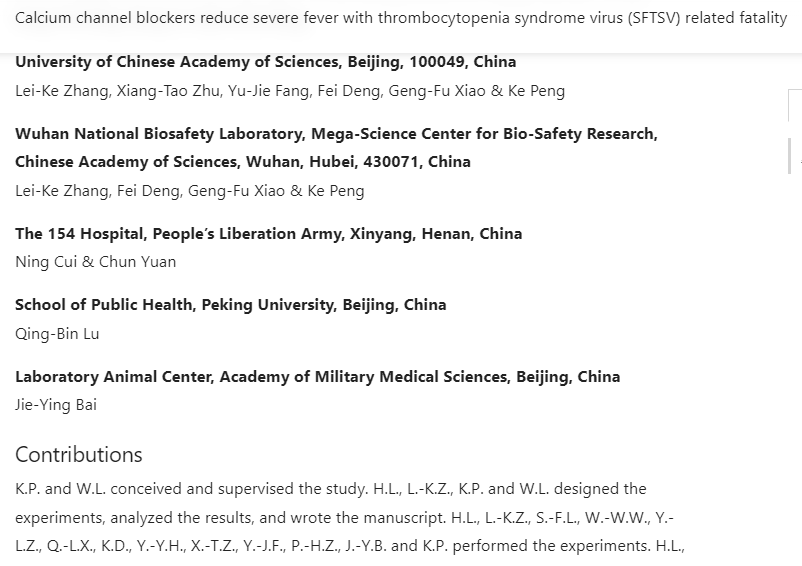
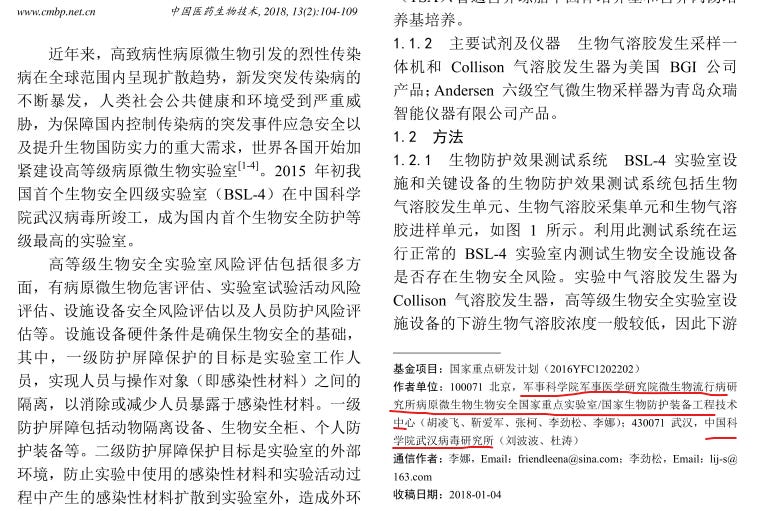
The Japan's Ministry of Defense must require epidemic insurance for all JSDF officers participating in exchanges with PLA. This is not speculative: prior PLA exercises in Wuhan before the COVID-19 outbreak and multiple co-authored publications between PLA-affiliated researchers and the Wuhan Institute of Virology demonstrate a historical pattern of military–research integration that elevates biological risk.
Advised measures:
Mandatory Epidemic Medical Insurance:
All participating personnel must obtain comprehensive epidemic/communicable-disease medical insurance covering exposure during all official activities, facility visits, and travel within host locations.
The insurance must be valid for 10 years since the travel to China and must provide coverage for treatment, hospitalization, evacuation, and quarantine related to infectious disease exposure.
Condition for Participation:
Officers or personnel unable or unwilling to obtain the required insurance shall be ineligible to participate in the exchange program.
Approval to travel will not be granted without verification of insurance coverage.
Post-Return Health Protocols:
All returning personnel must undergo post-travel medical screening, including testing for relevant infectious diseases as determined by the Ministry of Health, Labor, and Welfare.
Operational clearance to resume duties, particularly in sensitive units (intelligence, logistics, medical, forward deployments), will be contingent upon medical clearance.
Documentation and Reporting:
Verification of insurance coverage, pre-departure health status, and post-return medical reports must be submitted to the Ministry of Defense before travel approval and after return.
Any deviations or incidents must be reported immediately to Ministry health authorities and the commanding office.
Compliance:
Non-compliance with these requirements will result in denial of participation in the exchange program and may affect eligibility for future overseas deployments.
Rationale:
These measures should be enacted to protect the health of JSDF personnel, maintain operational readiness, and mitigate any potential biological risk associated with travel to environments where infectious-disease exposure may occur.
PLA Leadership vs. CISS Advisors – Differing Risk Profiles
While the senior PLA officers serving as presidents or vice-presidents of the China International Strategic Society (CISS) pose relatively obviously visible risk to foreign institutions—because they operate openly in uniform and their roles are official—the civilian advisors and consultants employed by CISS can present strategic and reputational risk.
These advisors often hold simultaneous positions in other Chinese or international institutions. This creates a mechanism for the PLA, CISS, and the United Front Work Department to advance Chinese military and political objectives through ostensibly “civilian” or “independent” organizations.
Case Study: Major General Luo Yuan
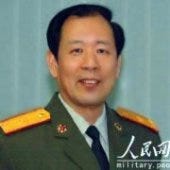
Positions: Member of the 11th National Committee of the Chinese People’s Political Consultative Conference (CPPCC), Deputy Secretary-General of the Chinese Military Science Society, Researcher, Doctoral Supervisor
Background: Served at PLA academies, the Defense University, and as military attaché to Denmark; was a visiting scholar at George Washington University
CISS Role: Senior Advisor
Other Affiliations:
Cross-Strait Relations Research Center
China International Strategic Foundation
Tsinghua University Institute of International Studies (guest researcher)
Council/Board member of Taiwan Studies Association, China Arms Control and Disarmament Association, Beijing Taiwan-Hong Kong-Macao Exchange Promotion Association
Publications: Authored/co-authored books on PLA history, Chinese military operations, strategic assessment, international strategy, and military forecasting
Many senior CISS advisors, such as Major General Luo Yuan, are fluent in English. This enables them to:
Participate in Western academic or research institutions (e.g., Luo Yuan’s visiting scholar role at George Washington University).
Engage directly with foreign military, diplomatic, and policy professionals.
Convey PLA-aligned perspectives or advance Chinese strategic objectives under the cover of “academic exchange.”
Potentially serve as conduits for United Front influence operations, leveraging their dual roles in CISS and other domestic or international organizations.
Implication:
Foreign institutions may inadvertently interact with PLA-aligned personnel capable of operating seamlessly in English-language contexts, heightening the need for careful vetting, awareness of dual roles, and risk mitigation measures.
CISS Senior Advisors and Strategic Influence Roles
Some senior advisors at the China International Strategic Society (CISS), such as Major General Cheng Jianning (born 1932, Tsinghua University graduate, PLA Major General), have long-standing careers in PLA political education and propaganda.
Career Highlights:
Early PLA service as class leader and cultural instructor, shaping the ideological training of new recruits
Held successive roles in Air Force Political Department propaganda, editorial teams for military political and cultural texts, and the General Political Department’s propaganda office
Deputy Director and later Director of the CPC Central Military Commission Office, responsible for party guidance within the PLA
Promoted to Major General in 1988; retired from active service in 1996
Role in CISS: Since retirement, Cheng has served as a Senior Advisor, continuing work in strategic education, communication, and propaganda—now with international outreach potential
Implication:
No comments:
Post a Comment