All men are created by LORD God, and are created equal by the LORD God in being endowed by the LORD God with unalienable Right of Life, Liberty and the Pursuit of Happiness equally.
Let's pray in the name of Jesus Christ for a decentralised China with no nukes, no military and no Leninist organisation. May LORD God's light shine on China. Welcome to follow CPAJim at X: https://x.com/CPAJim2021
Michael J. Zhang (张军) is a U.S.-based attorney and a member of the Overseas Lawyers Group of the Legal Advisory Committee under the All-C...
03 April 2026
The Funding Pipeline: Party-Controlled Foundations Behind “International” Academic Programs
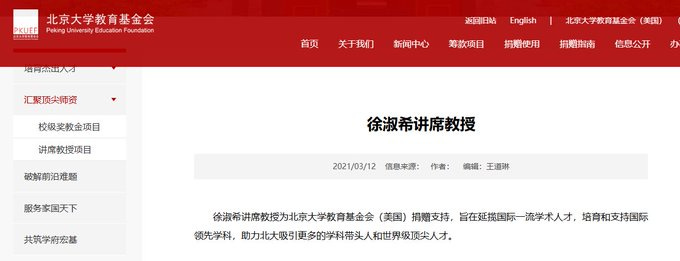
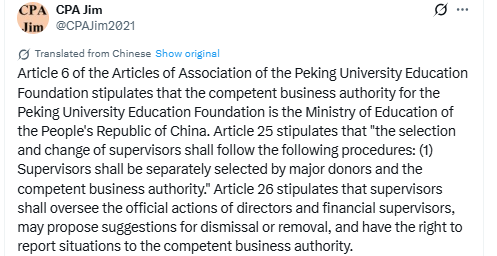
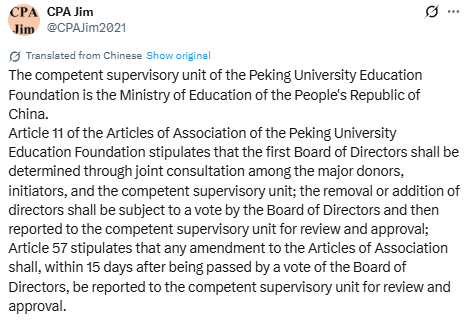
The “Shuhsi Hsü Chair Professorship” at Peking University is funded not by an independent endowment in the Western sense, but through a tightly controlled institutional network centered on the Peking University Education Foundation (PKUEF) and its U.S.-registered counterpart, Peking University Education Foundation (USA).
At first glance, this appears to be a typical international philanthropic structure. However, publicly available governance documents reveal a fundamentally different reality.
Party Control Embedded in the Foundation
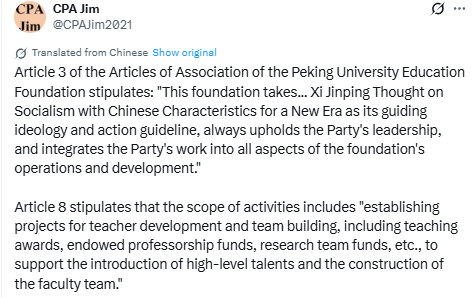
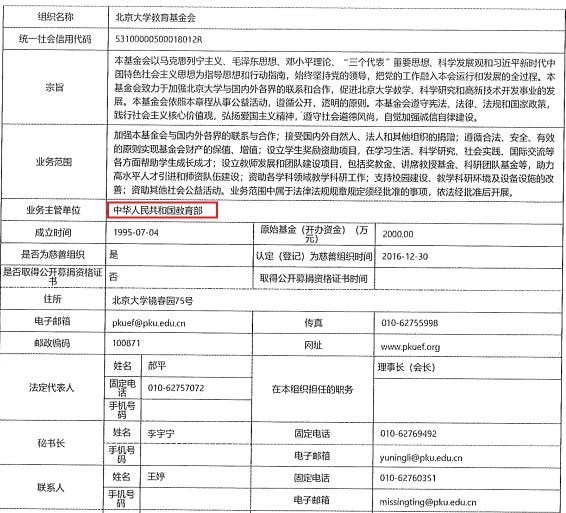
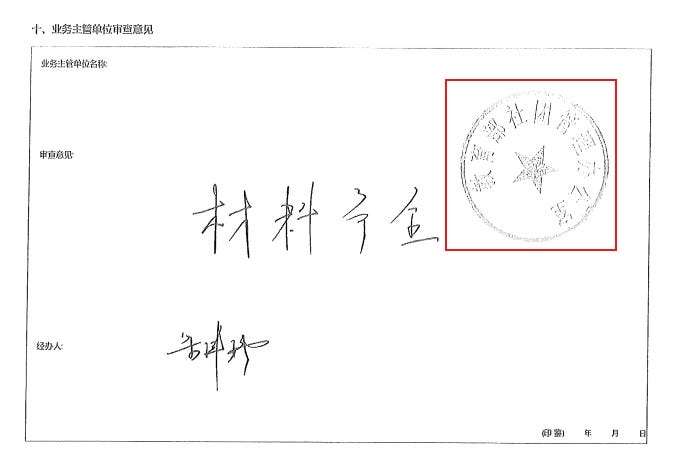
According to its official charter approved by China’s Ministry of Civil Affairs, the Peking University Education Foundation explicitly:
“Adheres to the comprehensive leadership of the Chinese Communist Party”
Establishes internal CCP organizations
Integrates Party activities into all aspects of its operations
Uses Xi Jinping Thought as its guiding ideology
This is not symbolic language—it is institutional design. The foundation is structurally required to embed Party leadership into funding decisions, governance, and operations.
Leadership Composition: Party Membership Dominance
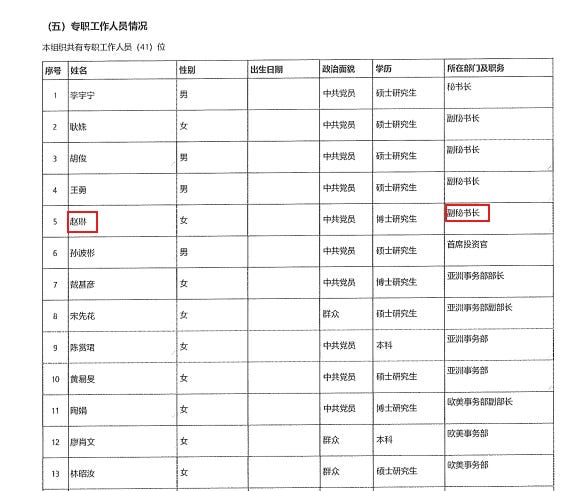
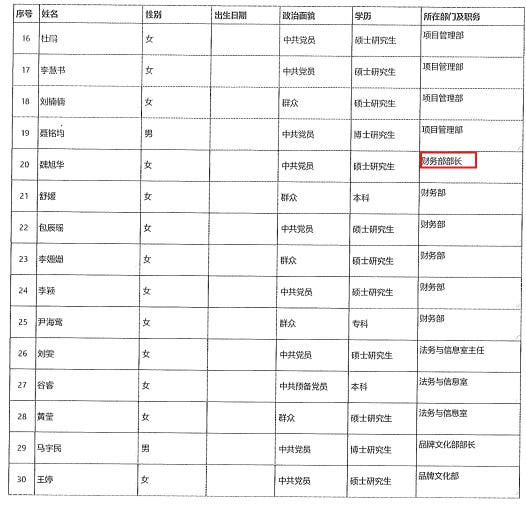
The foundation’s leadership is overwhelmingly composed of CCP members:
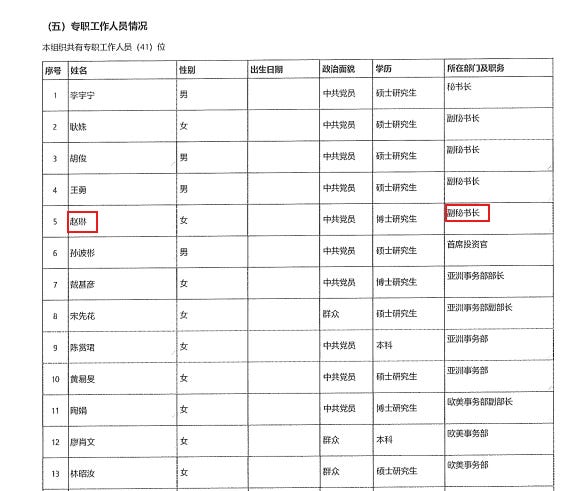
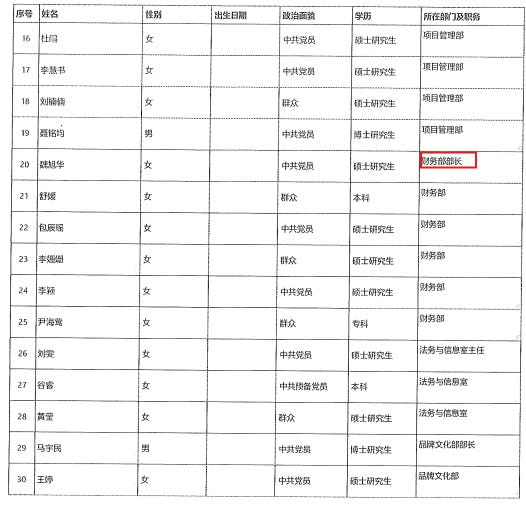
Secretary-General, Deputy Secretaries, Chief Investment Officer, Finance Head, and Legal Director — all CCP members
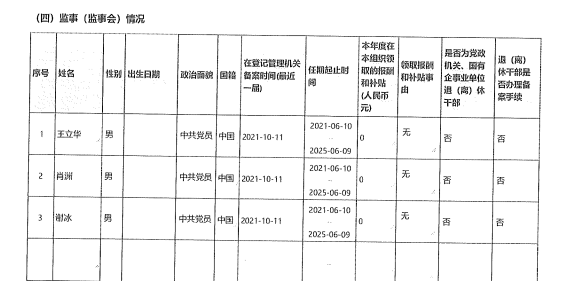
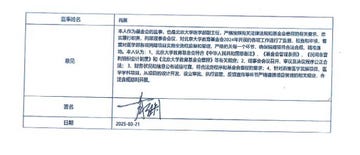
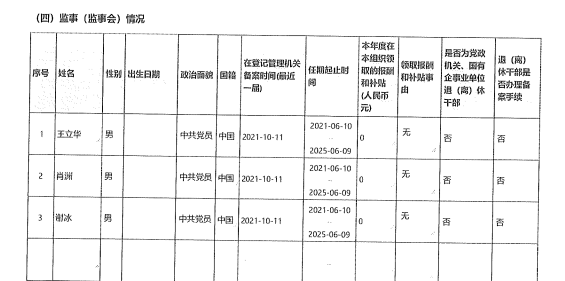
Supervisory Board — entirely CCP members
Key individuals include:
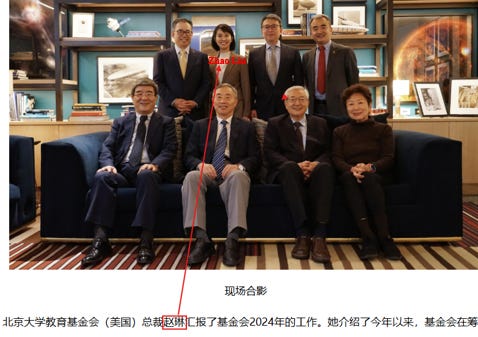
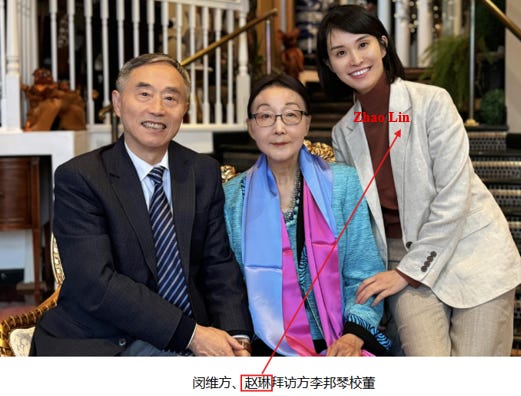
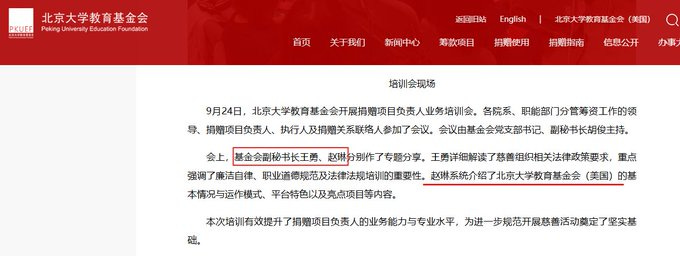
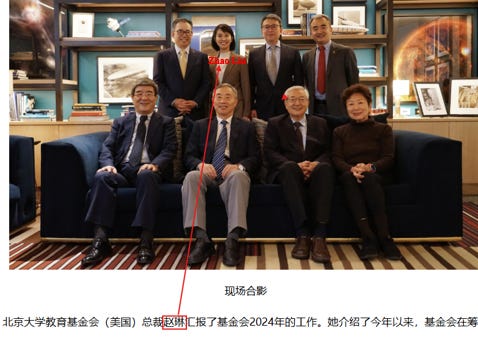
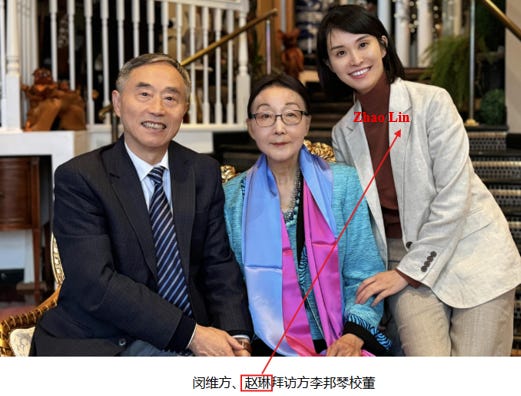
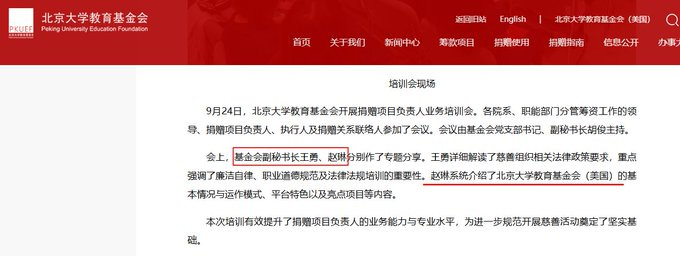
Zhao Lin — Deputy Secretary-General of PKUEF and President of Peking University Education Foundation (USA) (CCP member)
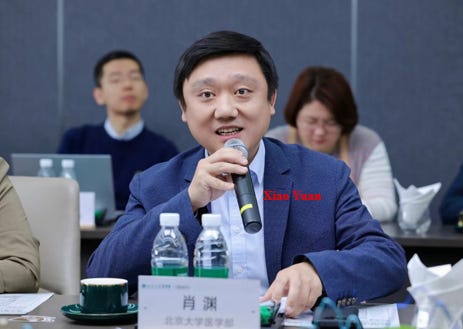
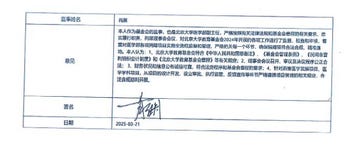
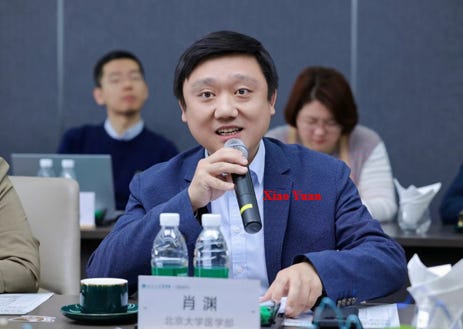
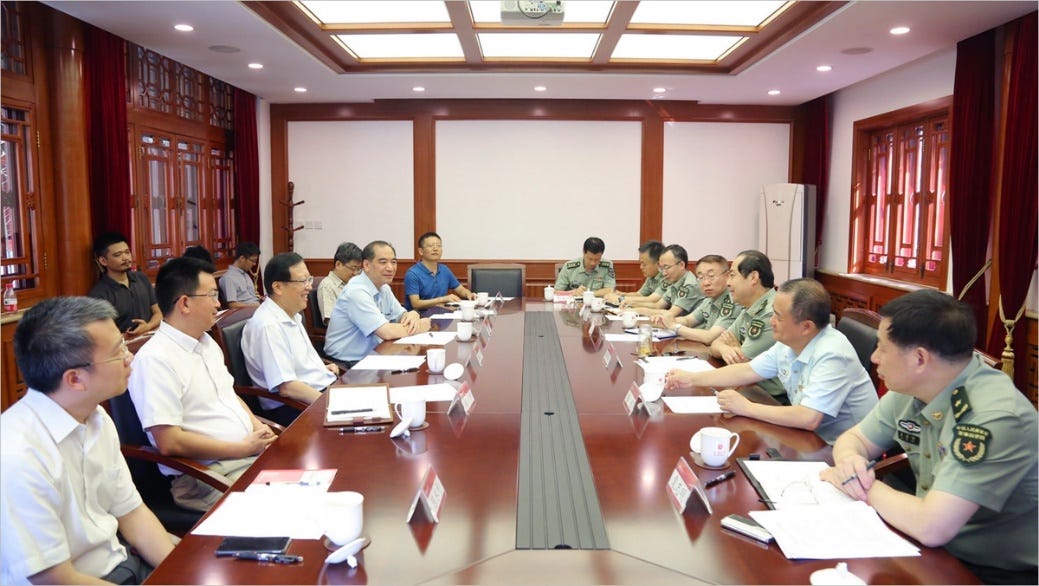
Xiao Yuan — Supervisor and Vice Dean of PKU Health Science Center (CCP member). Evidence of direct institutional interaction between Peking University Health Science Center and the People’s Liberation Army (PLA) extends beyond research frameworks into concrete joint projects. In December 2016, senior leadership from the PLA 302 Hospital—a major military medical institution under the PLA system—visited PKU’s medical campus to formalize discussions on joint hospital construction and long-term cooperation. The meeting was attended by top PKU medical leadership, including Vice Director Xiao Yuan, who later also appears within the governance structure of the Peking University Education Foundation. Both sides explicitly discussed deepening collaboration across clinical medicine, scientific research, and talent training, with the stated goal of forming a closely integrated partnership—described in the meeting as becoming “one family.” Importantly, the PLA 302 Hospital operates under the PLA’s Joint Logistics Support Force, a structure established under Xi Jinping’s military reforms. The implication is straightforward: cooperation is not abstract or historical—it is institutional, ongoing, and involves personnel who simultaneously participate in university governance, foundation oversight, and PLA-linked medical collaboration.
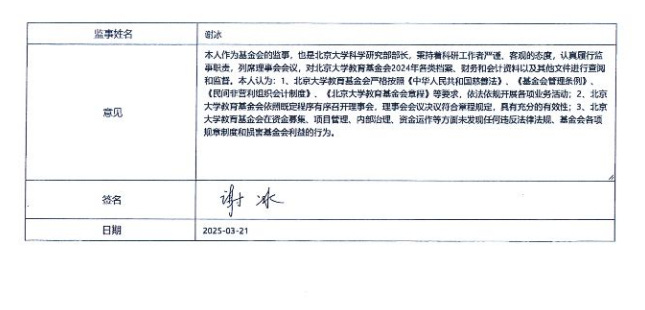
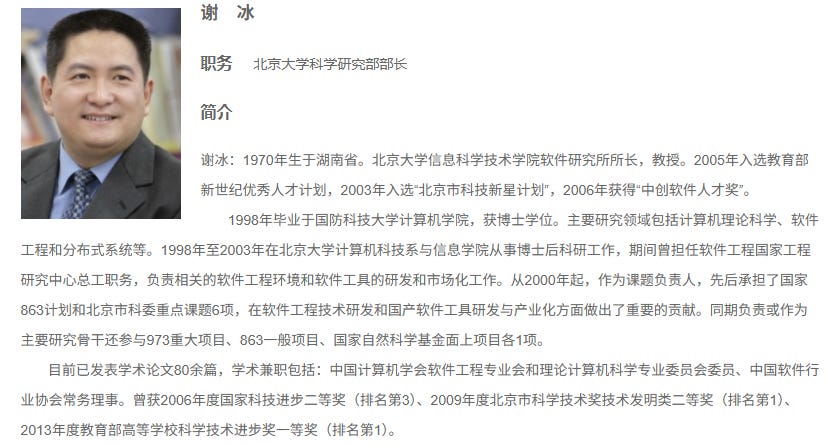
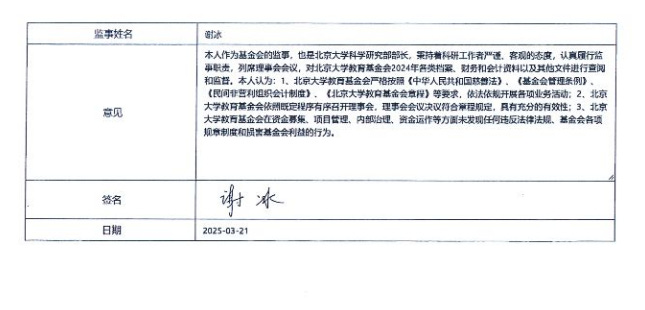
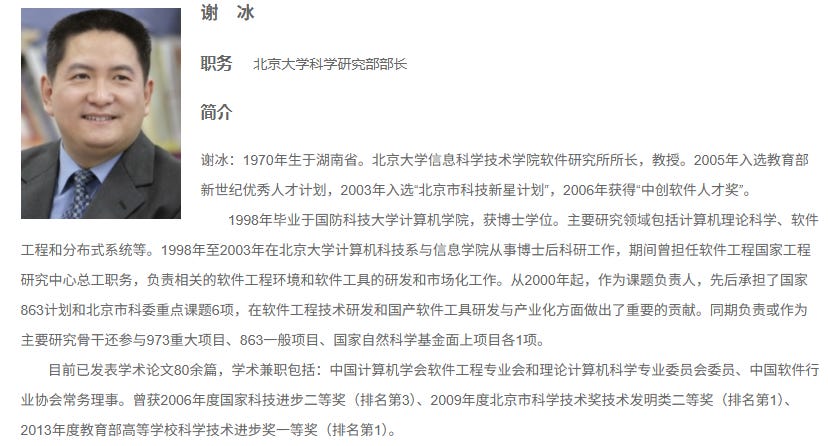
Xie Bing — Supervisor, Director of PKU Research Department, PhD from PLA National University of Defense Technology (CCP member)
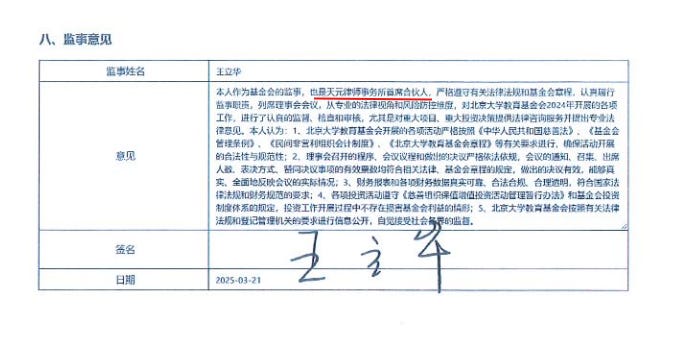
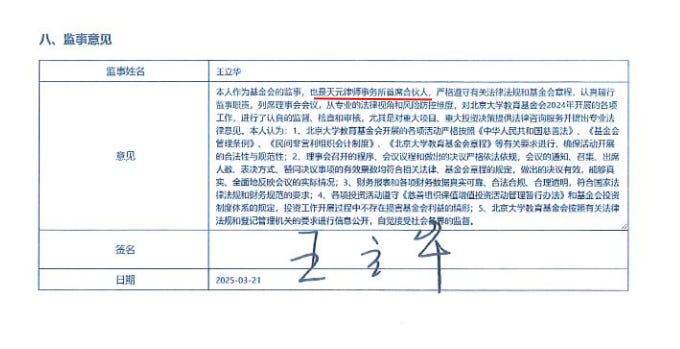
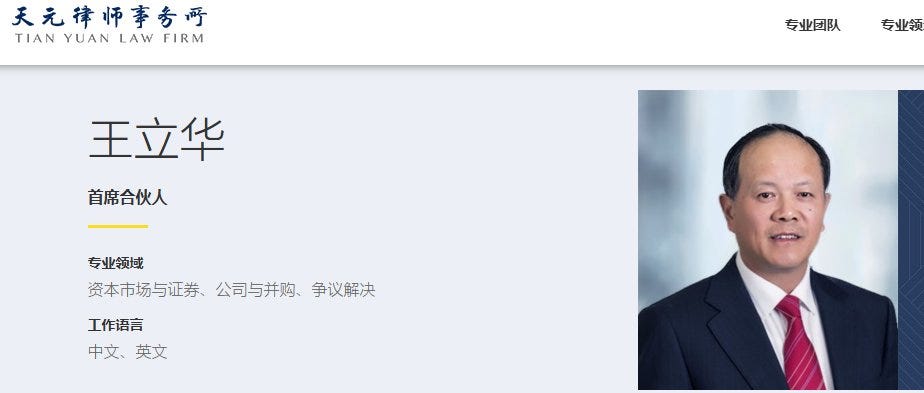
Wang Lihua — Chair of Supervisory Board, senior lawyer and Party official within the legal sector (CCP member)
This composition ensures political alignment across financial oversight, research funding, and institutional governance.
Direct Financial Link from Peking University Education Foundation (USA)
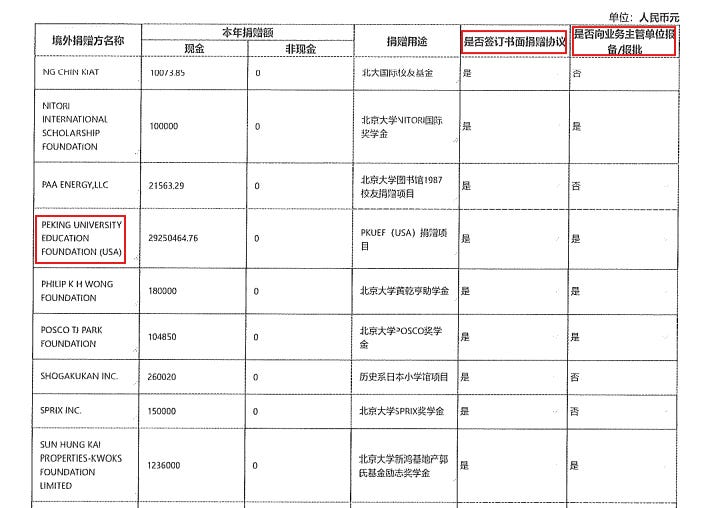
In 2023 alone, the Peking University Education Foundation received RMB 29,250,464.76 (≈ USD 4 million) from Peking University Education Foundation (USA), under formal agreements approved and filed with China’s Ministry of Education.
This establishes a clear pipeline:
Funds originate from a U.S.-based entity
Transfer into a CCP-controlled foundation
Are deployed into programs including chair professorships, talent recruitment, and research initiatives
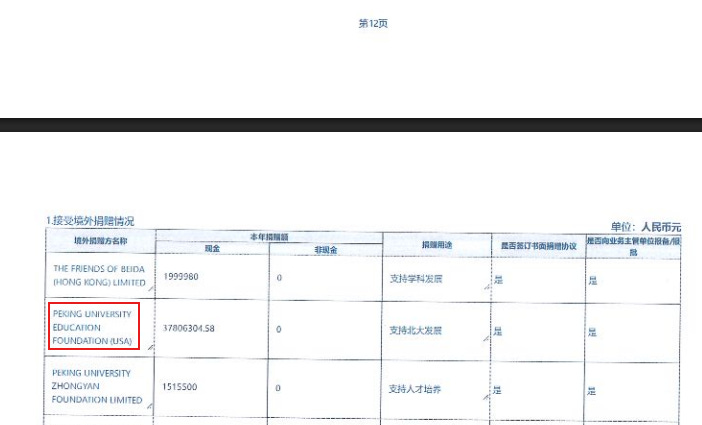
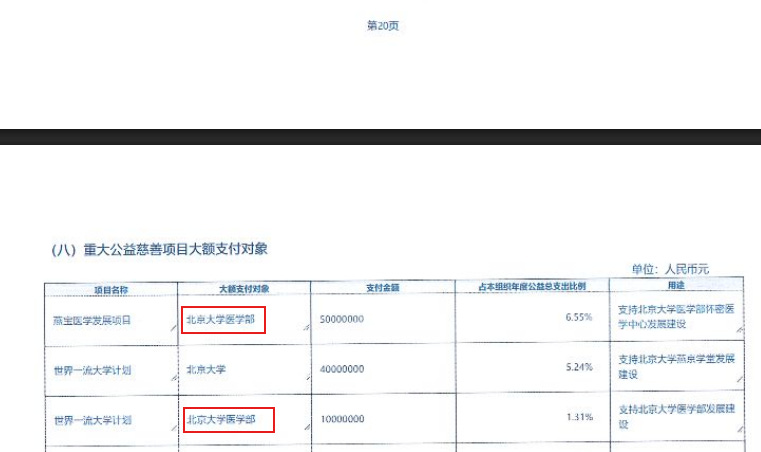
A closer reading of the 2024 annual report of the Peking University Education Foundation provides a more precise figure: the foundation received RMB 37,806,304.58 in donations from Peking University Education Foundation (USA), under formal written agreements that were filed with and approved by China’s Ministry of Education. This is not informal philanthropy—it is a regulated, state-supervised financial transfer. In the same reporting cycle, the foundation allocated RMB 40 million to Peking University for the development of the Yenching Academy of Peking University, which houses the “Shuhsi Hsü Chair Professorship.”
Crucially, the “Shuhsi Hsü Chair Professorship”—the position awarded in October 2023 to Jean-Pierre Raffarin—is a program housed within Yenching Academy. When placed side by side, the sequence becomes difficult to ignore: in October 2023, Raffarin, serving as a special representative of the French president, is appointed to a high-profile academic chair at PKU; by 2024, a Party-controlled foundation—whose governance structure mandates adherence to CCP leadership and ideology—channels tens of millions of RMB into the very institution hosting that chair. The implication is not that a single payment directly “buys” an appointment, but that foreign political figures are being integrated into platforms sustained by funding mechanisms that are structurally controlled by the CCP. In other words, what appears publicly as an academic honor operates within a financing ecosystem where political authority, institutional funding, and international engagement are tightly interwoven.
The implications deepen when considering personnel and institutional overlap:
PKU maintains cooperation with the PLA Academy of Military Sciences in fields including medicine, psychology, information science, and big data
PKU research leadership—including officials connected to the foundation—have participated in joint forums with PLA institutions
Individuals within the foundation’s supervisory structure have educational or institutional ties to PLA-affiliated universities
Official reporting from Peking University confirms that its engagement with military institutions is not incidental—it is structured, ongoing, and institutionally endorsed.
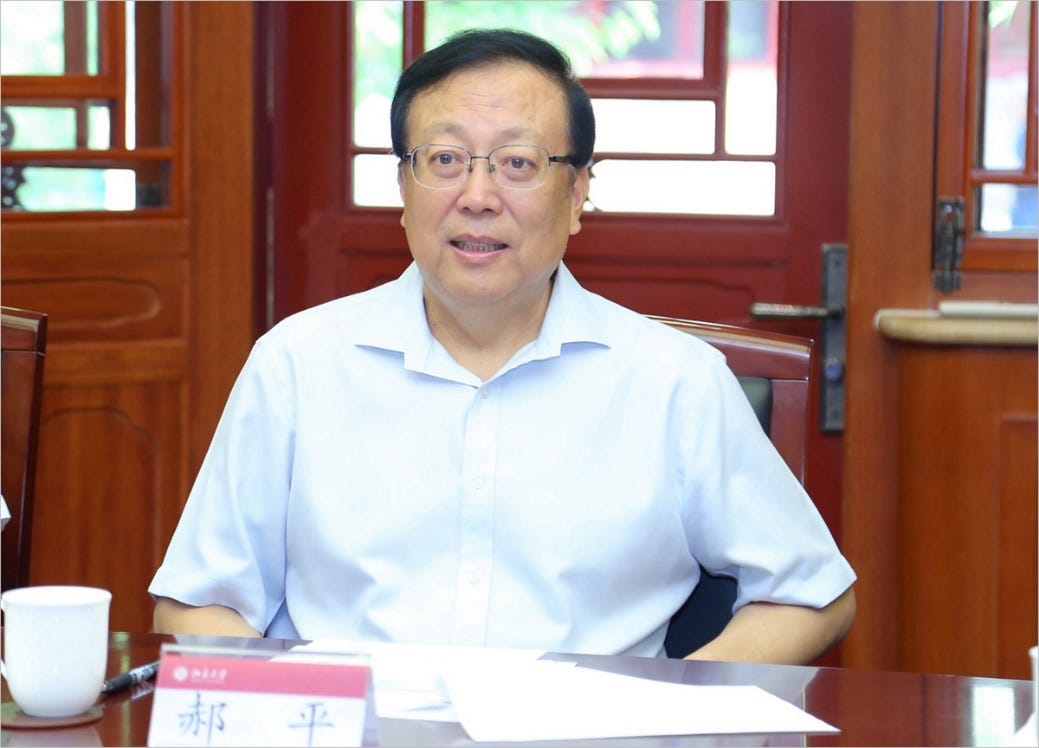
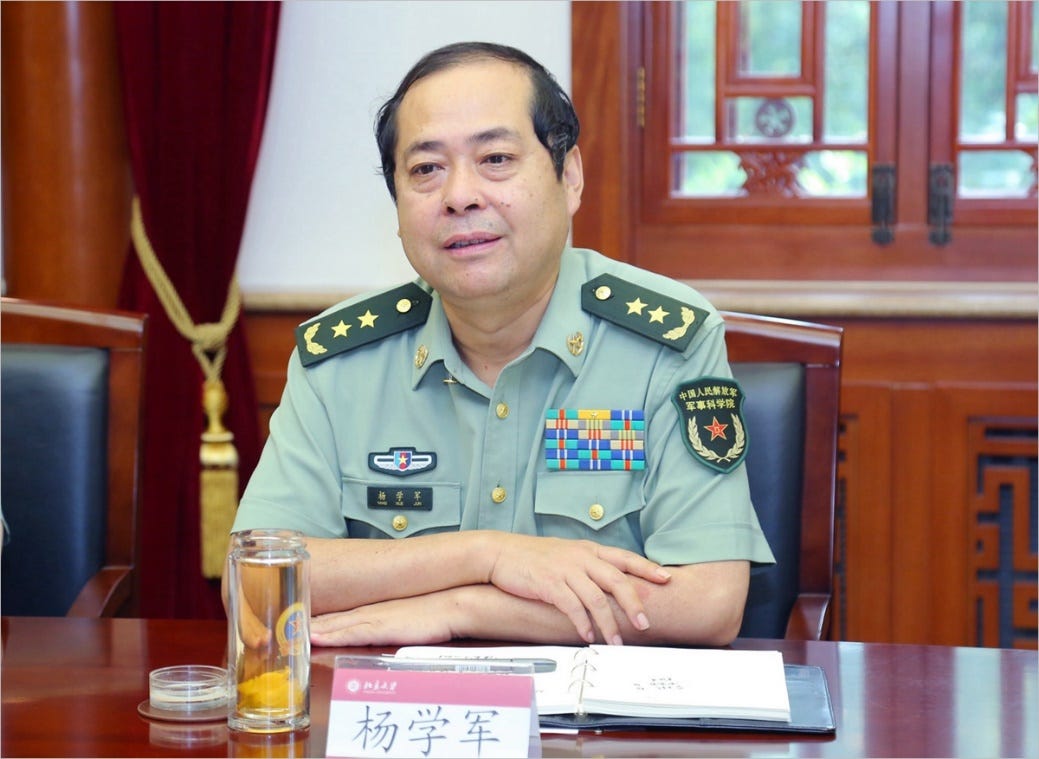
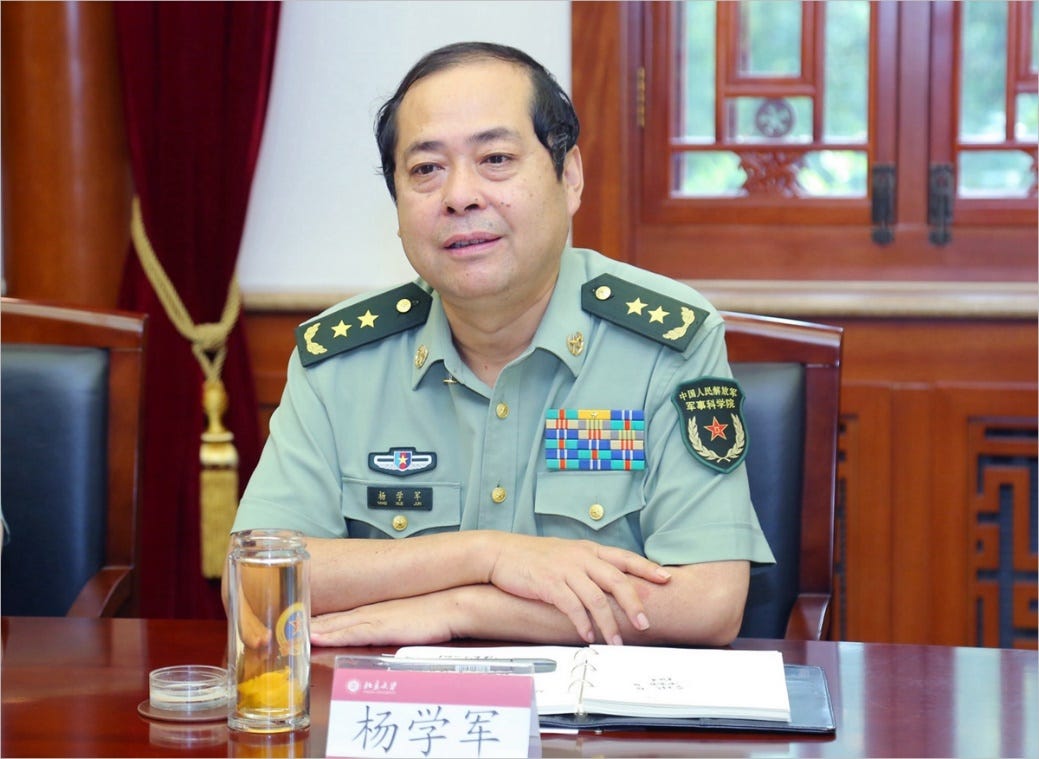
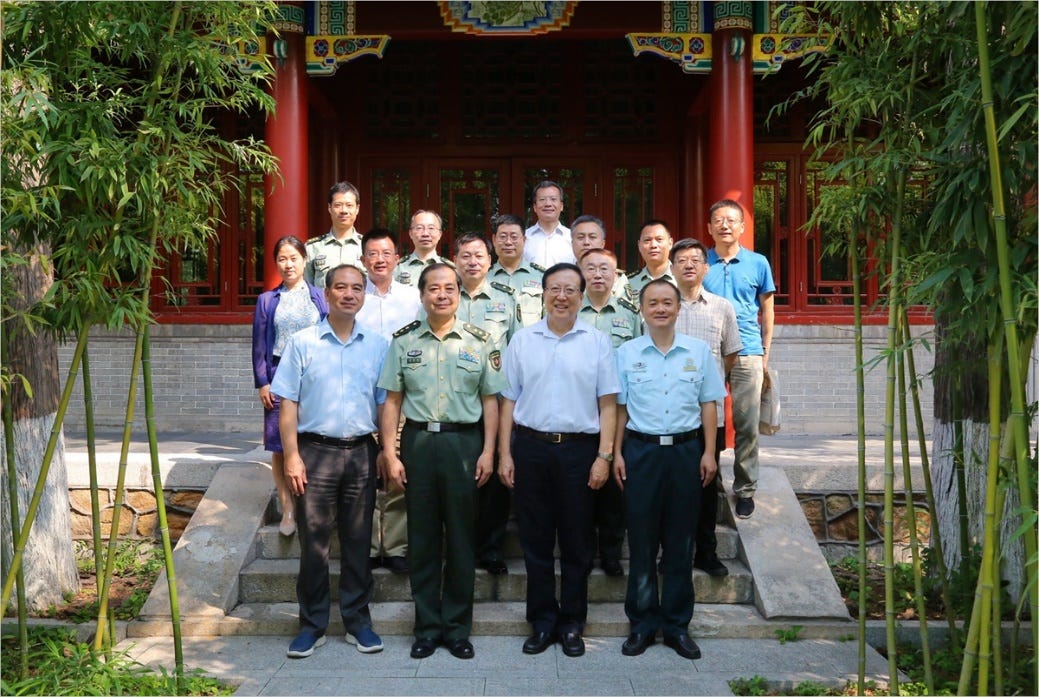
On September 4, 2019, a senior delegation led by Yang Xuejun, President of the Academy of Military Sciences, visited Peking University for high-level talks with PKU leadership, including then-President and CCP Party Secretary Hao Ping and Vice President Gong Qihuang.
The outcome was explicit: both sides agreed to establish a normalized, long-term cooperation mechanism.
According to PKU’s own statements, cooperation between the university and the Academy of Military Sciences already spans a wide range of fields, including:
Medicine and biomedical engineering
Chemistry and materials science
Psychology
Information science and big data
These are not peripheral disciplines—they are core dual-use domains with direct relevance to both civilian innovation and military capability.
The discussions went beyond research collaboration and moved into systematic talent integration, including:
Joint graduate training programs
Co-supervision of students
Faculty exchange mechanisms
Development of military-related academic disciplines within PKU
Peking University explicitly stated its intention to:
“deliver high-quality talent” to the Academy and the armed forces
Meanwhile, the military side committed to:
Supporting PKU’s development of military-related disciplines
Expanding joint research and training programs
This reflects a two-way institutional pipeline, not a one-off collaboration.
A critical but often overlooked detail is the reference to the “reorganized” Academy of Military Sciences.
This restructuring incorporated multiple military research bodies, including the Academy of Military Medical Sciences—an entity that has been subject to U.S. sanctions.
This matters because it means that:
Civilian academic collaboration with PKU intersects with military research structures under international scrutiny
Fields such as biomedical research and data science may connect, directly or indirectly, to military-linked programs
The meeting was not symbolic—it involved a wide range of PKU departments:
Research Department
Party Office and President’s Office
Advanced Technology Research Institute
Graduate Admissions Office
This indicates that cooperation is:
Coordinated across administrative, academic, and political layers
Integrated into the university’s broader institutional framework
This case makes one point unambiguous:
Peking University is not operating as an isolated academic institution. It is actively embedded in a system where:
Universities
Military research bodies
State policy frameworks
are interconnected.
When viewed alongside:
BIOPIC’s biomedical research collaborations
International partnerships with French institutions
CCP-controlled funding mechanisms
a consistent pattern emerges:
international academic cooperation involving PKU is taking place within a system that includes direct, institutionalized links to China’s military research apparatus.
Why This Matters
The “Shuhsi Hsü Chair Professorship” and similar programs are often presented internationally as neutral academic exchanges funded by philanthropic support.
But the underlying structure shows something else:
Funding flows through Party-controlled institutions
Governance is dominated by CCP members
Strategic direction aligns with state priorities and political ideology
Research ecosystems overlap with military-linked institutions
In this context, international academic engagement is not just educational—it is embedded within a state-directed system that integrates funding, talent, research, and political control.
Internal Party Structure: The Foundation as a Political Organization
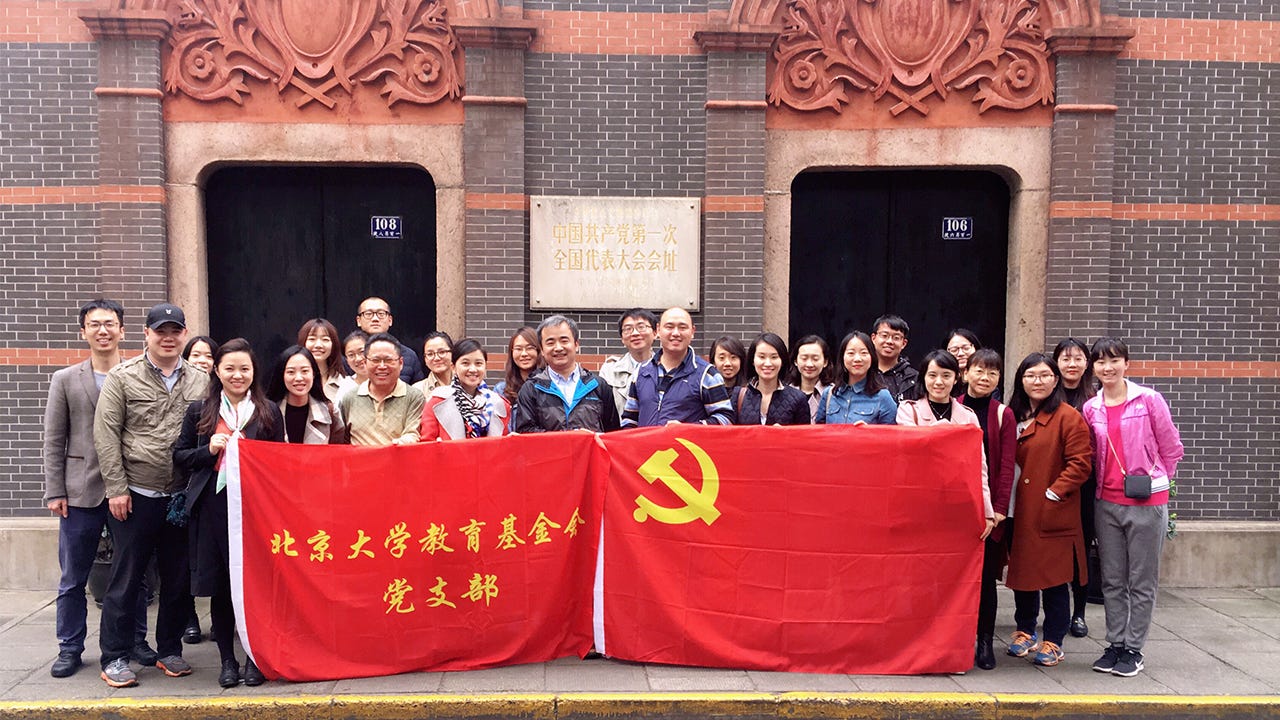
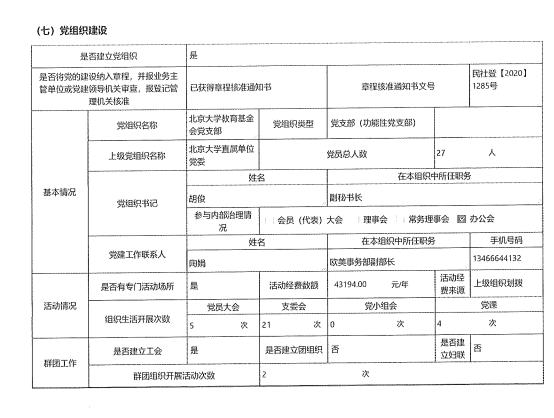
The Peking University Education Foundation openly acknowledges that it is not merely a financial body but a politically organized entity under CCP leadership. According to its own Party branch introduction, the foundation operates under the authority of the CCP committees of Peking University and its directly affiliated units, and conducts its work in accordance with official Party regulations governing grassroots organizations in universities. The Party branch explicitly states that it is guided by the full ideological framework of the CCP—from Marxism-Leninism through Xi Jinping Thought—and is responsible for embedding political discipline, ideological control, and Party-building activities into the foundation’s daily operations. Its mandate includes enforcing ideological work responsibilities, organizing political education campaigns, strengthening Party discipline, and ensuring that the foundation’s activities align with national strategies such as “Double First-Class” university development. With 27 CCP members and a formal Party committee structure, the foundation describes itself as a “fortress” for implementing Party directives—making clear that even the management of donations, international funding, and academic programs is integrated into a system of institutionalized political oversight rather than independent governance.
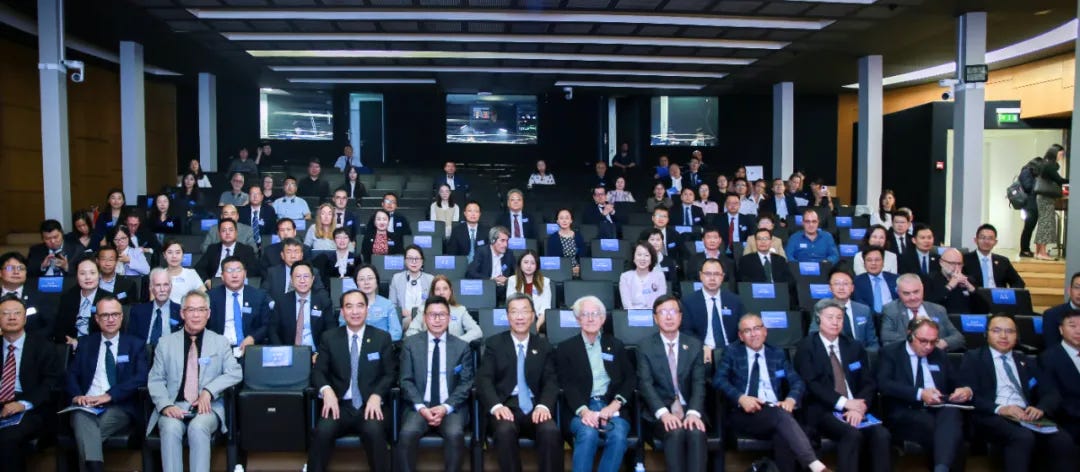
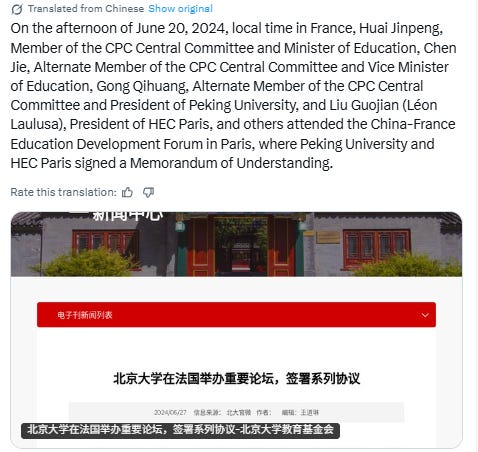
Publicly available information from Chinese sources reveals a consistent pattern: high-level cooperation between Peking University and leading French institutions has unfolded under the direct oversight of senior Chinese Communist Party (CCP) officials embedded within university leadership.
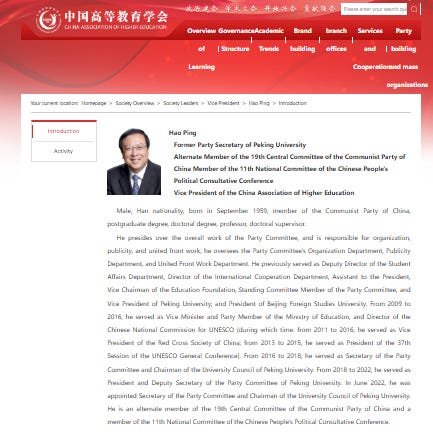
At the center of this network is Hao Ping—a senior CCP cadre who has simultaneously held top political and academic roles, including Alternate Member of the 19th Central Committee of the Chinese Communist Party and Party Secretary of Peking University.
These collaborations—spanning biomedical imaging, elite education exchanges, and political engagement—highlight how academic partnerships function as extensions of a Party-led system rather than neutral scholarly exchange.
The Political Structure Behind the University
Unlike Western universities, Peking University operates under direct CCP control.
This is not symbolic authority—it is institutional command over the university’s strategic direction, including international cooperation.
His dual role as:
Senior CCP political figure
Head of China’s top university
illustrates the core reality: there is no separation between academia and Party-state power in China’s system.
Peking University: A Strategic Hub of Franco-Chinese Biomedical and Military-Linked Collaboration
Peking University (PKU), China’s top academic institution, has become a key node in international biomedical research and state-directed scientific collaboration, combining civilian, military, and strategic interests. Central to this network is PKU’s Biomedical Frontiers Innovation Center (BIOPIC), which links elite international partners with China’s national science infrastructure and military-affiliated researchers.
2019: Strategic Technology Cooperation with France
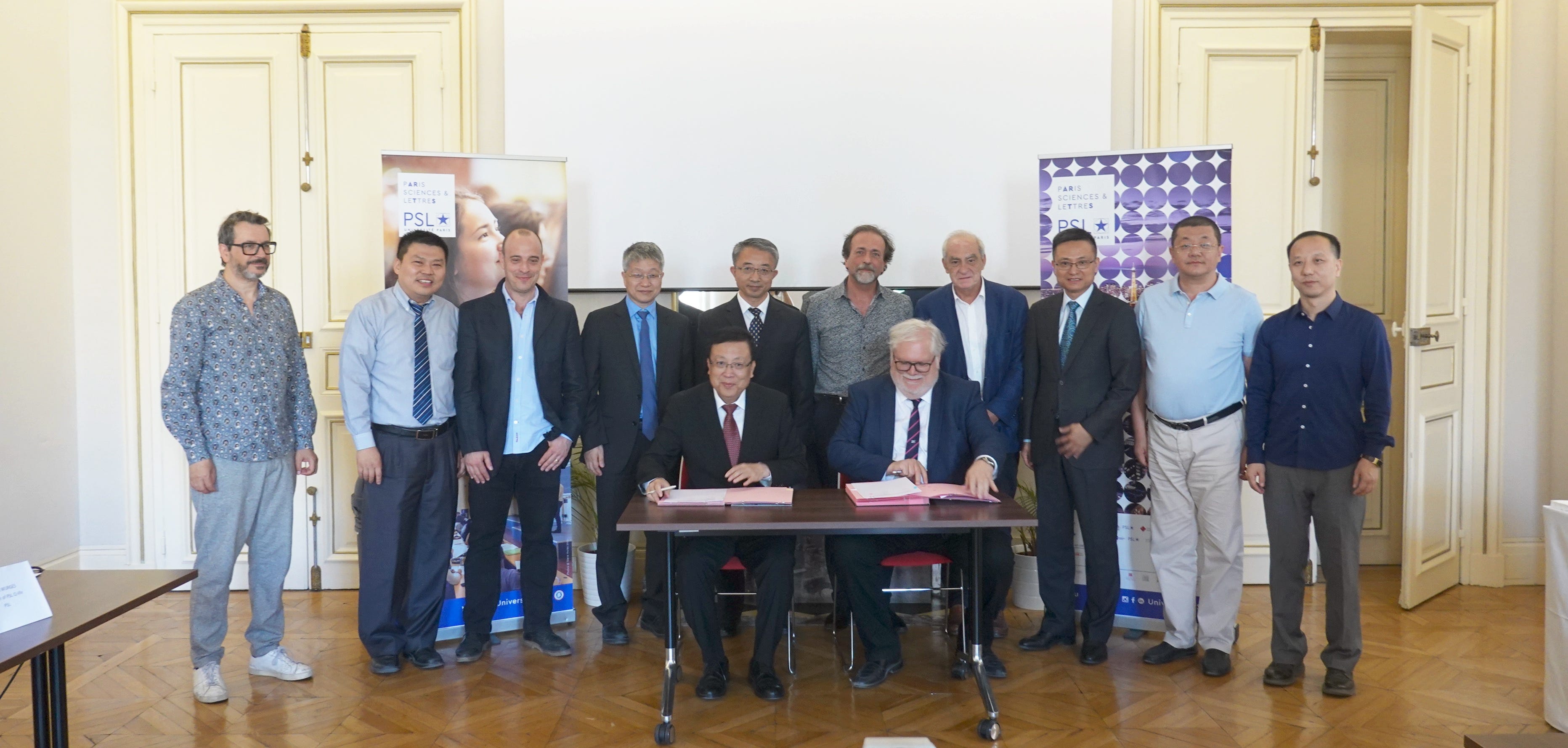
On July 9, 2019, Peking University (PKU) and Paris Sciences & Lettres University (PSL) signed a high-profile cooperation agreement in Paris targeting the construction of a national “Thirteenth Five-Year Plan” major scientific infrastructure—the Multimodal Cross-Scale Biomedical Imaging Facility. The agreement marked a strategic collaboration between PKU and one of the world’s leading biomedical imaging centers, the Curie Institute (under PSL), which operates France’s national imaging center, a globally recognized platform for cutting-edge imaging technology and applications. The agreement aimed to jointly develop advanced bio-microscopy techniques and equipment, create an internationally leading biomedical imaging center, and foster deep academic exchange through a two-day bioimaging technology workshop attended by top experts. The ceremony was attended by key figures, including PKU President and CCP Party Deputy Secretary Hao Ping, PSL President Alain Fuchs, Curie Institute Director Bruno Goud, French National Imaging Center leadership, and PKU BIOPIC researchers such as Cheng Heping and Sun Yujie.
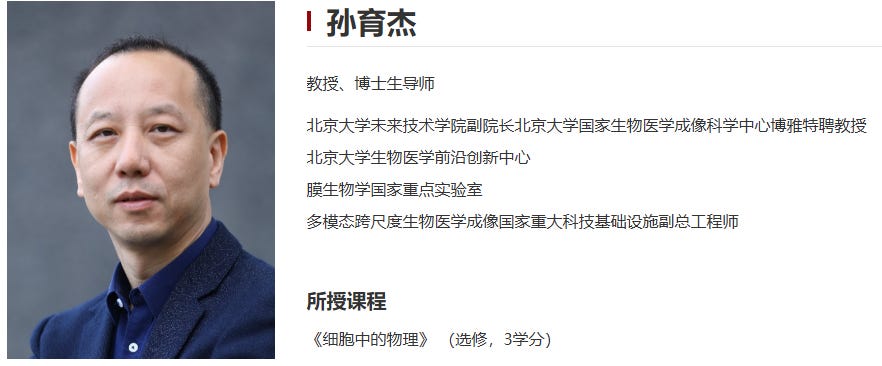
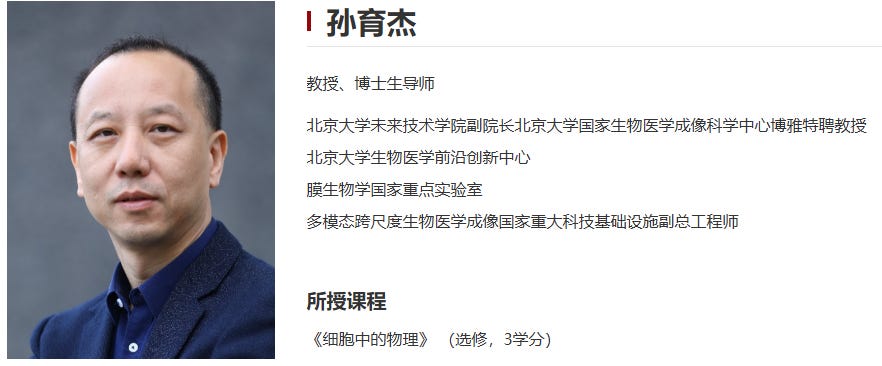
Sun Yujie – Vice Chief Engineer of the imaging facility and now BIOPIC associate professor/professor. His continuous role since 2019 links the facility’s development directly to PKU’s cutting-edge biomedical research platform, showing continuity of leadership in a CCP-controlled institution.
Sun Yujie
Xia Hongwei – A CCP member holding multiple overlapping positions (PKU Press Party Secretary, Director of PKU International Cooperation Office, HK/Macau/Taiwan Affairs, Vice Director of the International Higher Education Research Center, executive VP and secretary-general of the Chinese Higher Education Society foreign intelligence branch). This illustrates institutional CCP oversight and the integration of political control into international scientific collaborations.
Xia Hongwei
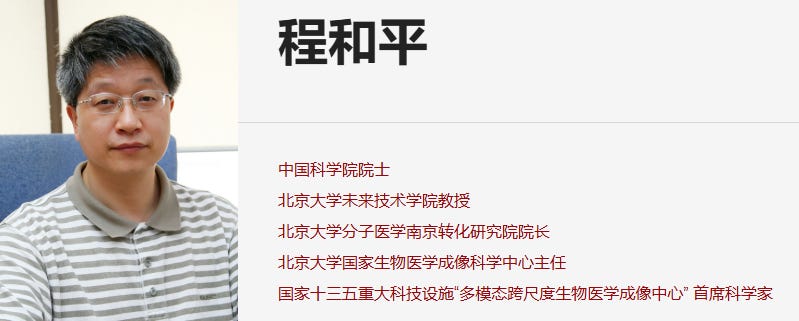
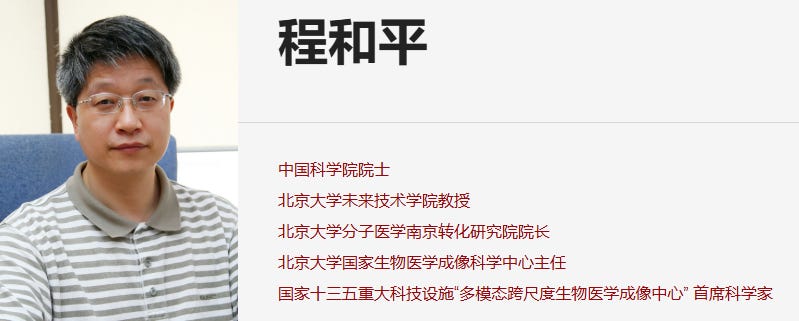
Cheng Heping – Chief Scientist of the “Thirteenth Five-Year Plan” Multimodal Cross-Scale Biomedical Imaging Center, PKU Future Technology Institute professor, director of multiple PKU biomedical centers, and CAS academician. His profile links national-level “strategic science infrastructure” to PKU, emphasizing the collaboration’s significance for China’s top-tier scientific and technology planning.
Xia Hongwei
The French Institutional Core: High-End Research Platforms
The cooperation draws heavily on PSL’s ecosystem, particularly:
Institut Curie
France’s national imaging centers and advanced microscopy platforms
These institutions represent:
World-leading expertise in biomedical imaging
Advanced instrumentation development
Integration of biology, physics, and engineering
By linking directly with these platforms, the partnership enables transfer of methodologies, technical standards, and research frameworks into a CCP-directed environment.
Dual-Use Potential: Where Biology Meets Technology
While biomedical imaging is often seen as purely civilian, its strategic relevance is broader:
High-resolution imaging technologies overlap with materials science and microfabrication
Instrumentation development feeds into precision engineering ecosystems
Data processing capabilities intersect with AI-driven analysis systems
In China’s system—where civil-military boundaries are fluid—such capabilities can be absorbed into dual-use pipelines, even when originating from health sciences.
Embedded Political Structure
The Chinese side of this cooperation is not politically neutral.
Participants in the agreement and subsequent activities include:
Senior CCP Party officials within the university
State-backed scientific leaders and academicians
Administrators responsible for national-level projects
This reflects a core reality: Chinese universities operate under direct Party leadership, and major scientific collaborations align with state priorities.
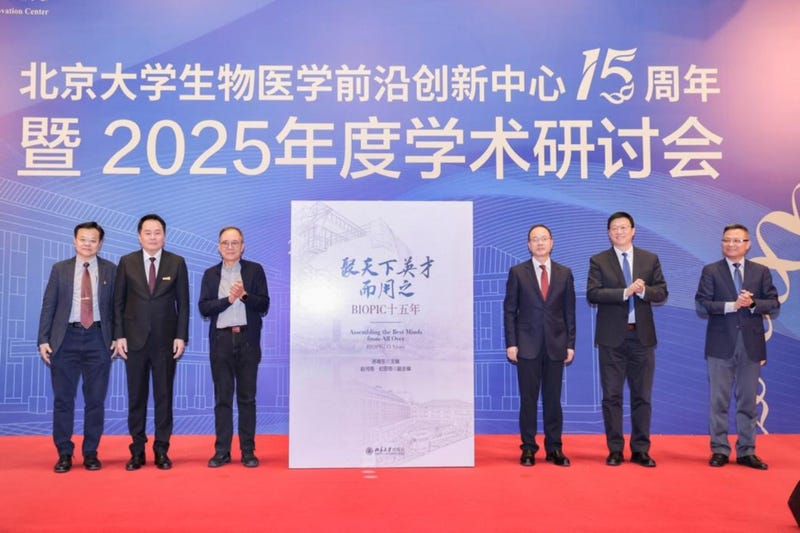
On December 18, 2025, Beijing University’s Biomedical Frontiers Innovation Center (BIOPIC) celebrated its 15th anniversary with an annual academic symposium at the Yingjie Exchange Center. The event brought together top university leadership, including He Guangcai, CCP Party Secretary of PKU, former presidents Lin Jianhua and Zhang Zemin, Executive Vice Presidents Qiao Jie and Zhang Jin, and other senior leaders. Key figures in BIOPIC’s leadership, including founding director Xie Xiaoliang, former director Zhang Zemin, Chief Scientist of China’s National Multimodal Cross-Scale Biomedical Imaging Facility, Cheng Heping, and BIOPIC Deputy Director Su Xiaodong, participated.
The symposium highlighted BIOPIC’s strategic role in China’s national biomedical infrastructure and frontier science programs, with leadership deeply integrated into CCP oversight. Xia Hongwei, a CCP member serving as PKU Publishing House Party Secretary, Director of the International Cooperation Office, and Vice President of China’s Higher Education Society’s International Intelligence Division, also attended.
BIOPIC has been pivotal in advancing high-impact biomedical technologies, including next-generation sequencing, genomic medicine, high-resolution imaging, gene editing, spatial omics, and AI for Science. Founding director Xie Xiaoliang summarized ten landmark achievements in basic research and technological innovation, emphasizing BIOPIC’s participation in driving these strategic technology revolutions.
The event included international scientific contributions via video addresses from Stefan Hell (2014 Nobel Chemistry), Thomas Maniatis (Columbia University), and Shi Yigong (President, Westlake University). John Rasko, Fellow of the Australian Academy of Technology and Engineering, attended in person. This underscores BIOPIC’s strategy of leveraging international scientific credibility while maintaining state-directed research priorities.
During the symposium, BIOPIC faculty and students, including 23 doctoral and postdoctoral researchers, presented their research in a Flash Talk session. Reports from cross-disciplinary research teams and industry collaborations highlighted ongoing work with institutions such as Shanghai Jiao Tong University, Tsinghua University, and various biomedical enterprises, further demonstrating BIOPIC’s role in connecting academic, industrial, and national strategic objectives.
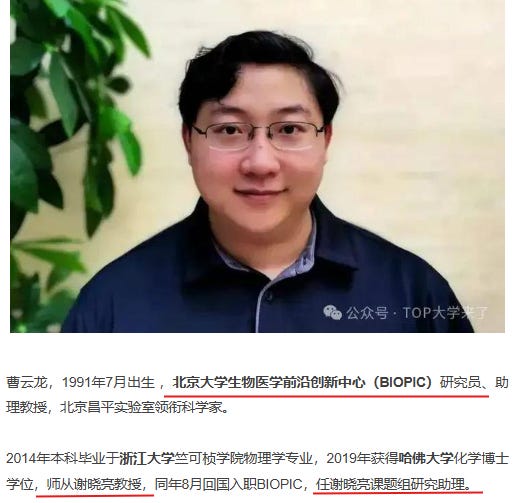
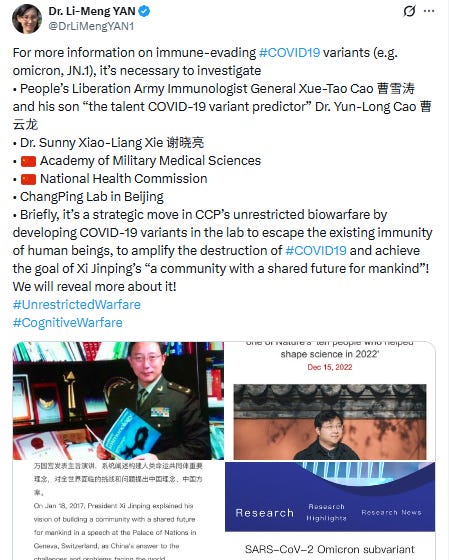
The event showcased BIOPIC’s role in integrating high-level talent, cross-disciplinary research, and international collaboration, reinforcing PKU’s strategic position in life sciences. The facility has also maintained close links with CCP military research networks, as evidenced by co-authored publications between BIOPIC researchers, Harvard-trained scientists like Cao Yunlong, and personnel from the PLA Academy of Military Medical Sciences. Together, these connections reveal a complex network where cutting-edge biomedical innovation, international collaboration, and military-linked research converge at PKU’s BIOPIC.
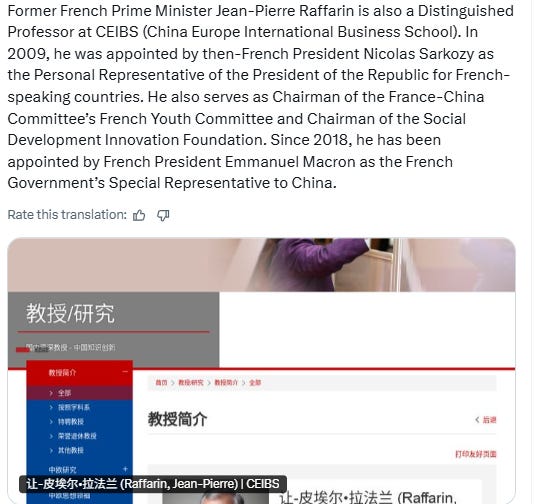
Parallel to these agreements is a sustained pattern of engagement involving Jean-Pierre Raffarin.
Key developments include:
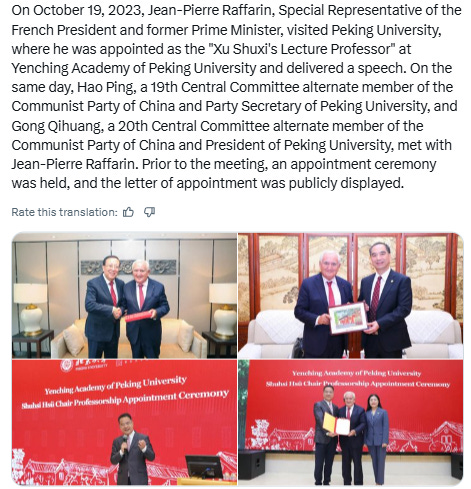
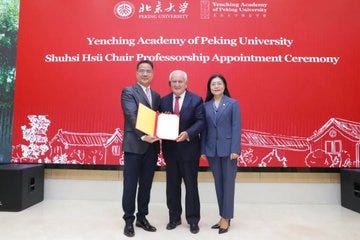
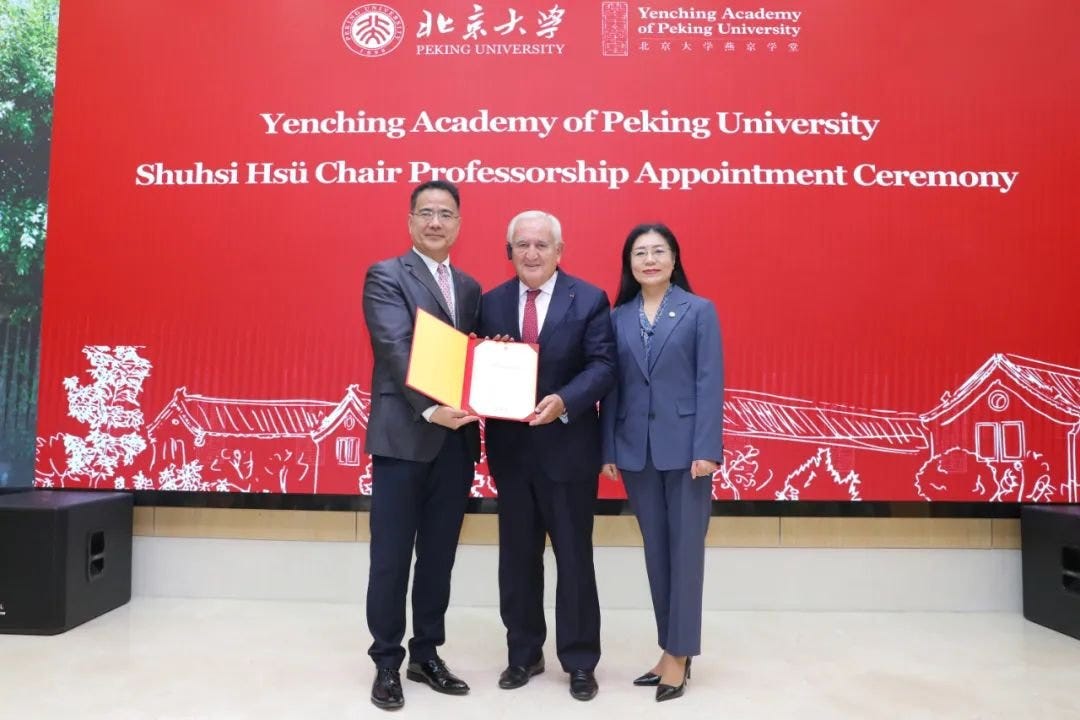
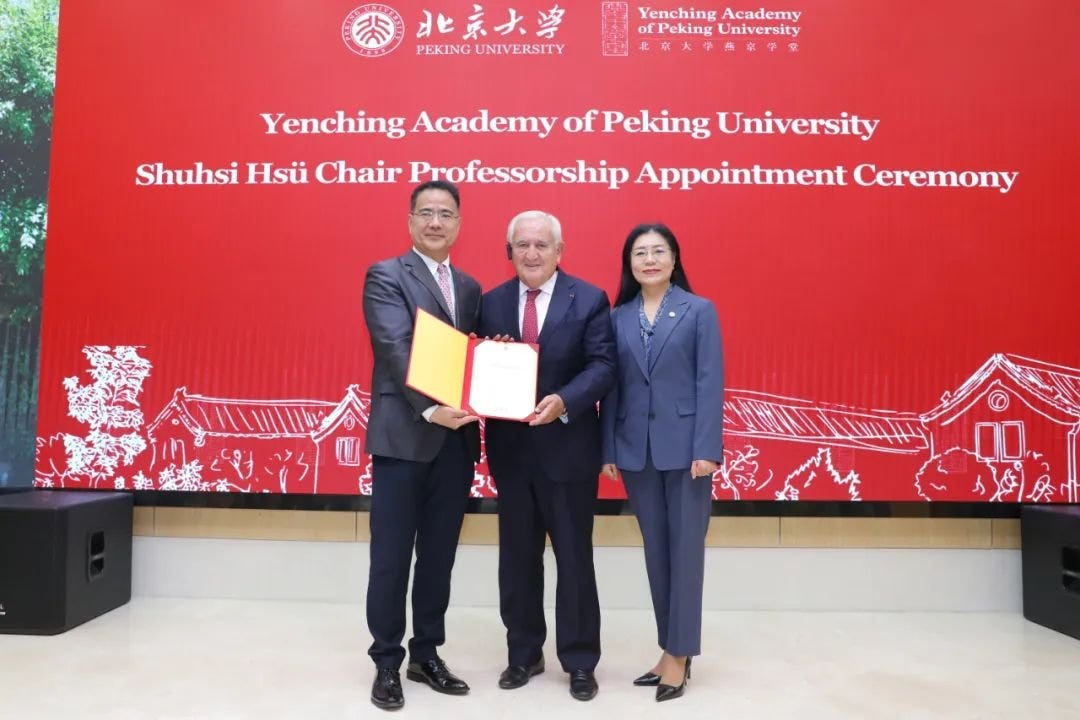
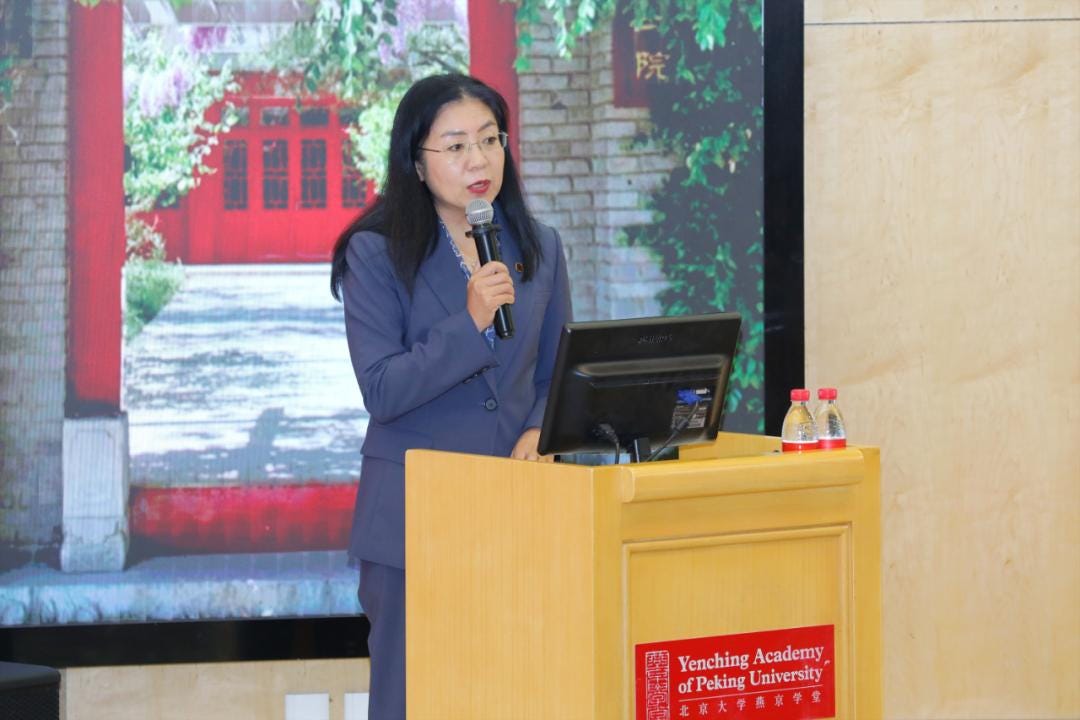
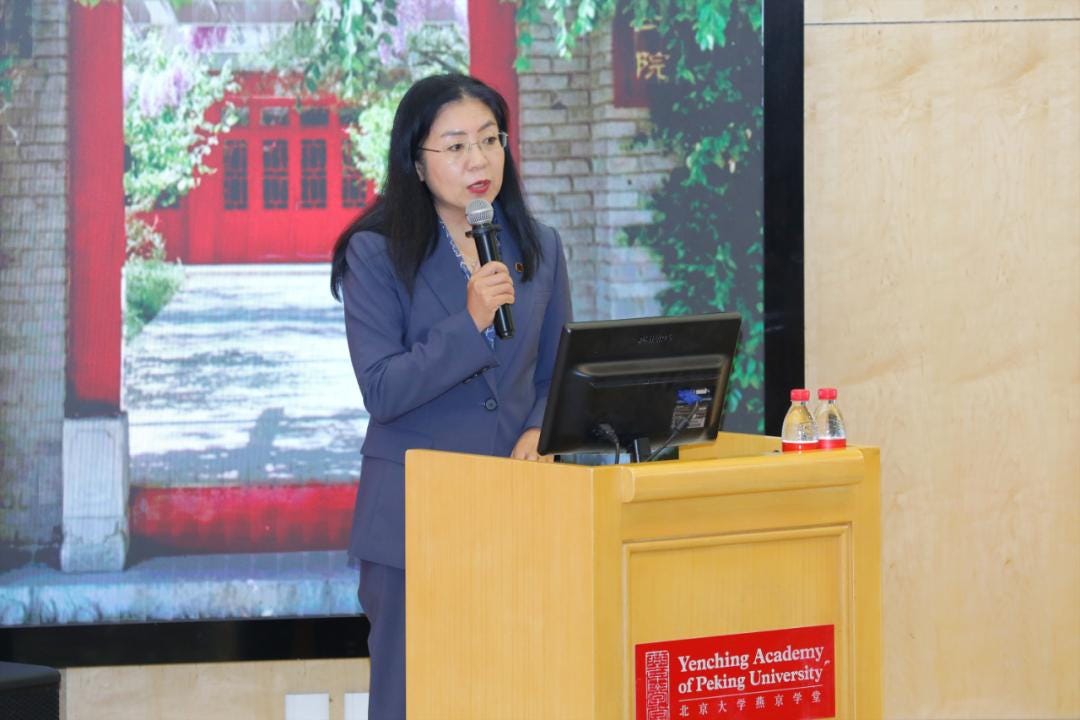
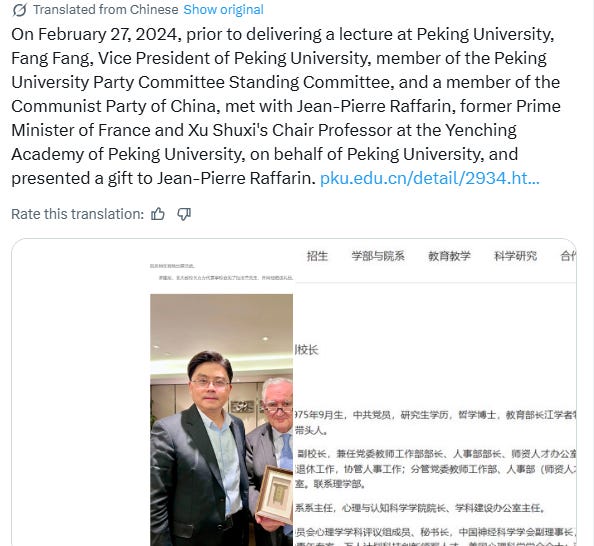
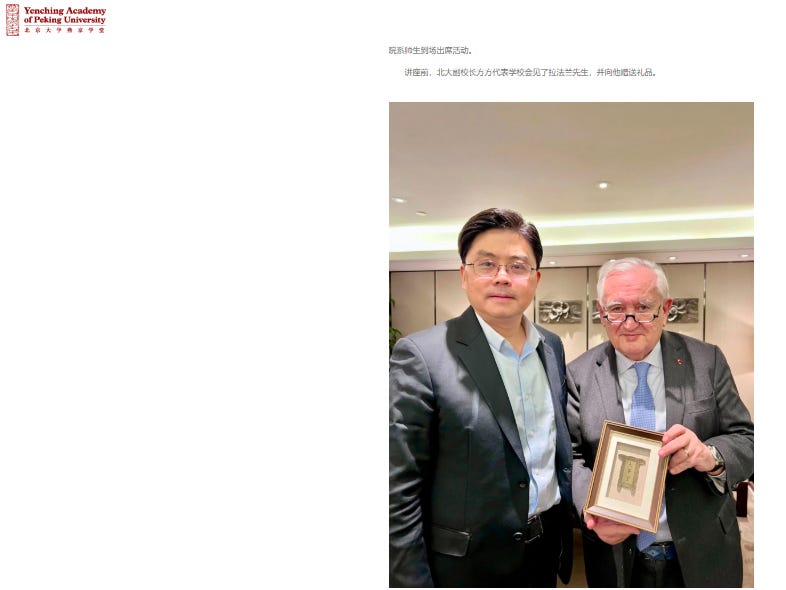
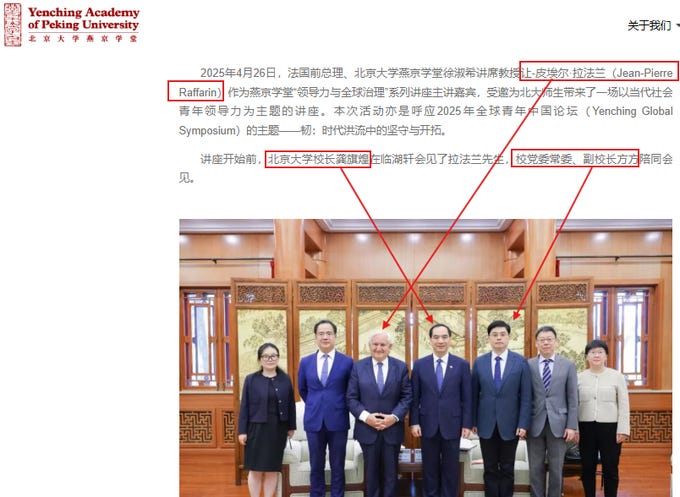
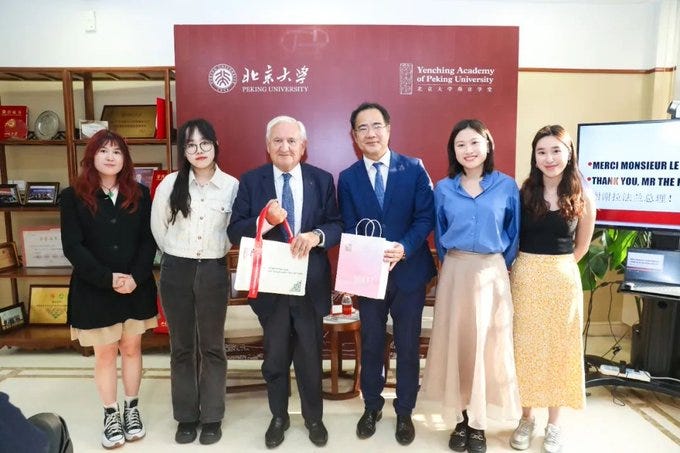
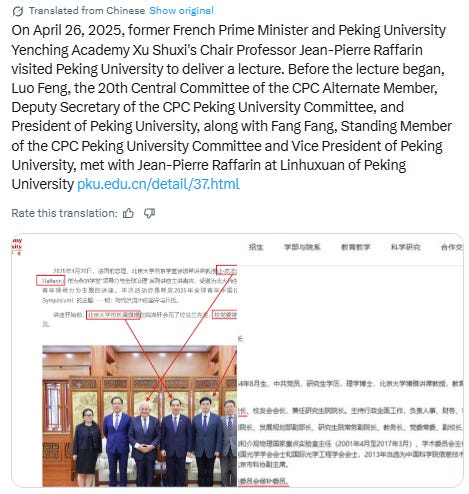
On October 19, 2023, Jean-Pierre Raffarin, former Prime Minister of France and special representative of the French President, visited Peking University (PKU) to assume his role as the “Shuhsi Hsü Chair Professorship” at the university’s Yenching Academy, delivering a keynote speech on leadership, global governance, and international cooperation.
The letter of Beijing University hiring Jean-Pierre Raffarin, the representative of French President, demonstrated along with Dean Qiang Dong and CCP Peking University Deputy Party Secretary Ning Qi
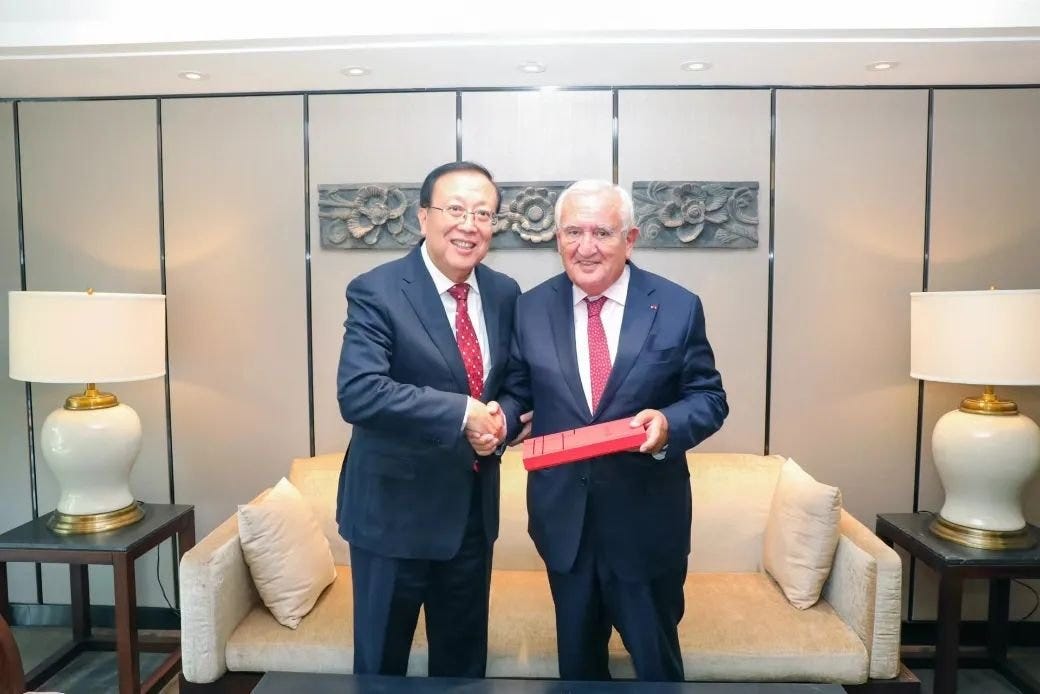
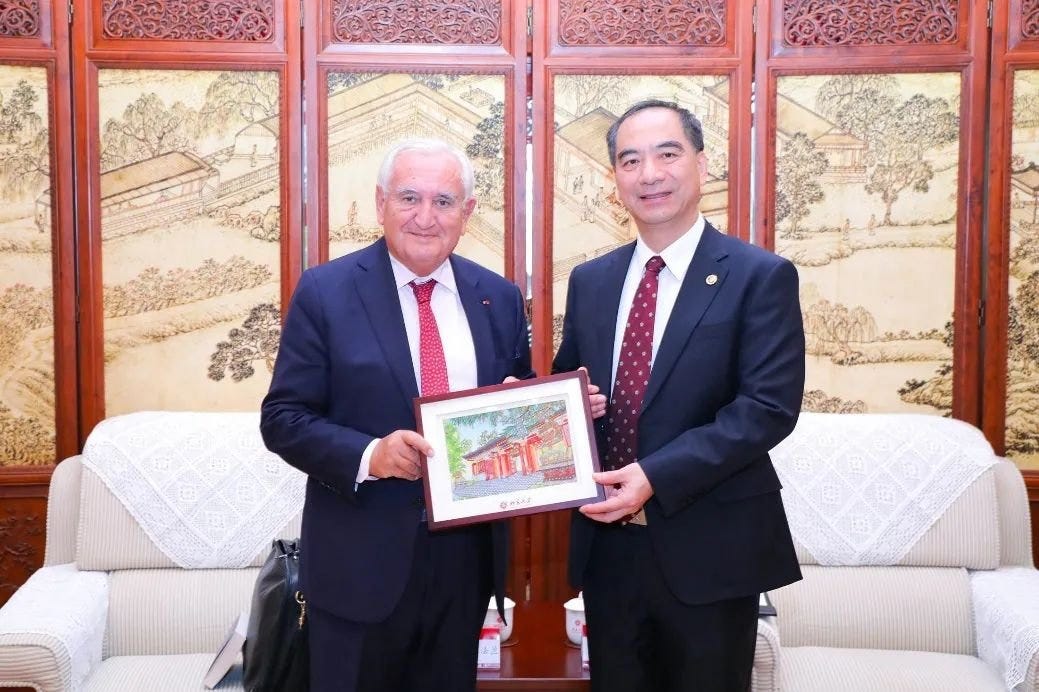
The appointment ceremony, held in the university’s underground lecture hall, was followed by Jean-Pierre Raffarin’s meeting with senior PKU leadership, including Hao Ping, Party Secretary of PKU and former president, and Gong Qihuang, PKU President, CCP Deputy Party Secretary, and alternate member of the 20th Central Committee of the CCP.
Hao Ping and Jean-Pierre Raffarin
Gong Qihuang and Jean-Pierre Raffarin
Other attendees of appointment ceremony included Yenching Academy leadership, faculty, mentors, and students, alongside representatives from PKU’s International Cooperation Office and Education Foundation. The ceremony was hosted by Dean Qiang Dong, who highlighted Raffarin’s decades-long friendship with China and his contributions to Sino-French political, economic, and cultural exchange. During the ceremony, Vice Party Secretary Ning Qi, previously responsible for CCP’s united front work, praised Raffarin’s appointment, noting that his “leadership and global governance” lecture series would broaden student perspectives and enhance PKU’s position in high-quality international education.
The ceremony formally conferred the Shuhsi Hsü Chair Professorship on Raffarin, after which he delivered a keynote emphasizing China-Europe collaboration, the Belt and Road Initiative, and global governance challenges. He acknowledged China’s rapid infrastructure development and stressed the importance of cross-cultural understanding to address global issues.
Raffarin’s visit also included a guided tour of Jingyuan San Yuan, where he was introduced to the historical ties between the Xu family, Yenching University, and Peking University, as well as the origin of the Shuhsi Hsü Chair Professorship. He engaged in a close discussion with Yenching Academy students on topics including Belt and Road, Sino-French cultural exchange, and the role of the younger generation in shaping the future.
Multiple high-level visits and lectures at the university (2024–2025)
Taken together, these developments reveal a consistent structure:
1. Strategic Infrastructure Collaboration
Joint work on national-level scientific platforms
2. Elite Political Interfacing
High-ranking French figures embedded in Chinese academic institutions
3. Institutional Expansion
Partnerships extending across science, engineering, and business education
4. Symbolic Diplomacy
Ceremonial exchanges reinforcing legitimacy and continuity
A Defense-Affiliated French Institution Expands Ties with Peking University
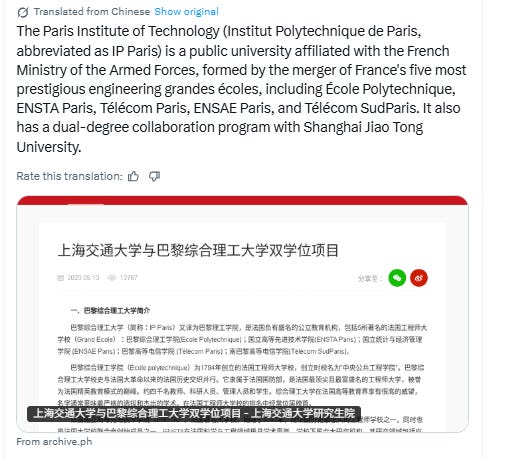
The scope of cooperation between France and CCP-linked academic systems extends beyond individual universities and programs. A notable case is Institut Polytechnique de Paris (IP Paris), a public institution under the authority of the French Ministry of Armed Forces. It brings together several of France’s most prestigious engineering schools, including École Polytechnique, ENSTA Paris, Télécom Paris, ENSAE Paris, and Télécom SudParis.
This institutional structure is significant: IP Paris is not a purely civilian academic body but is embedded within France’s defense-related higher education system.
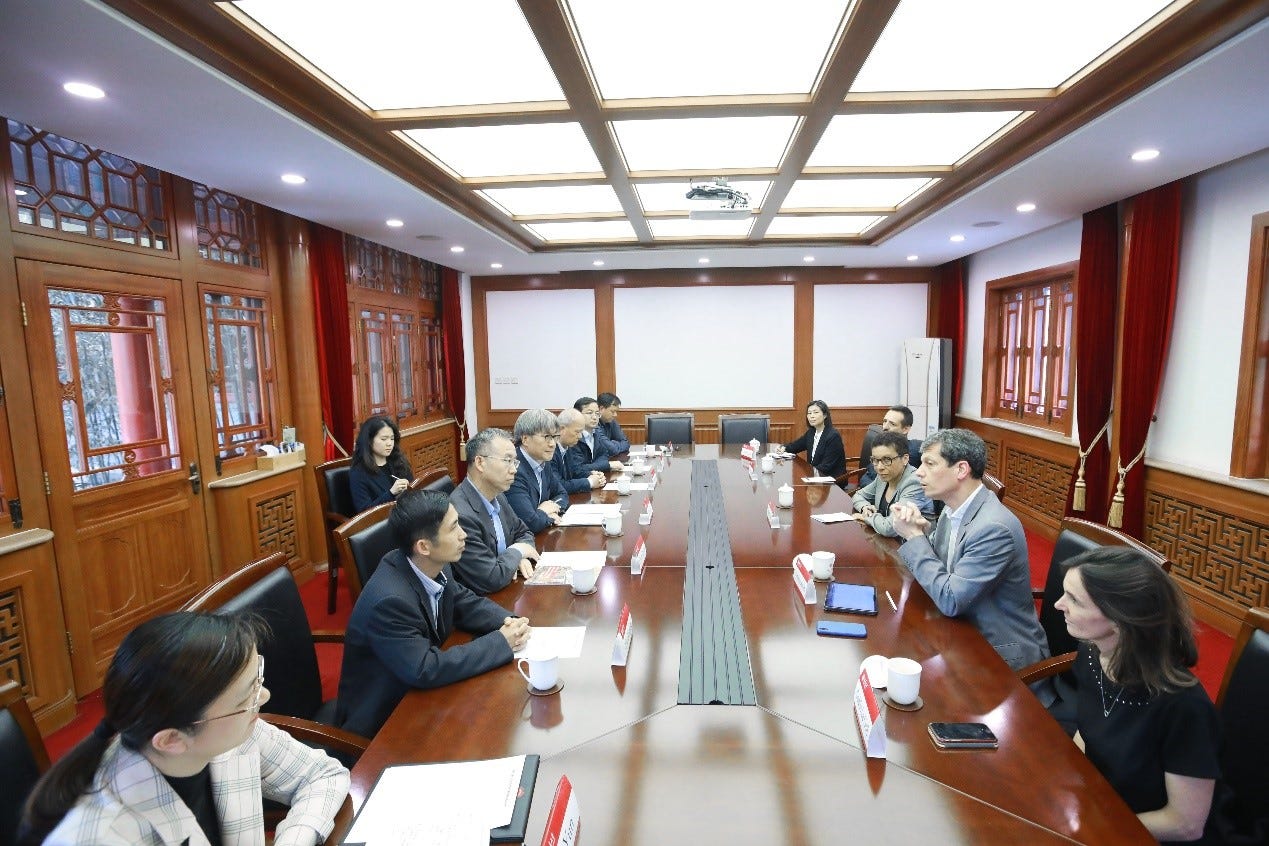
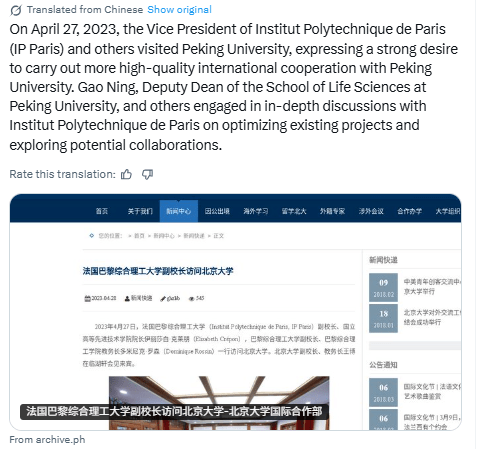
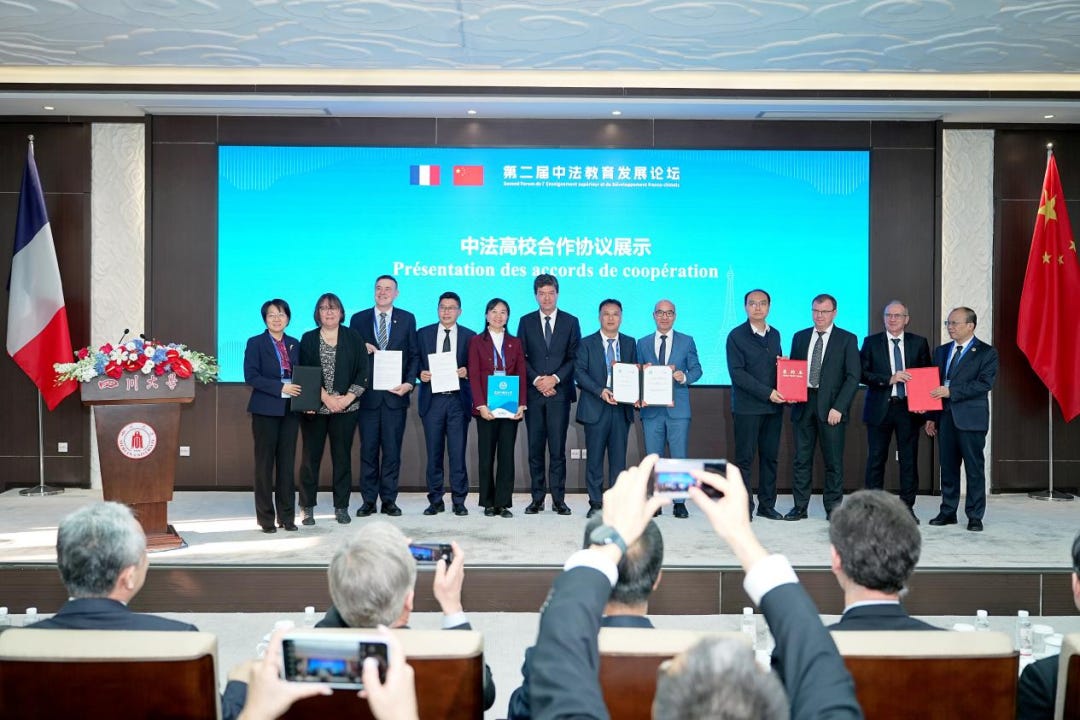
On April 27, 2023, senior leadership from Institut Polytechnique de Paris, including Vice President and ENSTA Paris Director Elisabeth Crépon and Vice President for Education Dominique Rossin, visited Peking University. They were received by PKU Vice President Wang Bo.
During the visit, both sides:
Reaffirmed long-standing cooperation
Discussed expanding joint degree programs, summer schools, internships, and international projects
Explored new areas for collaboration across disciplines including mathematics, physics, computer science, chemistry, and life sciences
French representatives explicitly expressed their intention to “develop more high-quality international cooperation” with Peking University.
This engagement follows earlier exchanges, including a visit by PKU President Gong Qihuang to IP Paris, where both sides discussed new models of international higher education cooperation under changing global conditions.
The broader implication is difficult to ignore: A French public institution tied to the Ministry of Armed Forces is actively deepening cooperation with a university system governed by the CCP, including in sensitive scientific and engineering domains.
This raises a structural question that cannot be dismissed as purely academic: when defense-affiliated institutions engage with CCP-controlled universities, such cooperation is not simply educational—it carries potential strategic and national security implications.
Dual Degrees, Shared Systems: IP Paris and Shanghai Jiao Tong University
The cooperation between France’s defense-linked academic institutions and CCP-aligned universities is not limited to Peking University. Another significant case is the dual-degree program between Shanghai Jiao Tong University and Institut Polytechnique de Paris (IP Paris).
Under this program, graduate students—primarily at the PhD level—split their studies between the two institutions and, upon completion, receive two degrees: one from Shanghai Jiao Tong University and one from IP Paris. Each student follows a jointly designed training plan supervised by advisors from both sides, ensuring deep academic and research integration rather than superficial exchange.
The scope of disciplines is particularly broad and strategically relevant, covering:
Artificial intelligence and data science
Telecommunications and electrical engineering
Physics and advanced mathematics
Mechanical and energy systems
Chemistry and chemical engineering
Biology and life sciences
These are not marginal fields—they represent the core technological domains underpinning both civilian innovation and military capability.
Crucially, Institut Polytechnique de Paris operates under the French Ministry of Armed Forces and includes elite schools such as École Polytechnique. Meanwhile, Shanghai Jiao Tong University is one of China’s top engineering institutions, deeply embedded in national strategic research and industrial development systems.
The structure of the program reinforces long-term integration:
Students must already be enrolled in PhD tracks
Joint supervision ensures sustained collaboration at the research level
Tuition waivers and institutional support reduce barriers to participation
Extended study periods (at least one year abroad) facilitate deep immersion
This is not a short-term exchange—it is co-development of high-level talent across two different political and institutional systems.
The implication is clear: A French defense-affiliated academic network is directly participating in the training of advanced researchers alongside a CCP-governed university system, across fields that are central to both economic competitiveness and national security.
When viewed alongside partnerships with Peking University and other institutions, this case further demonstrates that France–China academic cooperation extends into structurally sensitive domains—well beyond isolated or purely civilian collaborations.
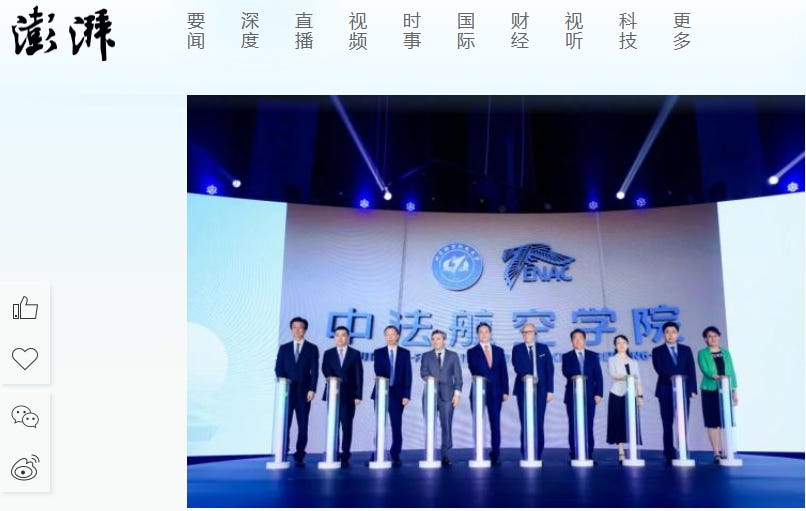
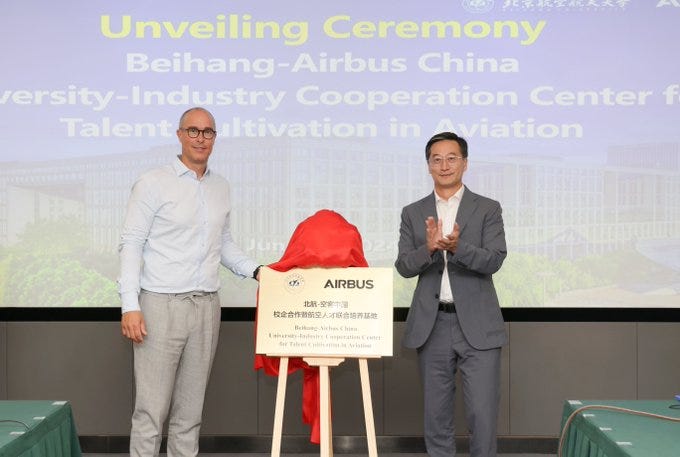
On September 15, 2023, the Beihang Sino-French Aviation Institute was officially inaugurated, marking a new phase in long-running cooperation between Beihang University and leading French institutions, including École Nationale de l’Aviation Civile.
This was not just another academic program.
It represents the institutionalization of a full-spectrum integration model, combining:
Undergraduate-to-master pipelines
Joint research centers
Corporate partnerships
Cross-border student flows
Strategic policy alignment
What began as academic exchange has evolved into permanent infrastructure embedded within China’s state-directed aerospace system.
2023: A New Institutional Platform
The launch event brought together:
Senior leadership from Beihang University
President Olivier Chansou of École Nationale de l’Aviation Civile
Officials from multiple CCP ministries, including education, foreign affairs, and industry
The institute immediately enrolled 180 undergraduate students in its first cohort.
Its structure is notable:
A 6-year integrated bachelor–master track
Programs in:
Transportation engineering
Airworthiness engineering
Measurement and control technology
Electronic information engineering
Trilingual instruction (Chinese–French–English)
This is not a short-term exchange—it is a full-cycle talent development system.
Civilian Education or Strategic Talent Pipeline?
Each of the institute’s core disciplines has dual-use relevance:
Airworthiness engineering → certification standards for aircraft (civil and military)
Measurement and control systems → critical for aerospace guidance and testing
Electronic information engineering → communications, avionics, and systems integration
Inside China’s system, these are not isolated academic fields—they are part of a civil-military fusion framework.
By embedding French educational resources into this structure, the program effectively creates:
A pipeline where internationally trained talent is produced inside a system aligned with state and defense priorities.
Scaling Up: From Programs to Ecosystems
The 2023 launch is only one layer of expansion.
1. Continuous French Student Intake
New agreements with the Groupe Centrale aim to:
Bring French students to China annually
Grant CCP-recognized degrees
Normalize long-term academic presence
This aligns with broader initiatives to increase European student participation at scale.
The cooperation between France and CCP-linked military-industrial universities is not limited to Beihang University. Evidence from a 2024 joint program shows that Centrale Group—through Centrale Nantes—also maintains structured partnerships with Nanjing University of Aeronautics and Astronautics, another key aerospace institution embedded in China’s defense ecosystem. The “3+1+2 / 4+2” dual-degree pathway allows students to split training between China and France, culminating in advanced engineering or master’s credentials. Critically, the program includes highly sensitive domains such as ocean engineering, including a specialization titled “Atlantic Ship Operations and Naval Engineering”—a field directly relevant to maritime systems operating in the Atlantic Ocean. This expands the scope of exposure beyond aviation into naval and oceanic engineering, raising strategic concerns: Western technical expertise, developed in open civilian institutions, is being funneled into a dual-use environment tied to the CCP’s military-industrial complex, with potential downstream implications for transatlantic security dynamics rather than just bilateral academic exchange.
Official messaging surrounding the 2023 launch emphasized:
“China–France friendship”
“global vision”
“community of shared future for mankind”
These are not neutral phrases—they are part of a standard CCP external narrative framework.
The combination of:
Technical education
International cooperation
Political messaging
creates a system where soft power, talent development, and strategic objectives operate simultaneously.
The Structural Reality
Across 2017 → 2018 → 2023 → 2024, a clear trajectory emerges:
Phase 1: Symbolic Engagement
High-level visits and diplomatic endorsement
Phase 2: Program Formation
Joint degrees and executive education
Phase 3: Institutionalization
Permanent institutes and full-cycle training
Phase 4: Ecosystem Integration
Research centers, corporate partnerships, global networks
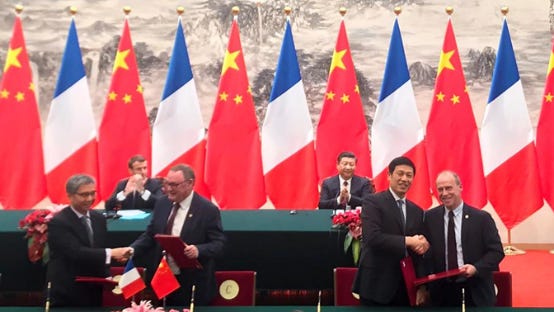
On January 9, 2018, under the joint witness of Xi Jinping and Emmanuel Macron, Beihang University signed a cooperation memorandum with École Nationale de l’Aviation Civile (ENAC).
The agreement led to the creation of the Beihang–ENAC Advanced Master in Aviation Management, a formally approved transnational degree program backed by China’s Ministry of Education.
On paper, it is a professional aviation management program.
In practice, it represents something far more consequential: a structured integration of Western civil aviation expertise into a CCP-controlled aerospace and defense ecosystem.
A Politically Endorsed Academic Channel
Unlike ordinary university partnerships, this agreement was not a low-level institutional initiative.
“Xi Jinping Thought on Socialism with Chinese Characteristics for a New Era”
Marxist philosophy coursework
This is not optional. It is mandatory ideological training embedded within a technical degree.
That means:
Foreign-linked students operate within a politicized academic framework
Management education is fused with Party doctrine
2. Industry Integration Across the Aviation Chain
The program targets professionals from:
Airlines
Airports
Air traffic service providers
Aerospace manufacturing and suppliers
This creates a cross-sector integration platform—linking:
Civil aviation operations
Industrial supply chains
Strategic aerospace capabilities
In China’s system, these sectors are not isolated—they are part of a broader civil-military fusion architecture.
3. Executive-Level Access Without Standard Academic Filters
Admission does not require China’s national graduate entrance exam.
Instead, it uses:
Application-based selection
Professional experience criteria
This allows mid-career professionals—often already embedded in industry—to enter the program.
Result:
Faster knowledge transfer
Direct impact on operational sectors
Reduced academic barriers to strategic integration
The Ideological Layer: Not Hidden, but Open
The contradiction becomes explicit when looking at internal Party activity within the same institutional framework.
Following the agreement period:
Party committees organized study sessions on CCP Congress directives
Faculty and students were mobilized to align with Party ideology
Foreign media coverage of CCP political events was incorporated into internal study
Even more striking:
There were explicit efforts to communicate CCP political narratives to foreign staff and educators
This is not incidental. It is policy.
The French Side: A Civilian Lens in a Strategic System
École Nationale de l’Aviation Civile is a globally respected civil aviation institution.
Its mandate:
Train civilian aviation professionals
Advance safety, management, and efficiency
But when paired with Beihang University, its expertise enters a fundamentally different system:
One where civil and military aviation are interconnected
Where universities operate under Party leadership
Where knowledge transfer can serve state strategic goals
The mismatch is structural:
France operates in a civilian regulatory framework
China operates in a state-directed, dual-use framework
The Strategic Implication
This program is not just about education.
It functions as:
A Knowledge Transfer Mechanism
Western aviation management practices enter a CCP-aligned ecosystem.
A Talent Development Pipeline
Professionals trained under this system move into aviation sectors with dual-use relevance.
A Legitimacy Shield
International partnerships provide credibility to institutions with military affiliations.
A Policy-Level Endorsement
The presence of Xi Jinping and Emmanuel Macron signals that this is not accidental—it is state-backed integration.
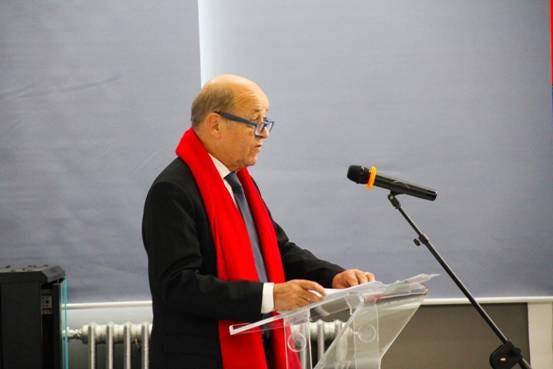
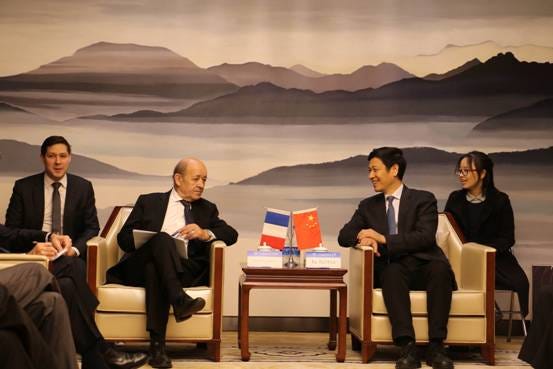
On November 25, 2017, then–French Foreign Minister Jean‑Yves Le Drian visited Beihang University (formerly Beijing University of Aeronautics and Astronautics), one of the People’s Republic of China’s key military-industrial universities.
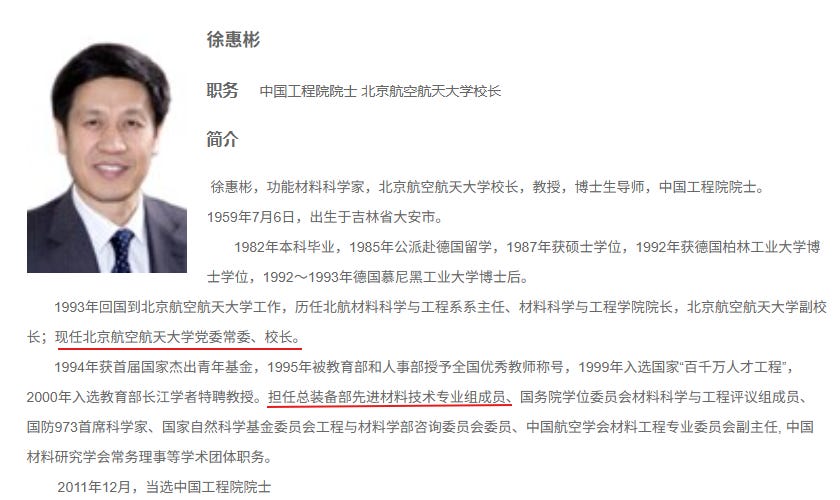
During the visit, Le Drian met with university president Xu Huibin—a senior academic who simultaneously held roles tied to the People’s Liberation Army (PLA), including participation in advanced materials programs connected to military development.
The visit included:
Formal talks and public praise of Sino-French academic cooperation
Participation in a joint “engineering institute” program
Acceptance of ceremonial gifts
Engagement with Chinese and French corporate representatives
This episode illustrates a deeper structural issue: Western political elites engaging with institutions embedded in the CCP’s military-industrial ecosystem under the banner of “academic cooperation.”
The Visit: Optics vs Reality
Official accounts framed the visit as a celebration of educational and cultural exchange. Le Drian praised the joint initiative between Beihang and the Groupe Centrale, calling it a model of bilateral cooperation.
Students performed French songs. Delegations exchanged pleasantries. Gifts were presented—including a personalized seal and symbolic items.
On the surface, it looked like soft diplomacy.
But the institutional context tells a very different story.
Beihang University: A Military-Industrial Hub
Beihang University is not a typical civilian university.
It is one of the “Seven Sons of National Defense”—a group of universities directly tied to China’s defense sector, supplying talent and research to the PLA and state defense conglomerates.
Its core functions include:
Aerospace engineering for military applications
Advanced materials research linked to weapons systems
Direct collaboration with defense contractors and PLA units
The presence of Xu Huibin—who held roles within PLA-linked technical groups—underscores that this was not merely an academic meeting, but an interaction with a dual-use and military-relevant ecosystem.
The “Engineering Institute” as a Technology Bridge
The Sino-French Engineering Institute, jointly run with Groupe Centrale, is often described as an educational success story.
However, such programs serve multiple strategic functions:
1. Talent Pipeline Integration
French-trained engineers are embedded into a system aligned with state and military priorities.
2. Knowledge Transfer
Western engineering methodologies, standards, and research approaches are absorbed into a dual-use environment.
3. Corporate Interface
The “Enterprise Open Day” attended by Le Drian brought together:
Multinational companies
Chinese state-linked firms
Students entering the workforce
This creates a direct bridge between Western industry and CCP-aligned defense ecosystems.
Political Messaging and Ideological Alignment
The timing is critical.
Just days after the visit, on December 4, 2017, the institute’s Party leadership convened a meeting to:
Study and implement the outcomes of the 19th National Congress of the Communist Party of China
Align the institution with Xi Jinping Thought
Expand ideological work among:
Chinese students
Foreign faculty
International staff
Notably, the leadership explicitly emphasized:
Using foreign-language capabilities to interpret and disseminate CCP ideology internationally
Strengthening Party organization among overseas-connected personnel
Promoting political messaging to foreign teachers and partners
In other words, the same institution hosting European cooperation was simultaneously intensifying political indoctrination and external influence efforts.
The Strategic Contradiction
This case reveals a fundamental contradiction in Western engagement with CCP-linked institutions:
Public framing: Cultural exchange, education, openness
Operational reality: Integration into a centralized, Party-controlled, military-relevant system
Le Drian’s visit—complete with praise, participation, and symbolic exchanges—effectively legitimized an institution operating at the intersection of:
Academia
Defense research
Political indoctrination
Why This Matters
This is not an isolated incident. It reflects a broader pattern:
Dual-use ambiguity Civilian academic partnerships mask military relevance.
Elite capture through access and ceremony High-level visits create political endorsement without scrutiny.
Asymmetric openness Western institutions operate transparently; CCP-linked institutions do not.
Ideological export embedded in cooperation Even joint programs become channels for political messaging.
When the world examines how the CCP inserted itself into European political, economic, and informational systems, one document stands out as a potential force multiplier for Beijing’s influence inside the EU: the EU–China 2020 Strategic Agenda for Cooperation.
What was marketed as a roadmap for “strategic cooperation” quietly established structural channels through which the CCP could shape EU positions, especially in areas touching global security, sanctions, and alignment with the United States. When Russia launched its full-scale invasion of Ukraine, the EU attempted to move in lockstep with the U.S.—yet internal hesitation, mixed messaging, and fragmented sanction responses revealed deeper systemic vulnerabilities.
One of those vulnerabilities may be rooted in the very architecture of cooperation laid out in the 2020 Agenda.
Why This Document Matters Now
The 2020 Strategic Agenda was not a harmless diplomatic paper. It created a dense mesh of institutional linkages, political dialogues, policy harmonization channels, and “joint action” mechanisms. Many of these mechanisms gave the CCP unprecedented access to EU structures and policymaking psychology—access the U.S. never received.
The Agenda explicitly promotes:
Coordinated positions on major global issues
Joint responses to regional conflicts
Expanded cooperation on “peace and security”
Security-sector dialogue and joint training
Collaboration in international forums (UN, G20, etc.)
This is not normal for any democratic alliance with an authoritarian regime—much less with a regime categorized by the European Parliament as a “systemic rival.”
The question is simple: Did these structures later make it harder for the EU to fully align with U.S. sanctions against Russia—one of the CCP’s most important strategic partners?
A Crucial Observation: Why This Issue Came Into Focus
The trigger for re-examining the 2020 Agenda was the role of Zhang Yi, chair of the EU–China Urban Development Commission—an organization whose listed responsibilities reveal the deeper operational logic of the 2020 framework.
This Commission claims it exists to:
Promote cooperation between EU institutions, EU member states, and all levels of CCP government
Facilitate communication between EU institutions and CCP authorities
Provide services for cultural, economic, scientific, and technological cooperation
Support EU member states’ promotional and outreach activities in China
Introduce European technologies, education, and creative industries to China
Assist European firms in “landing” in China
Assist CCP provincial and municipal governments in promoting themselves inside Europe
Help Chinese enterprises “go out” into the EU market
Offer legal, policy, and commercial consulting to Chinese firms entering Europe
Implement EU–China Urbanization Partnerships and Belt & Road–related projects
Execute projects under the EU–China 2020 Strategic Agenda for Cooperation
This is not simply an “exchange” organization. It is an implementation arm—a civilian-front tool designed to embed CCP-linked agendas into EU localities, institutions, and corporate environments.
The most concerning part: It explicitly works to implement the 2020 Strategic Agenda—meaning it operates as a pipeline for the CCP’s political, economic, and regulatory interests inside the EU.
Once examined in this context, the 2020 Agenda begins looking less like a cooperation plan and more like an infrastructure that could dampen or delay EU alignment with U.S. security and foreign-policy priorities—including sanctions on regimes supported by Beijing.
How the 2020 Framework Could Undermine EU–U.S. Unity on Russia
1. The Agenda institutionalized political coordination mechanisms with the CCP
These mechanisms could be exploited to:
Influence EU positions on Russia
Promote “multipolarity” narratives aligned with Beijing
Encourage EU “strategic autonomy”—a euphemism for weakening transatlantic unity
2. It integrated CCP agencies into European policy ecosystems
Enhanced “dialogues,” security cooperation, and joint training created inappropriate proximity between EU political institutions and an authoritarian power with its own anti-Western agenda.
When the Ukraine crisis escalated, these channels would naturally act as brakes on rapid alignment with U.S. sanctions.
3. It empowered CCP-linked intermediaries inside Europe
Organizations like the EU–China Urban Development Commission—ostensibly European but functionally aligned with CCP interests—gain legitimacy as “EU partners.” These intermediaries are able to influence:
Local governments
Universities
Think tanks
Business councils
Urbanization programs
Development policy discussions
This embedded presence dilutes policymaker resistance to CCP narratives.
4. It normalized security cooperation with the CCP
Joint actions on policing, crime, cybersecurity, maritime security, and Arctic affairs create an illusion of “shared security interests”—which is strategically false. But once institutionalized, these activities psychologically position China as a “security partner.” Such framing makes it more difficult for EU officials to see the CCP as a threat actor supporting Russia.
5. It allowed the CCP to shape EU thinking on “global governance”
The Agenda repeatedly emphasizes “multilateralism,” “rule-based order,” “equity,” and “global governance reform”—concepts the CCP weaponizes to weaken U.S. leadership and strengthen Moscow–Beijing influence.
6. It opened channels for the CCP to quietly lobby inside EU institutions
With hundreds of legitimate “cooperation” events per year, the CCP gained ample opportunity to apply pressure behind closed doors whenever Western sanctions threatened Beijing or its allies.
Why This Matters Today
When examining the EU’s inconsistent response to:
sanctions on Russia
CCP coercive diplomacy
technology-security alignment with the U.S.
human-rights accountability
energy-strategy decoupling timescales
…it becomes increasingly clear that the EU’s internal friction is not merely accidental.
Part of the friction may stem from the political, diplomatic, and psychological infrastructure built by the 2020 Agenda.
This is not a conspiracy theory. It is a structural analysis of institutional incentives and political penetration.
The CCP spent a decade cultivating these channels. It would be naive to assume they had no influence when sanctions on Russia—Beijing’s strategic partner—were on the line.
Conclusion: Time for a Comprehensive Audit
The EU member states, the United Kingdom and the United States must conduct a full audit of:
all institutional mechanisms created under the 2020 Agenda
all affiliated organizations operating in Europe
all political-dialogue structures created with the CCP
all local-level partnerships involving CCP entities
all security-cooperation programs with Beijing
the direct and indirect influence these mechanisms may exert on EU positions regarding Russia
If the EU wants to restore strategic alignment with the United States, especially on Russia and other authoritarian threats, it must first identify and dismantle the CCP-built infrastructure that obstructs unified action.
The EU–China 2020 Strategic Agenda may be one of the most under-examined elements of Europe’s geopolitical vulnerability. It deserves a thorough and unflinching reassessment.
A comprehensive audit cannot be entrusted to EU institutions themselves. By the mid-2010s, the EU’s central bureaucracy had already been drawn into a policy orbit shaped by Beijing, to the point where its regulatory, legal, and even auditing functions may have been influenced—directly or indirectly—by CCP-trained lawyers, consultants, and accounting firms embedded in EU-China cooperation structures. Allowing the EU to “audit itself” would only guarantee a whitewash.
For this reason, the responsibility must fall on the EU member states individually, particularly those with historical experience confronting Soviet-style political manipulation. Many Central and Eastern European countries—having lived through communist infiltration, coercive diplomacy, and institutional capture—possess an instinctive understanding of the CCP’s methods and are far less susceptible to its narratives.
In addition, the United Kingdom and the United States must conduct their own parallel audits:
The UK, because it was still part of the EU in 2015, meaning UK taxpayer resources may have flowed into CCP-aligned programs that ultimately undermined Britain’s national security.
The United States, because it is the primary guarantor of European defense; any structure that weakened transatlantic unity, softened EU policy toward Russia, or expanded the CCP’s influence inside European institutions directly affects U.S. strategic interests.
Only member-state-level, UK-level, and U.S.-level investigations—not EU-level self-examination—can identify the full extent of the CCP’s penetration of European governance, legal oversight, and policy formation.
A Potential CCP Tool to Disrupt EU–U.S. Joint Sanctions on Russia by CPA Jim
Why the “EU–China 2020 Strategic Agenda for Cooperation” Deserves Immediate Scrutiny

















No comments:
Post a Comment