History is rarely a collection of isolated events; it is a continuous torrent where the unpunished transgressions of the past act as fertile soil for greater catastrophes in the future. Today, as the world still grapples with the lingering geopolitical, social, and economic fallout of the 2019 COVID-19 pandemic, global analysts routinely scan for immediate technical failures or recent bureaucratic cover-ups. Yet, the true institutional architecture that enabled the obfuscation of the Wuhan outbreak was designed seven decades ago. By failing to hold the Chinese Communist Party (CCP) legally and historically accountable for its actions during the Korean War (1950–1953), the international community permitted the creation of a domestic and constitutional system engineered to guarantee absolute impunity.
The Genesis of Absolute Power: The Korean War and the War-God Paradigm
Between 1950 and 1953, the newly established People’s Republic of China intervened in the Korean War, backing North Korea’s aggression. On the domestic front, this conflict was utilized by Mao Zedong to consolidate total authority, purging internal dissent under the banner of wartime mobilization. Internationally, because of the realities of the burgeoning Cold War, no international military tribunal was ever convened to investigate potential war crimes, aggressive warfare, or tactical propaganda campaigns orchestrated by the Chinese Communist state.
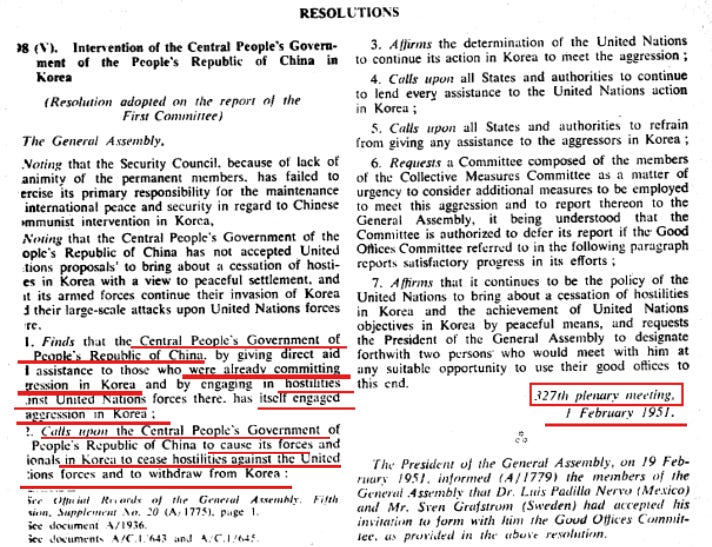
Crucially, this period marked the birth of the CCP’s institutional monopoly over biological and medical narrative creation. In August 1951, by a secret directive of the Central Military Commission to meet “urgent wartime needs,” the Academy of Military Medical Sciences (AMMS) was hastily founded in Shanghai. This military-medical complex immediately went to work formulating the regime’s international propaganda campaign accusing the United States of waging biological warfare. By establishing a system where military scientists possessed exclusive rights over pathogens, epidemiology, and forensic data, the party discovered a potent formula: severe crises could be completely neutralized through highly coordinated, militarized scientific narratives, insulated entirely from independent civilian verification.
Mao faced zero legal accountability—either from the international community or within a domestic constitutional framework—the limits of top-tier executive power were completely erased. This feedback loop of “zero-cost decision making” directly paved the way for subsequent state-engineered domestic tragedies: the Great Leap Forward which triggered a catastrophic man-made famine, the societal madness of the Cultural Revolution, and the coercive human rights violations of the One-Child Policy.
The Constitutional Fortress: “Guns in the Parliament”
To ensure that the regime’s decisions could never be legally challenged or scrutinized, the CCP formalized its governance via the National People’s Congress (NPC) system, established in 1954. Far from being a traditional parliament, the NPC was structurally engineered to eliminate accountability through two distinct mechanisms:
Total Pre-Screening of Candidacy: The electoral process systematically filters out independent representation. Since candidates must be vetted and approved by the Party apparatus, representatives owe their political survival upward to the Party, rather than downward to the electorate.
The Institutionalization of Military Supervision: In a unique constitutional anomaly, the People’s Liberation Army (PLA) does not answer to the state, but strictly to the Chinese Communist Party, and it operates as its own independent legislative delegation within the NPC. At the national level, the military delegation commands roughly 10% of the total voting power.
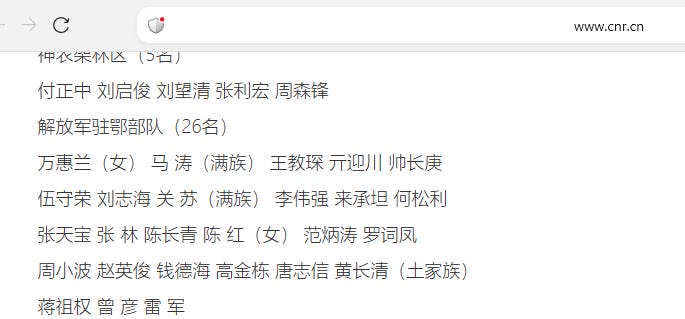
Official state records demonstrate that this “military delegation” design is perfectly mirrored down to every tier of local government. In the 2022–2023 legislative sessions, official state announcements confirmed that the Provincial People’s Congress of Guangdong allocated 33 seats to “Troops Stationed in Guangdong,” Sichuan allocated 30 seats to “Troops Stationed in Sichuan,” and Beijing allocated 28 seats to “驻京解放军和武警部队” (PLA and Armed Police Troops Stationed in Beijing)
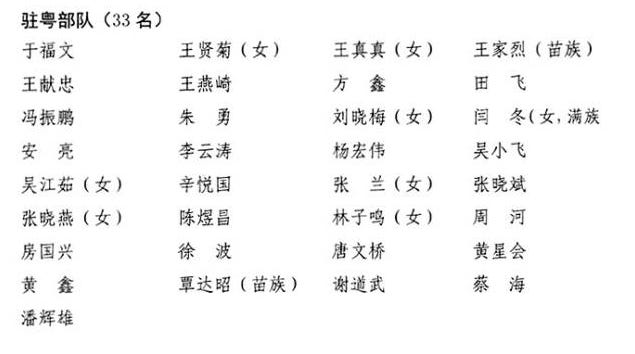
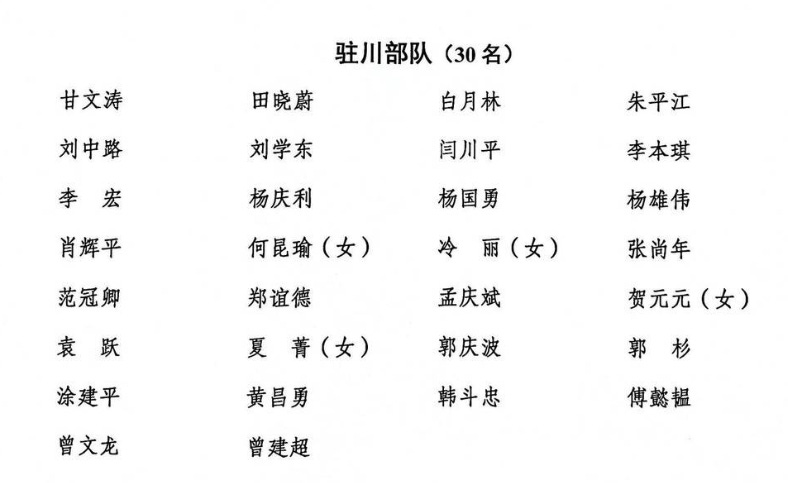
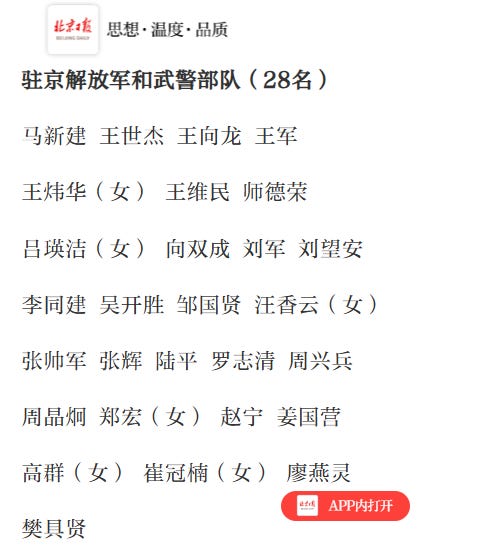
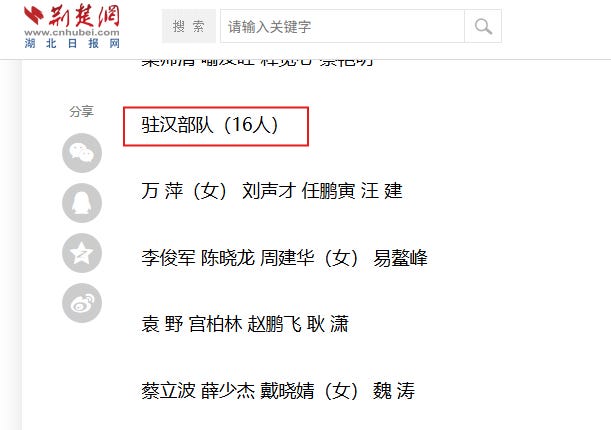
Most telling of all, at the epicenter of the 2019 outbreak, the Wuhan Municipal People’s Congress (地级市) explicitly listed “武汉驻军” (Wuhan Garrison) as a distinct, independent voting bloc—holding 15 seats in 2017, which actually increased to 16 seats in January 2022 following the peak of pandemic lockdowns.

Furthermore, historical records published by official organs like People’s Daily reveal that this crossover goes even deeper through an “invisible alignment.” Since the 1950s, high-ranking military physicians and researchers (such as Korean War medical team leaders and military hospital directors) have routinely bypassed the explicit military delegation quotas. Instead, they have been strategically integrated into civilian regional delegations under the guise of “Science and Technology,” “Medical Care,” or “Women’s Rights” representatives.
The Crisis Management SOP: From Tiananmen to Wuhan
This structural interlocking of the Party, the judiciary, and the military creates an unbreakable constitutional loop. In the Chinese legal framework, the judiciary is not independent; the courts must formally report their work to the People’s Congresses. Because these legislative bodies are heavily anchored by screened party members and active-duty military overseers, it is structurally impossible for a civilian court to accept a lawsuit against the state. This explains why, in 2020 and 2021, grieving families in Wuhan who attempted to sue the local and provincial governments for pandemic negligence and early-stage cover-ups found their cases uniformly rejected, with courts refusing to even issue formal rejection notices.
When a crisis threatens the regime’s legitimacy, the state activates a standard operating procedure (SOP) first perfected in the 1950s, repeated in 1989, and deployed again in 2019:
In June 1989, following the lethal military crackdown on student protestors in Tiananmen Square, Deng Xiaoping delivered a definitive speech on June 9th to military commanders. He immediately inverted the reality, officially labeling the student movement an “anti-revolutionary riot” aimed at destroying the state, praising the military for “passing the political test” while framing the army as the true victim.
In December 2019, when a novel pathogen began spreading through the dual-use, military-civilian biotech hubs of Wuhan, the regime defaulted to this exact historical playbook. Civilian whistleblowers and physicians were forcibly silenced and “admonished” by state security. When the scale of the disaster spilled onto the global stage, the state apparatus deployed its diplomatic and media machinery to blame external forces—alleging without evidence that the U.S. military had imported the virus during the October 2019 Military World Games in Wuhan, and pointing fingers at Fort Detrick.
The domestic enforcement of this cover-up was seamless because the local power structures in Hubei and Wuhan were already occupied by the very forces requiring protection. With military medical expert teams (such as Major General Chen Wei’s biological defense division) taking immediate, classified control of regional virology labs, and with 16 garrisoned military representatives sitting directly in the Wuhan Municipal Congress, any domestic legislative inquiry, independent journalistic investigation, or civilian judicial accountability was strangled at the root
Conclusion: The Cost of Historical Neglect
The global catastrophe of 2019 was not merely an accident of biology; it was the inevitable output of an unaccountable political machine. When the international community chose convenience over justice in the wake of the Korean War, it permitted a totalitarian system to build an unassailable domestic fortress.
By allowing a regime to integrate its military apparatus directly into its legislative and judicial organs, and by validating a political model where technical failures are routinely converted into external conspiracy narratives, the world granted the CCP a license for perpetual impunity. The iron curtain of secrecy that descended upon Wuhan in the winter of 2019 was forged in the unpunished transgressions of 1950. Until history is viewed as a continuous chain of institutional cause and effect, the world remains entirely vulnerable to the next, even greater calamity engineered by unchallenged power.
No comments:
Post a Comment