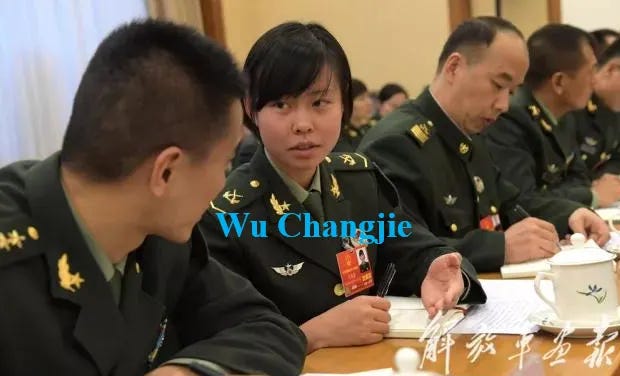
The fundamental danger of the Chinese Communist Party’s (CCP) system lies in the deliberate blurring of military power, civilian governance, and asymmetric warfare strategy. While Western analysts often dismiss the National People’s Congress (NPC) as a passive rubber-stamp parliament, the inclusion of active-duty elite military officers inside China’s highest legislative delegation—the PLA and People’s Armed Police delegation—reveals a far more sinister reality: elite military operatives actively shape state policy while executing specialized warfare mandates.
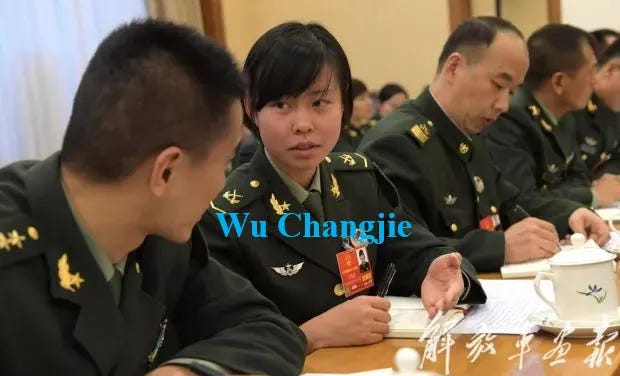
Among the hand-picked representatives of the 13th NPC is Wu Changjie (吴昌洁), a female special forces operator born in 1994 who enlisted in 2013 and rose through the ranks of an elite special operations brigade in the 75th Group Army.

                  +----------------------------------------------+
                  | Central Military Commission of the CCP (CMC) |
                  +----------------------------------------------+
                                         |
                                         v
                  +----------------------------------------------+
                  | 75th Group Army Special Operations Brigade   |
                  | Special Forces Operator: Wu Changjie         |
                  +----------------------------------------------+
                                         |
            +----------------------------+----------------------------+
            |                                                         |
            v                                                         v
+------------------------------------+   +------------------------------------+
| Legislative Delegate               |   | Unconventional Warfare Asset       |
| Active Member, 13th National       |   | Expert in Extreme Survival, Recon,  |
| People's Congress (PLA Delegation) |   | CQC, Hand-to-Hand Combat & Infiltration|
+------------------------------------+   +------------------------------------+
The Anatomy of an NPC Special Forces Operator
Wu Changjie is not an administrative officer; she is a hardened combatant trained in extreme wilderness survival, demolition, reconnaissance, close-quarters combat (CQC), and deep infiltration.
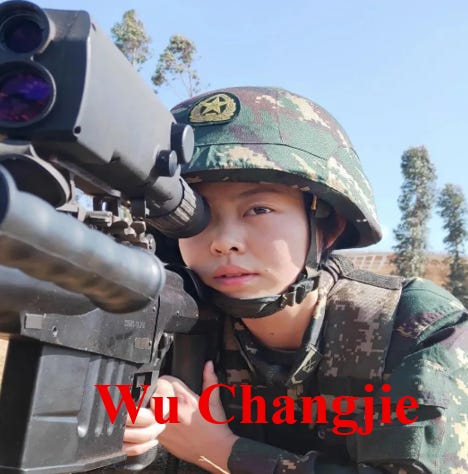
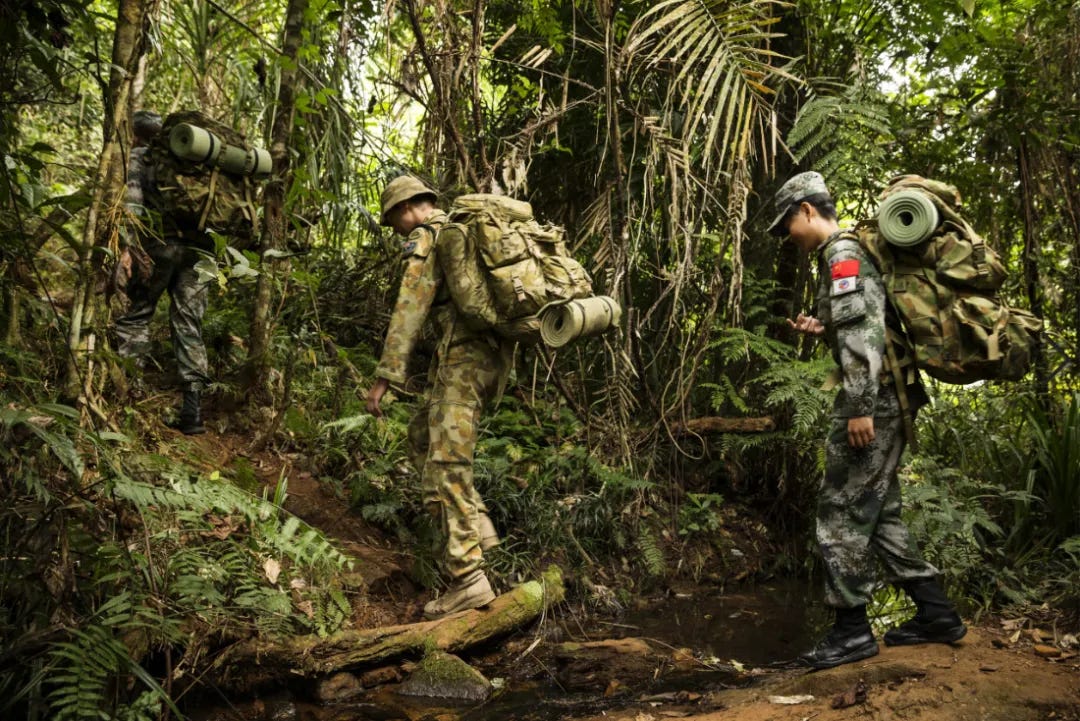
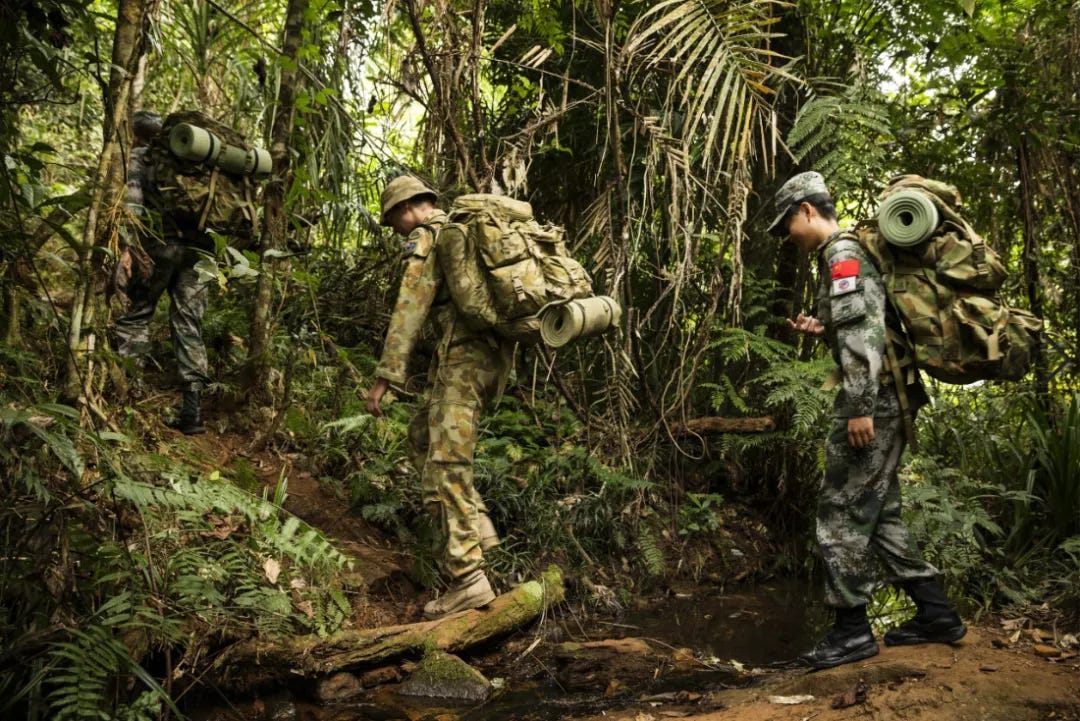
Extreme Jungle Survival & Ritual Training: Official state military reports detail Wu’s training regime, which includes surviving in dense jungle without supplies, gnawing tree bark, slaughtering snakes and pigs, and drinking raw, warm chicken blood—a standard PLA special forces survival protocol designed to desensitize operators to gore and maintain caloric intake in extreme conditions.
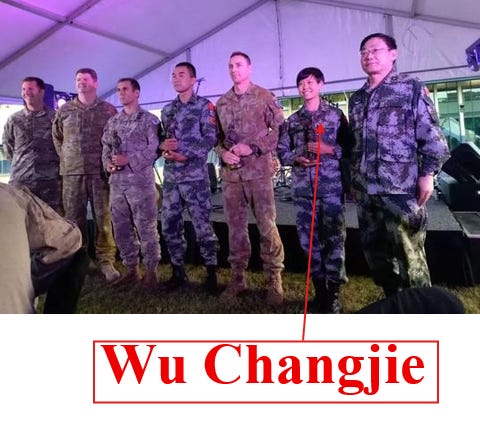
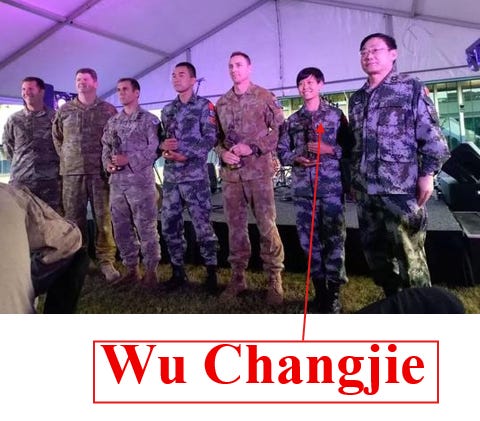
Foreign Defense Infiltration: In 2017, Wu was selected to represent the PLA Army in “Kowari 2017,” a trilateral joint survival exercise in Queensland, Australia, alongside US and Australian forces. During riverine maneuvers, she suffered a dislocated shoulder, concealed the injury, and pushed through severe physical trauma to secure an Australian military award—demonstrating the extreme psychological conditioning enforced by PLA special units.
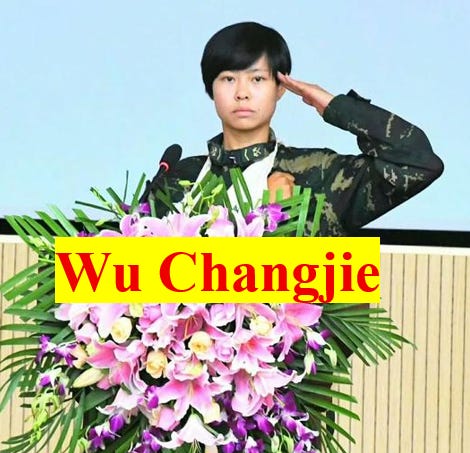
Legislative Ideological Strategy: Installed in the 13th NPC as a representative of the armed forces, Wu submitted proposals focusing on political indoctrination and expanding CCP ideological control through new media platforms, using her legislative seat to advocate for total combat readiness and ideological absolute control.
+------------------------------------------------------------------------------------------------------------------------+
|                                  WU CHANGJIE: SPECIAL FORCES & LEGISLATIVE PROFILE                                     |
+------------------------------------------------------------------------------------------------------------------------+
| PERIOD / ROLE                    | MILITARY & OPERATIONAL CAPABILITIES     | LEGISLATIVE & STRATEGIC IMPACT              |
+----------------------------------+-----------------------------------------+-------------------------------------------+
| 75th Group Army Special Ops      | Trained in explosive handling, 10m cliff| Served as key propaganda tool for PLA     |
| (2013–Present)                   | jumping, unarmed combat, jungle survival.| combat desensitization and readiness.     |
+----------------------------------+-----------------------------------------+-------------------------------------------+
| Kowari 2017 Trilateral Drill     | Penetrated US/Australian military sphere| Embedded with Western armed forces; evaluated|
| (Australia)                      | under joint training cover.             | foreign survival tactics and capabilities.|
+----------------------------------+-----------------------------------------+-------------------------------------------+
| 13th National People's Congress  | Active legislative delegate in the PLA  | Advised on military indoctrination and    |
| Delegate                         | & PAP parliamentary delegation.         | ideological media warfare strategies.    |
+----------------------------------+-----------------------------------------+-------------------------------------------+
The Infiltration Vector: Drinking Chicken Blood on the Migration Route
The presence of PLA special forces operators within national governance institutions takes on an urgent national security dimension when examined against the unprecedented surge of military-age Chinese migrants entering the United States via the southern border.
US local media and intelligence observers covering the illegal migration trail through Central and South America recorded an anomaly in late 2023:
A group of six young Chinese men stopped at a hotel along the migration route in Panama, purchased a live chicken, drained its blood into small glasses, drank the raw blood, and subsequently cooked the bird. Local managers and observers noted that drinking raw chicken blood is not a common civilian custom in China, but rather a signature field-survival ritual practiced specifically by PLA special forces soldiers during wilderness conditioning.
This detail exposes a critical intelligence vulnerability: unconventional military operatives may be utilizing civilian migration routes to enter the United States undetected.
                     +---------------------------------------+
                     | PLA Special Forces / Active Cadres    |
                     +---------------------------------------+
                                         |
                                         v
                     +---------------------------------------+
                     | Tactical Disguise: Civilian Migrant   |
                     | Blend into illegal migrating Streams    |
                     +---------------------------------------+
                                         |
                                         v
                     +---------------------------------------+
                     | Border Crossing & Infiltration        |
                     | Exploit Processing & Release System   |
                     +---------------------------------------+
                                         |
                                         v
                     +---------------------------------------+
                     | Asymmetric Pre-Positioning            |
                     | Reconnaissance, Sabotage, Subversion  |
                     +---------------------------------------+
The Border Infiltration Loophole: Central Military Commission Control and the Statutory Cover of “Non-War Military Actions”
An analysis of the institutional ties surrounding special forces delegates like Wu Changjie—a decorated member of the 75th Group Army Special Operations Brigade—exposes the seamless administrative chain linking elite special forces, the Central Military Commission (CMC), and China’s border control apparatus. While Western observers treat border crossings and immigration enforcement as civilian policing functions, the internal power structure of the People’s Republic of China ensures that border access, military exit orders, and legislative mandates remain under absolute military command.
                      +-------------------------------------------------+
                      |   Central Military Commission of the CCP (CMC)  |
                      | (Absolute Command of Armed Forces & Land Borders)|
                      +-------------------------------------------------+
                                               |
         +-------------------------------------+-------------------------------------+
         |                                     |                                     |
         v                                     v                                     v
+------------------+                 +------------------+                 +------------------+
| Joint Staff /    |                 | PLA Land Border  |                 | Operational      |
| Political Work   |                 | Defense Units    |                 | Special Forces   |
| Departments      |                 | (Border Guard)   |                 | (75th Group Army)|
+------------------+                 +------------------+                 +------------------+
         |                                     |                                     |
         +-------------------------------------+-------------------------------------+
                                               |
                                               v
                      +-------------------------------------------------+
                      | Statutory Cover: Non-War Military Actions (NWMA)|
                      | Legitimizes Covert External Deployments & Exits |
                      +-------------------------------------------------+
Direct Military Access to the Highest Command Organs
The official narrative surrounding Wu Changjie explicitly highlights her direct connection to the highest levels of the military hierarchy. Following her participation in the “Kowari 2017” joint training exercise in Australia, Wu was personally invited by the CMC Joint Staff Department (中央军委联合参谋部) to serve as an official guest accompanying Rebecca Skinner, Associate Secretary of Defense and the Deputy Secretary for Strategic Policy Intelligence of Australia. Simultaneously, her unit was officially commended by the CMC Political Work Department (中央军委政治工作部) as a model youth team.
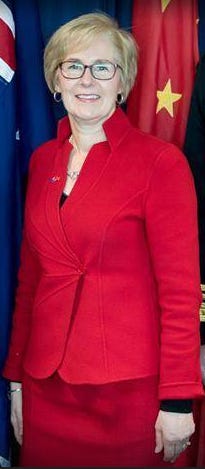
These institutional connections demonstrate that elite special operations personnel do not operate within isolated tactical silos. They maintain direct reporting and operational channels to the CMC Joint Staff Department—the supreme command body responsible for operational planning, intelligence, special operations, and international military deployments.
Total Military Dominance Over China’s Borders
A critical oversight in Western analysis of Chinese border security is the assumption that cross-border movements are controlled solely by civilian Ministry of Public Security (MPS) immigration police. In reality:
PLA Border Defense Control: Following the 2015–2018 military reforms, the primary security along China’s thousands of kilometers of land borders (including border corridors in Yunnan, Guangxi, Tibet, and Xinjiang) is assigned directly to PLA Border Defense Troops (陆军边防部队) under the operational command of the respective Theater Commands and the CMC.
Subordination of Immigration Forces: Even the former Public Security Border Troops (公安边防部队) were stripped of civilian administrative ties during the 2018 structural reforms, with border security functions reorganized under unified party-state control mechanisms dominated by CMC.
“Non-War Military Actions” as a Statutory Cover for Infiltration
This structural reality clarifies the intense push by military delegates in the National People’s Congress—such as Major General Cui Yuling and Professor Wang Xuanyu—to enact legislation on Non-War Military Actions (NWMA / 非战争军事行动).
Under standard peace-time legal definitions, deploying military assets across borders without declaring war presents international and domestic legal hurdles. However, the legal doctrine of Non-War Military Actions—formally codified via CMC regulations signed in 2022—provides explicit legal authority for the PLA to deploy troops, intelligence personnel, and special operations units internationally for tasks including:
International humanitarian assistance and disaster relief
Maritime protection and asset security
Counter-terrorism, intelligence reconnaissance, and specialized covert missions
Under the cover of an official NWMA command, active-duty special operations personnel can be legally ordered by the CMC to execute cross-border movement, infiltrate foreign territories, or pre-position personnel under non-combat guises. Because the military commands both the border defense posts and the special operations units, these personnel can bypass civilian customs and border checks entirely, moving seamlessly from Chinese garrison facilities into foreign infiltration corridors.
The Threat of Asymmetric Pre-Positioning
When an active-duty PLA special forces operator like Wu Changjie can serve simultaneously as a state lawmaker, the boundary between military force, civilian society, and intelligence operations disappears entirely.
Exploiting Asymmetric Vulnerabilities: While US border agencies evaluate migrants primarily through economic or asylum frameworks, trained special operators possess the survival skills (demonstrated by raw blood consumption and extreme physical conditioning) to navigate hazardous jungle corridors like the Darién Gap with minimal logistical footprint.
Pre-Positioning Sabotage Networks: PLA special forces are explicitly trained in reconnaissance, infrastructure sabotage, and guerrilla tactics. In the event of a Western Pacific conflict (e.g., over Taiwan), sleeper cells or pre-positioned military personnel who successfully crossed the US border under the guise of asylum seekers could execute targeted attacks on power grids, military supply lines, and communication nodes.
The Legislative-Military Pipeline: The CCP routinely integrates combat-trained special operators into state political organs. An regime that uses special forces soldiers to write state laws is equally capable of deploying those same trained operatives across international borders as disguised civilian migrants.
The Western perception of Chinese migrants as exclusively economic refugees fails to account for the CCP’s doctrine of civil-military fusion. As special operations rituals emerge along illegal migration corridors, national security authorities must recognize that the individuals entering the homeland may not be escaping the party-army—they may be its trained tip of the spear.
The Bureaucratic Dichotomy: Policy Diplomacy vs. Operational Execution in PLA Overseas Engagement
The administrative architecture of the Chinese People’s Liberation Army (PLA) handles foreign-related defense matters through two primary, distinctly structured institutions established under the 2015–2016 military reforms: the Office for International Military Cooperation of the Central Military Commission (CMC-OIMC) and the Overseas Operations Bureau under the Joint Staff Department Operations Bureau (CMC-JSD-OO).
While both entities navigate China’s expanding global footprint, their differences lie in rank, institutional hierarchy, operational domain, and structural purpose.
                  +-------------------------------------------------+
                  |   Central Military Commission of the CCP (CMC)  |
                  +-------------------------------------------------+
                                           |
                   +-----------------------+-----------------------+
                   |                                               |
                   v                                               v
+------------------------------------+           +------------------------------------+
| Office for International Military  |           | Joint Staff Department             |
| Cooperation (CMC-OIMC / 正军级)    |           | Operations Bureau (正军级)          |
+------------------------------------+           +------------------------------------+
                   |                                               |
                   |                                               v
                   |                             +------------------------------------+
                   |                             | Overseas Operations Bureau         |
                   |                             | (CMC-JSD-OO / 正师级)               |
                   +-----------------------------+------------------------------------+
                                           |
                   +-----------------------+-----------------------+
                   |                                               |
                   v                                               v
+------------------------------------+           +------------------------------------+
| "Civilian / Legal / Strategic"     |           | "Operational / Tactical / Combat"   |
| Military Diplomacy, Treaty         |           | Non-War Military Actions (NWMA),   |
| Negotiations, Defense Spokesperson |           | Escorts, Special Ops, Evacuations  |
+------------------------------------+           +------------------------------------+
Institutional Rank and Hierarchy
The structural positioning of these two entities inside the military chain of command reflects their administrative scope:
CMC Office for International Military Cooperation (CMC-OIMC): Operates at the Corps-grade level (正军级) as one of the 15 primary functional departments directly subordinate to the CMC. Concurrent with its party-military designation, it functions publicly as the Ministry of National Defense International Military Cooperation Office, serving as the institutional successor to the former General Staff Headquarters Foreign Affairs Office.
Overseas Operations Bureau (CMC-JSD-OO): Operates at the Division-grade level (正师级). It is an internal functional division nested within the Operations Bureau (a Corps-grade entity) of the CMC Joint Staff Department. It functions within a standard three-tier administrative structure (Department – Bureau – Division / 部–局–处).
+------------------------------------------------------------------------------------------------------------------------+
|                                    COMPARATIVE STRUCTURAL BREAKDOWN                                                    |
+------------------------------------------------------------------------------------------------------------------------+
| ATTRIBUTE                        | CMC-OIMC (国际军事合作办公室)               | CMC-JSD-OO (联合参谋部作战局海外行动处)    |
+----------------------------------+--------------------------------------------+----------------------------------------+
| Rank / Grade                     | Corps-grade (正军级)                        | Division-grade (正师级)                 |
+----------------------------------+--------------------------------------------+----------------------------------------+
| Parent Organization              | Central Military Commission (Direct)       | CMC Joint Staff Department Ops Bureau  |
+----------------------------------+--------------------------------------------+----------------------------------------+
| Public Interface                 | Defense Ministry International Office      | None (Internal Operational Staff)      |
+----------------------------------+--------------------------------------------+----------------------------------------+
| Primary Function                 | Policy, Defense Talks, Media Briefings     | Tactical Planning, Force Deployment    |
+----------------------------------+--------------------------------------------+----------------------------------------+
| Operational Focus                | Strategic / Political Alignment            | Non-War Military Actions (NWMA)        |
+----------------------------------+--------------------------------------------+----------------------------------------+
Functional Division: Strategic Diplomacy vs. Tactical Execution
The operational dynamic between these two bodies is frequently categorized within PLA institutional literature as the distinction between policy negotiation (”文” - civilian/diplomatic) and force execution (”武” - combat/operational):
1. Strategic Policy and Defense Diplomacy (CMC-OIMC)
The OIMC governs bilateral and multilateral state-to-state military exchanges, strategic defense dialogues, treaty negotiations, and official defense messaging:
Strategic Coordination: Manages senior military delegation visits, defense consultations with foreign ministries, and military attache appointments worldwide.
Public Information: Directs the Ministry of National Defense spokesperson office, issuing official state declarations on military policy.
Legal and Framework Alignment: Establishes the political baseline and diplomatic MoUs required before troops enter foreign air, maritime, or land spaces.
2. Tactical Execution and Non-War Military Actions (CMC-JSD-OO)
The Overseas Operations Bureau under the Joint Staff Department plans, coordinates, and executes actual operational deployments of PLA and People’s Armed Police (PAP) forces outside Chinese territory:
Non-War Military Actions (NWMA): Directs field operations including naval escort missions (e.g., Gulf of Aden), international peacekeeping contingents, joint anti-terrorism drills, foreign evacuations (e.g., Yemen, Sudan), and specialized tactical deployments.
Inter-Agency Command Coordination: Connects the PLA command center with civilian state organs (such as the Foreign Ministry, Commerce Ministry, and Civil Aviation Administration) to manage troop transit logistics, rules of engagement, and field communications.
Tactical Joint Exercises: Plans real-world tactical exercises involving foreign militaries—such as the “Kowari” trilateral exercises—overseeing operational readiness, field survival protocols, and unit performance.
Institutional Convergence in Asymmetric Power Projection
The structural division between the OIMC and the Overseas Operations Bureau allows the Central Military Commission to conduct overseas power projection through synchronized channels:
Strategic Masking: The OIMC establishes diplomatic agreements and promotes narratives of “peaceful cooperation” in international forums, providing legal cover for overseas missions.
Operational Deployment: Simultaneously, the Overseas Operations Bureau handles force packaging, logistics, intelligence integration, and command directives, deploying active units, special operations teams, or technical cadres abroad.
Statutory Integration: When military delegates pass statutes like the Non-War Military Actions framework in the National People’s Congress, the Joint Staff Department’s Overseas Operations Bureau gains the statutory authority to execute cross-border missions without requiring formal declarations of war.
When media reports document Chinese individuals traversing thousands of miles of jungle, surviving on raw blood, and demonstrating advanced survival mechanics without civilian equipment, US security agencies must recognize these behaviors as PLA Special Forces survival protocols.
The CCP's military posture relies heavily on asymmetric warfare. A military apparatus that embeds special forces operators into state legislative bodies can just as easily utilize unmonitored human flow routes to insert trained operatives—possessing tactical demolition, signal communications, and extreme survival skills—directly into Western sovereign territory.
Reevaluating Border Security Through an Asymmetric Warfare Lens
The CCP’s integration of military operators into state governance is not a ceremonial detail—it is an operational paradigm.
When evaluating national security risks at foreign borders, intelligence analysts must move past simplistic humanitarian narratives. When an individual demonstrates the specific survival traits, physical resistance, and psychological conditioning taught in the 75th Group Army's Special Operations Brigades, treating them as an ordinary civilian isn't just naive—it is a critical failure of counter-intelligence.
No comments:
Post a Comment