
When a social media corporation announces it has dismantled a network of 200,000 "inauthentic accounts" linked to a foreign adversary, the public reaction is predictably compliant.

Yet, unquestioningly accepting these corporate announcements creates a precedent that fundamentally undermines global free expression.
If we allow platform operators to erase hundreds of thousands of accounts behind a curtain of vague technical jargon without independent verification, we grant them an unchecked license to suppress dissent. Every future act of political censorship can—and will—be laundered through the convenient, unassailable narrative of "routine automated threat remediation."
Why does X refuse to release full list of the 200,000 "China-linked" accounts it just nuked?
— CPA Jim (@CPAJim2021) August 30, 2026
By hiding behind many labels without transparent public disclosures, X creates a dangerous black box that strips real users of any recourse. https://t.co/7pXmSU5h1w

1. The Convenience of the "Inauthentic" Label
In modern platform governance, deleting an account for its explicit political viewpoint triggers immediate public backlash, media scrutiny, and accusations of political bias. However, classifying an account as part of a "coordinated inauthentic network" or a "foreign bot farm" neatly bypasses public resistance.
The "inauthentic" label transforms a constitutional and human rights question into a technical hygiene procedure. By shifting the conversation from what was said to how the account operates, platforms gain complete unilateral authority to act.
Without a mandatory requirement to publish raw data logs, behavioral metrics, or the specific handles affected, this mechanism becomes an ideal cloak. Genuine political dissidents, investigative journalists, whistleblowers, and critics of state authoritarianism can easily be bundled into large-scale purge statistics, write off as "collateral damage," or deliberately erased under the guise of bot remediation.
2. Unaudited Claims Are PR Stunts, Not Governance
In the corporate world, if a publicly traded firm releases a press release claiming a massive shift in its assets without providing audited financial statements, regulators and markets call it what it is: unverified public relations.
Why should social media platforms receive a free pass on human rights and public speech?
A press post declaring that 200,000 accounts were purged tells us nothing about:
Identification Methodology: What specific automated heuristics or machine-learning models triggered the flags?
Account Overlap:
How many real, human-operated accounts using commercial VPNs or privacy proxies were swept up in the dragnet? Censorship Auditing: Which specific political narratives or critical accounts were permanently silenced during the operation?
Without independent third-party access to full audit trails and data archives, accepting these numbers at face value replaces transparent oversight with blind trust in corporate threat intelligence teams.
3. The Global Laundering of Digital Censorship
The ultimate irony lies in how closely this corporate strategy mirrors the tactics of authoritarian regimes.
For decades, state censors—most notably in Beijing—have justified state-wide internet purges under the banner of "cleaning up rumors," "eradicating online spam," and "maintaining digital order." When Western tech platforms adopt the exact same non-transparent, un-auditable "cleaning" framework, they effectively validate the authoritarian model of information control.
If platform operators are allowed to operate without independent accountability, the future of digital speech is bleak:
[Unverified Corporate "Bot" Purge]
              │
              ▼
  [Zero Raw Data Disclosure]
              │
              ▼
[Dissidents & Journalists Erased]
              │
              ▼
 [Normalized Precedent for Mass Censorship]
The Path Forward: Mandatory Auditable Transparency
We cannot allow "anti-disinformation" to become the ultimate get-out-of-jail-free card for platform overreach. If platforms genuinely care about preserving an authentic digital square, they must abide by basic standards of transparency:
Public Sample Repositories: Platform safety teams must release anonymized, audited data archives containing the behavioral metadata and content logs of flagged accounts for accredited academic and human rights review.
Independent Appeal Frameworks: Establish clear, expedited recourse channels specifically designed for real users mistakenly caught in automated network takedowns.
Third-Party Verification: Require independent cybersecurity auditors to review large-scale account purges before platforms declare victory over foreign influence operations.
Until platforms provide verifiable receipts, every massive, un-audited account sweep should be treated not as a triumph for digital security, but as a alarming expansion of unchecked corporate censorship.
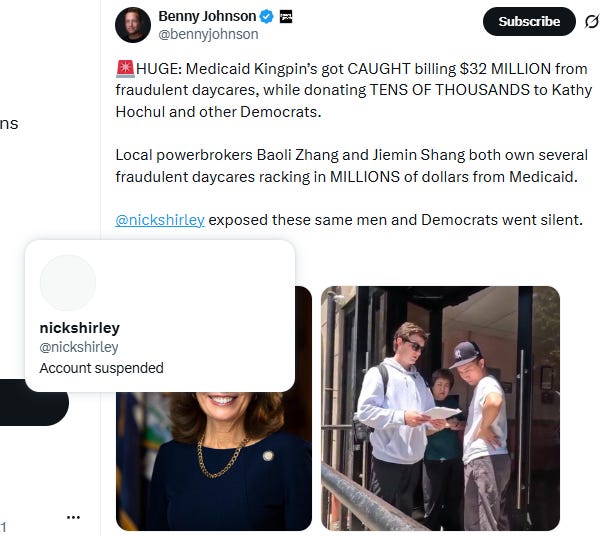
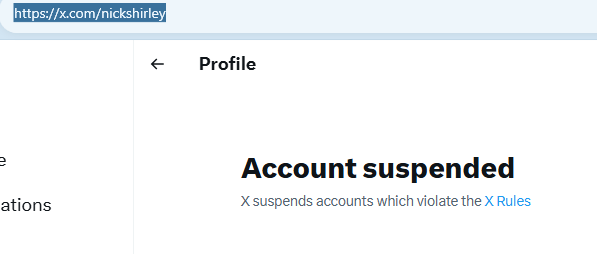


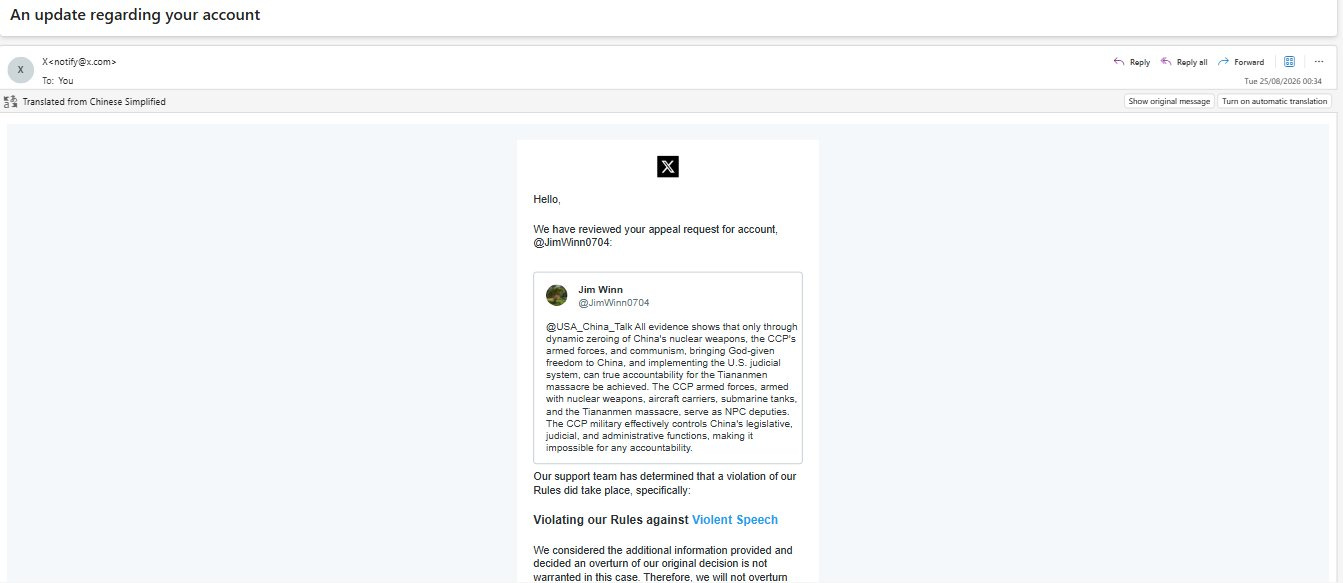
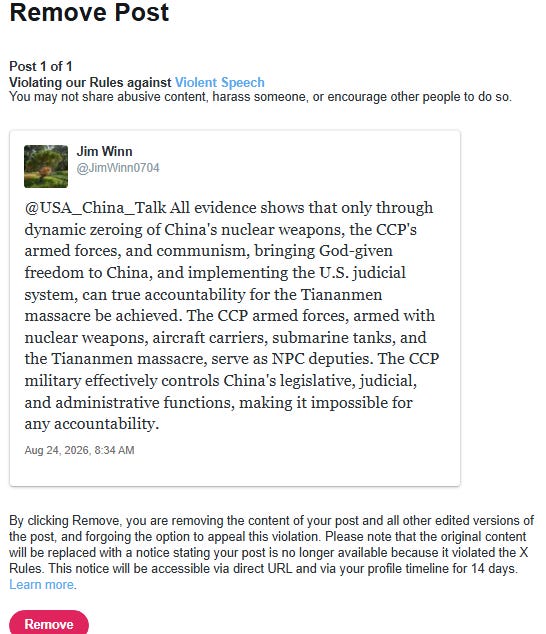
The suppression of legitimate political commentary—such as flagging critiques of totalitarians or discussions on key historical events like the Tiananmen Square massacre as “hate speech”—represents a severe weaponization of trust and safety mechanisms. By mislabeling counter-authoritarian speech, national security critiques, and historical truth as platform violations, content moderation systems effectively align with the interests of foreign regimes. This dynamic is not merely an ideological inconvenience; it constitutes an active suppression of political speech under the guise of safety, silencing vital voices right when global public square integrity is most needed.
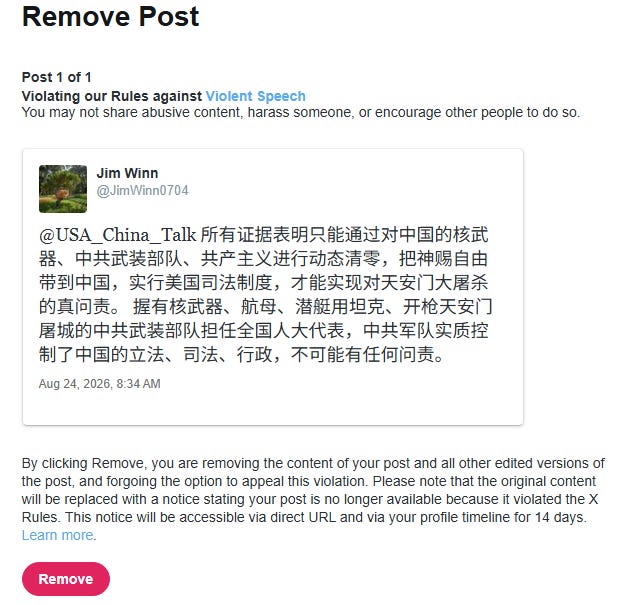
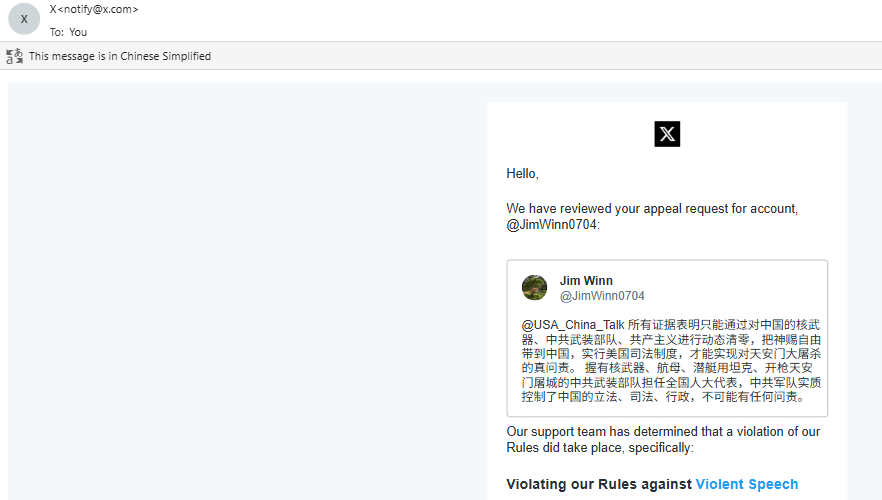
Beyond individual account bans, this institutional vulnerability carries catastrophic real-world consequences, particularly in times of global crisis. Consider the critical role real-time platforms play during public health emergencies or geopolitical conflicts. If whistleblowers, citizen journalists, and independent analysts are silenced or algorithmically shadowbanned for exposing cover-ups or foreign state activities, the resulting information void can lead to delayed responses, widespread panic, and preventable casualties. Silencing warnings about hostile actors or biological risks directly jeopardizes national security and public safety.
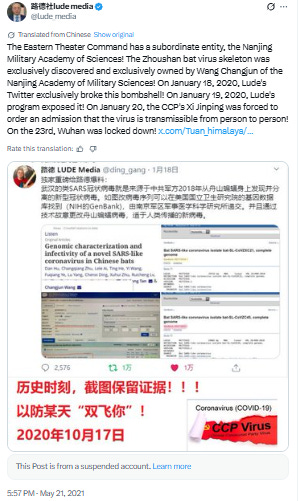


The root of this systemic risk often points to internal structural compromises within major technology firms. When foreign state actors or aligned interests exert subtle influence over content moderation teams, engineering units, or Trust & Safety departments, platform policy is quietly converted into a tool for transnational repression. Foreign nationals who leverage their internal access to enforce totalitarian narratives on American platforms undermine domestic democratic norms. Addressing this threat requires robust federal oversight, rigorous background audits for personnel managing core communication channels, and strict visa scrutiny for individuals handling sensitive platform operations.
Ultimately, protecting global free speech demands total transparency and unyielding accountability from technology platforms. Protecting open dialogue is not simply a matter of platform policy; it is a primary line of defense against biological, political, and strategic disasters. If digital platforms continue to appease authoritarian pressure by censoring critical inquiries and silencing whistleblowers, the international community will pay the price in lost accountability, compromised security, and eroded fundamental freedoms.
The Chinese Communist Party’s Transnational Suppression of Lude Media and Dissenting Voices on U.S.-Based Social Media

近年来,YouTube 上路德社的订阅数长期停留在19.9万,无论其节目内容如何爆料、点击量如何起伏,订阅数字始终无法突破这一关口。这一异常情况并非孤例,而是近年来中共利用“灰色算法战争”渗透西方社交平台的典型表现。


No comments:
Post a Comment