北京的科技战略并非仅仅关乎主导地位,更在于输出其价值观


在北京外交官施压赞比亚取消“人权大会”(RightsCon)之后,另一个现实浮出水面:中国正利用经济影响力和人工智能投资来塑造世界能够说什么、看到什么以及思考什么。

通过“数字丝绸之路”和价值15亿美元的赞比亚能源协议,中共正将基础设施建设与信息控制相结合。

美国必须以自由、透明和开放创新为先导,否则将面临在科技竞赛和思想之战中双双落败的风险。  #Democracy #Christ #Peace #Freedom #Liberty #Humanrights #人权 #法治 #宪政 #独立审计 #司法独立 #联邦制 #独立自治

美国驻联合国大使暗示如果中国选择无视违反联合国安理会制裁决议的行为,中国就是在蓄意支持朝鲜的核武器计划。

美国常驻联合国代表团


2026年4月30日


特别政治事务候补代表

纽约州纽约市

发言稿

谢谢主席先生。我要感谢副秘书长DiCarlo先生和Byrne先生今天作的简报。

Colleagues, nearly two years ago, a Russian veto eliminated the 1718 Committee Panel of Experts—with China standing silently by—robbing this Council and UN Member States of independent, credible reporting on sanctions violations. Russia did this for one key reason: To hide its own violations from scrutiny.
各位同事,近两年前,俄罗斯的否决权导致1718委员会专家小组解散——而中国却保持沉默——这从安理会和联合国会员国抢劫了关于制裁违规行为的独立、可信的报告。俄罗斯这样做有一个关键原因:为了掩盖其自身的违规行为。

The United States is grateful to independent experts like the Open Source Centre for stepping into the breach and keeping the spotlight on UN sanctions evasion and violations. Mr. Byrne briefed the work of his team to us in May 2025, and he is back today because these violations continue.
美国感谢像开源中心Open Source Centre这样的独立专家挺身而出,填补了这一空白,并持续关注联合国制裁规避和违规行为。Byrne先生曾在2025年5月向我们汇报过他的团队的工作,今天他再次来访,是因为这些违规行为仍在继续。

The information presented to us today is not speculative. The evidence is irrefutable: Vessels are loading DPRK-origin coal and iron ore at North Korean ports and sailing to destinations—most notably to China—in direct violation of this Council’s resolutions.
今天呈现在我们面前的信息并非臆测。证据确凿:船只在朝鲜港口装载朝鲜产煤炭和铁矿石,驶往目的地——尤其是中国——这直接违反了安理会决议。

Let me be crystal clear about what this means. In 2017, this Council passed Resolution 2371 explicitly prohibiting the export of DPRK coal, iron, and iron ore. The revenue from these exports directly funds North Korea’s unlawful nuclear weapons and ballistic missile programs.
让我明确说明这意味着什么。2017年,安理会通过了第2371号决议,明确禁止出口朝鲜的煤炭、铁和铁矿石。这些出口收入直接用于资助朝鲜非法的核武器和弹道导弹计划。

Every ton of coal loaded onto these vessels, every shipment that reaches a foreign port, every dollar or yuan that flows back to Pyongyang brings the DPRK one step closer to threatening the world with nuclear catastrophe. This is not an abstract concern—this is one of the gravest threats to international peace and security today.
每装载一吨煤炭到这些船只上,每一批货物抵达外国港口,每一美元或每一人民币元流回平壤,都使朝鲜离以核灾难威胁世界更近一步。这并非抽象的担忧——这是当今国际和平与安全面临的最严重威胁之一。

The Open Source Centre’s findings confirm what the United States has been tracking for months. We have identified these vessels. We know their routes. We know their operators. And we will not stand by while they operate with impunity.
开源中心的调查结果证实了美国数月来一直在追踪的情况。我们已经确定了这些船只。我们知道它们的航线。我们知道它们的运营者。我们绝不会袖手旁观,任由他们逍遥法外。

In December 2025, the United States nominated seven vessels for designation in the 1718 Committee.
2025年12月,美国向1718委员会提名了七艘船只,要求对其进行制裁。

Those seven nominations are still under review months later, despite being supported by the same irrefutable evidence that we saw here today. This briefing shows additional vessels now engaged in the same prohibited activity.
尽管我们今天在此看到了无可辩驳的证据,但数月过去了,这七项提名仍在审查中。本次简报显示,目前还有更多船只参与了同样的违禁活动。

In the coming days, the United States will nominate the vessels identified in today’s briefing for designation in the 1718 Committee. We call on the Committee to act without delay—to designate all of the vessels involved in these smuggling operations, including those we nominated months ago.
未来几天,美国将向1718委员会提名今天简报中提到的船只,要求对其进行制裁。我们呼吁委员会立即采取行动,将所有参与走私活动的船只,包括我们几个月前提名的船只,都列入制裁名单。

The 1718 Committee has a mandate: To oversee the implementation of UN Security Council sanctions on the DPRK, including by designating violators. This is not optional. This is the Committee’s responsibility.
1718委员会的任务是:监督联合国安理会对朝鲜民主主义人民共和国制裁的执行情况,包括指定违反制裁者。这不是可选项,而是委员会的职责。

UN sanctions exist as a peaceful lever for addressing threats to international peace and security. They are the alternative to military action.
联合国制裁是应对国际和平与安全威胁的和平手段,是军事行动的替代方案。

The evidence presented today leaves no room for doubt, and it is drawn from readily available commercial satellite imagery and standard vessel tracking software accessible to anyone. If some members of this Council choose to ignore these violations, they are making a deliberate choice to enable the DPRK’s nuclear weapons program.
今天提交的证据不容置疑,这些证据来自唾手可得的商业卫星图像和任何人都能使用的标准船舶追踪软件。如果安理会某些成员选择无视这些违规行为,他们就是在蓄意支持朝鲜的核武器计划。

The United States will not make that choice. We will continue to identify violators, nominate them for designation, and work with our partners to ensure that they face consequences—whether through this Council or through other means.
美国绝不会做出这样的选择。我们将继续查明违规者,提名他们接受制裁,并与我们的伙伴合作,确保他们承担后果——无论是通过安理会还是其他途径。

Mr. President, the DPRK’s unlawful nuclear weapons and ballistic missile programs are a threat to the Korean Peninsula, the Indo-Pacific, and to the entire world. This Council was created to address exactly these kinds of threats. It’s time we did our actual jobs.
主席先生,朝鲜非法的核武器和弹道导弹计划对朝鲜半岛、印太地区乃至全世界都构成威胁。安理会的设立正是为了应对此类威胁。现在是我们履行职责的时候了。

谢谢。
#Democracy #Christ #Peace #Freedom #Liberty #Humanrights #人权 #法治 #宪政 #独立审计 #司法独立 #联邦制 #独立自治 

被美国制裁的青岛海业油码头有限公司的股权结构

2026年5月1日美国国务院制裁自国家安全总统备忘录-2发布以来已进口数千万桶受制裁的伊朗原油为伊朗提供了数十亿美元资金的青岛海业油码头有限公司及其董事长李新春。
2019年青岛海业油码头有限公司的股东包括香港豪信贸易有限公司、青岛懿睿源商贸有限公司和青岛海业石油有限公司,从青岛市交通运输管理委员会港航管理局取得过《港口危险货物作业附证》(鲁青)港经证(1014)号-C001和(鲁青)港经证(1014)号-M001从事港口危险货物作业,成立于2008年6月11日。
根据2021年5月10日青岛港收购海业油码头51%股权的关连交易公告内容(最后没有成交),青岛懿睿源商贸有限公司,青岛海业石油有限公司和青岛乐瑞特投资有限公司在青岛海业油码头有限公司分别持股10.2%,40.8%和49%。


青岛乐瑞特投资有限公司持有青岛海业石油有限公司(海业石油)100%股权。根据2021年5月10日公告,青岛乐瑞特投资有限公司在青岛海业油码头有限公司直接与间接合计持股比例为89.8%。据乐居财经2024年报道,被美国制裁的青岛海业油码头有限公司的控股股东青岛乐瑞特投资有限公司由郝新、郝熠分别持股70%、30%。
青岛海业油码头有限公司分别在青岛益佳阳鸿燃料油有限公司、山东海清石油管道运输有限公司和青岛海业瑞邦船舶有限公司持股86%、100%和51%;青岛益佳阳鸿燃料油有限公司的其余14%股份由青岛懿睿源商贸有限公司持有。青岛海业瑞邦船舶有限公司的51%、49%股份分别由青岛海业油码头有限公司和青岛乐瑞特投资有限公司持有。
据新浪2024年报道,山东港联化管道石油输送有限公司由青岛港国际股份有限公司持股51%,青岛海业石油有限公司24.5%。郝新在山东港联化管道石油输送有限公司担任董事一职。青岛海业油码头有限公司仍由青岛乐瑞特投资有限公司、青岛海业石油有限公司分别持股49%、40.8%。

根据青岛港国际股份有限公司2024年度报告和2025年年度报告,山东港联化管道石油输送有限公司的中共党委书记、总经理兼董事、、中共党员于守水青岛振华石油仓储有限公司副董事长、青岛中石油仓储有限公司副董事长、中国石化青岛液化天然气有限责任公司董事。2025年1月青岛振华石油仓储有限公司改名为青岛华港石油仓储有限公司。山东港联化管道石油输送有限公司的中共党委书记、总经理兼董事、中共党员于守水在2025年7月继续担任青岛华港石油仓储有限公司董事长。
青岛海业油码头有限公司的实际控制人郝新在山东港联化管道石油输送有限公司担任董事明显经过了中国石化青岛液化天然气有限责任公司董事于守水任书记的山东港联化管道石油输送有限公司的中共党委批准,并经过山东港联化管道石油输送有限公司控股股东青岛港国际股份有限公司的中共党委的同意。

根据青岛港国际股份有限公司2023 年度第三期中期票据募集说明书,青岛海业油码头有限公司的股东、同属郝新控制的兄弟公司青岛海业石油有限公司是青岛港国际股份有限公司的供应商,2022年1-9月向青岛港供应了货物或服务18,541.85人民币万元。

青岛海业油码头有限公司的关联方青岛港国际股份有限公司与被美国列出的中共军事公司中国远洋海运集团有限公司存在密切的关联关系,包括与其成员企业互相持股,互为供应商、客户, 高管兼职。
青岛港国际股份有限公司董事朱涛,1972 年生,是中远海运港口有限公司(香港联交所上市公司,股票代码:01199)执行董事、董事总经理、风险控制委员会主席及执行委员会、投资及战略规划委员会委员,历任中远集装箱运输有限公司(以下简称“中远集运”,现为中远海运集装箱运输有限公司)班轮部调度处业务副经理、业务经理,中远集运沿海运输部业务处副处长,中远集运中日贸易区华东华南经营部经理,上海泛亚航运有限公司(以下简称“上海泛亚”)副总经理、工会主席,中远集运美洲贸易区副总经理、中远集运荷兰公司总经理、中远集运总经理办公室主任,上海泛亚总经理、党委副书记,中远海运集装箱运输有限公司副总经理、党委委员等职务。


根据北方工业集团的子公司中国北方工业有限公司2022 年面向专业投资者公开发行公司债券(第一期)募集说明书,振华石油控股有限公司是中国北方工业有限公司的全资子公司,中国北方工业有限公司的控股股东是中国兵器工业集团有限公司, 振华石油控股有限公司与青岛港国际股份有限公司分别在青岛振华石油仓储有限公司持股49%、51%。


中国兵器工业集团有限公司(即北方工业)和中国兵器装备集团有限公司(即南方工业)在中国北方工业有限公司分别持股56.70%、37.54%。

青岛振华石油仓储有限公司2025年1月改名为青岛华港石油仓储有限公司后,仍然只有两个股东,仍然是振华石油控股有限公司、青岛港国际股份有限公司。青岛港2025年年度报告显示青岛港国际股份有限公司在青岛振华石油仓储有限公司改名为青岛华港石油仓储有限公司后仍然持股51%,即青岛港国际股份有限公司、振华石油控股有限公司在青岛华港石油仓储有限公司的持股比例仍然是51%、49%。青岛海业油码头有限公司控股股东郝新担任董事的山东港联化管道石油输送有限公司的中国共产党党委书记、总经理兼董事于守水同时是青岛中石油仓储有限公司副董事长、中国石化青岛液化天然气有限责任公司董事、青岛华港石油仓储有限公司董事长。青岛振华石油仓储有限公司(现名青岛华港石油仓储有限公司)的最新高管情况:董事长于守水;总经理、董事、法定代表人为邹建波;其余董事分别为万竞、罗琳、杨献鹏。


#Democracy #Christ #Peace #Freedom #Liberty #Humanrights #人权 #法治 #宪政 #独立审计 #司法独立 #联邦制 #独立自治

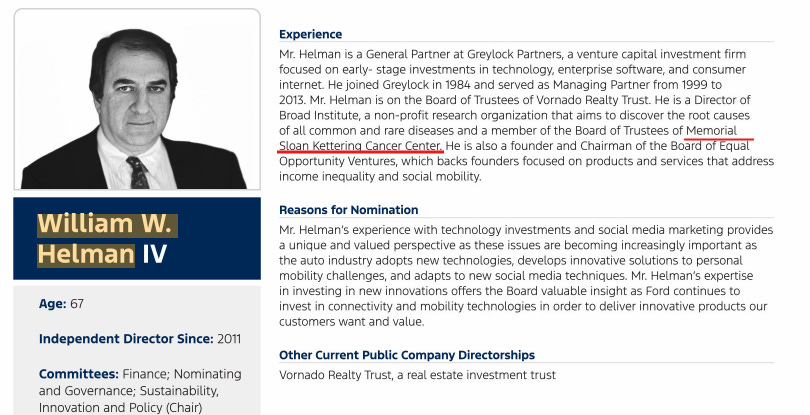
Rethinking “Independence” in the Case of William W. Helman IV

If traditional definitions of corporate governance still assume that “independent directors” operate at arm’s length from geopolitical and institutional complexity, the profile of William W. Helman IV suggests that assumption is no longer tenable.

Helman, an independent director of Ford Motor Company since 2011, holds influential positions across venture capital, biomedical research, and nonprofit governance. He serves on Ford’s Finance and Nominating and Governance Committees and chairs Sustainability, Innovation and Policy—placing him at the center of how the company evaluates long-term strategic risk.

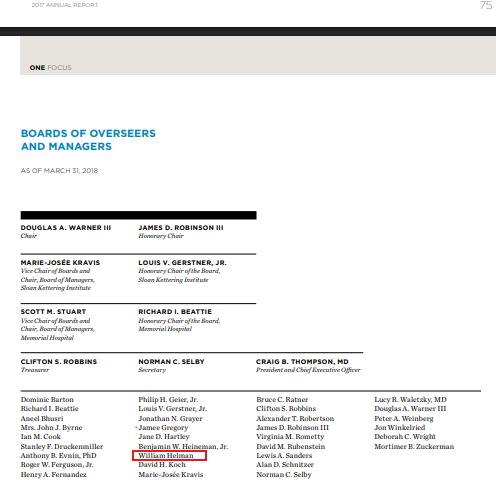
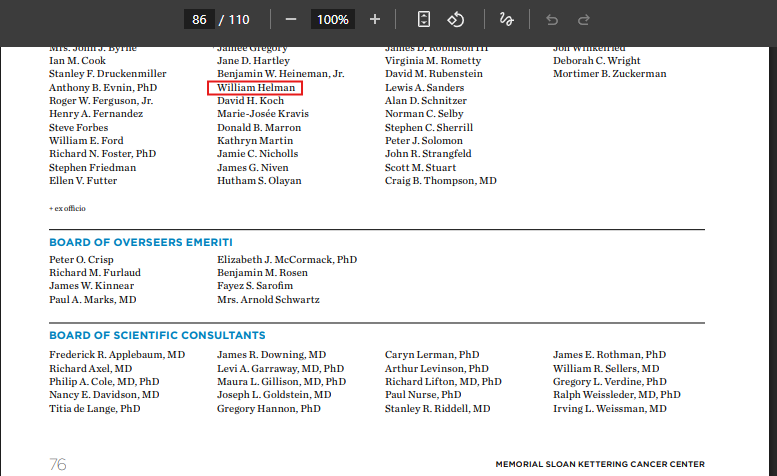
At the same time, he is a General Partner at Greylock Partners, a major force in early-stage technology investment, and a trustee or board member of leading scientific institutions including the Broad Institute and Memorial Sloan Kettering Cancer Center (MSKCC).

Individually, these roles reflect prestige and influence. Collectively, they reveal something more complicated: deep embedding in global systems where technology, healthcare, and international collaboration increasingly intersect with state-linked structures and strategic competition.


Biomedical Governance in a Globalized—and Uneven—System

Institutions like MSKCC and the Broad Institute sit at the forefront of biomedical innovation, including oncology, genomics, and data-intensive research. These are fields no longer confined to purely academic or clinical domains; they carry growing strategic significance due to their implications for biotechnology, population health data, and advanced therapeutics.

As a trustee of MSKCC, Helman is part of the governance structure responsible for overseeing institutional direction, partnerships, and ethical frameworks. That responsibility extends, at least in principle, to how the institution engages internationally.
And those engagements are not abstract.


Global Health Collaboration or Network Convergence?

In December 2023, MSKCC co-hosted the inaugural Cure4Cancer conference in New York alongside the China Thoracic Oncology Group (CTONG) and the Asia Society Policy Institute. The event brought together more than 200 participants, including cancer experts, public health leaders, biotech executives, hospital CEOs, advocacy groups, and policymakers, under the banner of advancing “global health equity.”

The stated goal—accelerating collaboration to improve cancer outcomes—is broadly uncontroversial. But the structure of the participating network warrants closer examination.

Publicly available information shows that CTONG’s member institutions include entities such as:

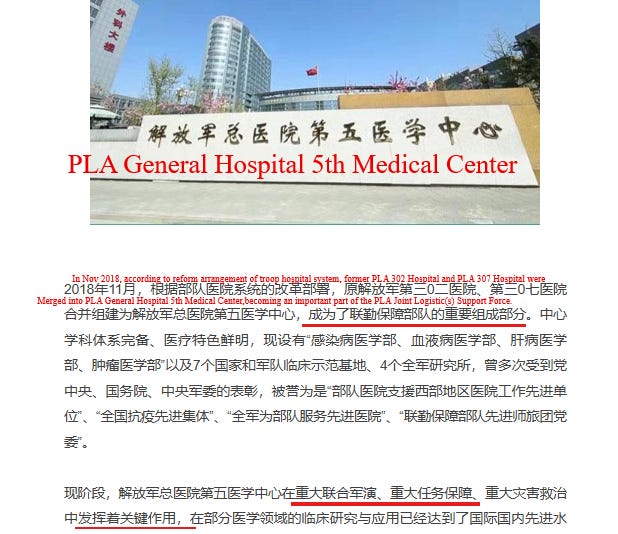
  • PLA-affiliated hospitals (including the former PLA 307 Hospital, now part of the PLA General Hospital system)

  • Military-region general hospitals such as those tied to the Nanjing Military Command

both under Joint Logistics Support Force of PLA founded by Xi Jinping.
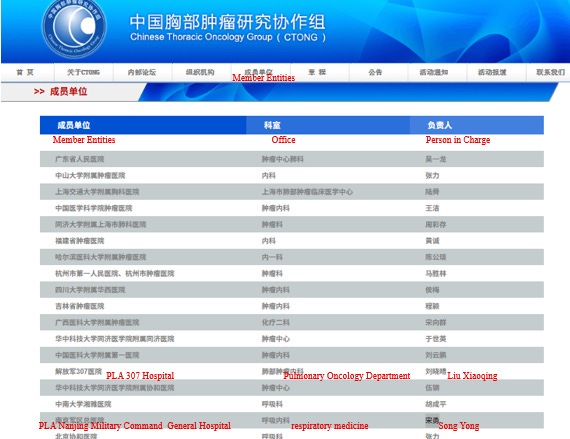
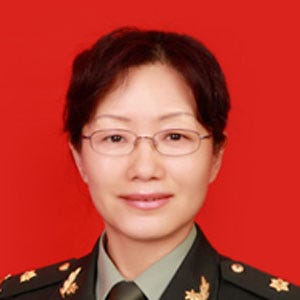
Liu Xiaoqing(刘晓晴) in charge of former PLA General Hospital 5th Medical Center (former PLA 307 Hospital) in relation to CTONG.
中国人民解放军东部战区总医院
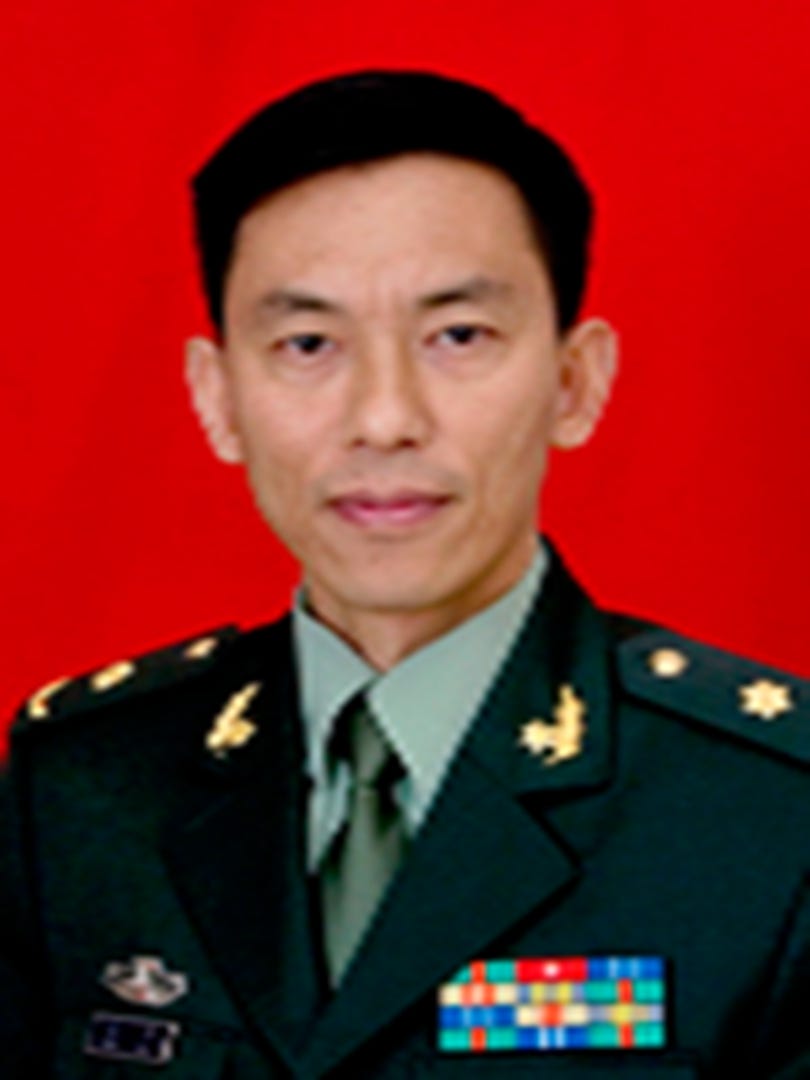
Song Yong(宋勇 in charge of General Hospital of the Eastern Theater Command (formerly Nanjing Military Region) of the Chinese People’s Liberation Army in relation to CTONG

These are not purely civilian medical institutions. They operate within a system where military, research, and healthcare functions are often intertwined.


Institutional Responsibility Without Direct Participation

There is no indication that Helman personally participated in the Cure4Cancer conference or in any specific collaboration with CTONG. That is not the point.

The relevant issue is institutional governance:

  • As a trustee, Helman is part of the body that oversees MSKCC’s global engagement strategy

  • That strategy includes partnerships and convenings involving organizations with military-linked components

  • These interactions take place within a broader system where data, research, and expertise may have dual-use implications

This creates what can be described as second-order exposure—not direct involvement, but governance-level connection to complex international networks.


The Asia Society Link and Cross-Sector Convergence

The involvement of the Asia Society in the Cure4Cancer initiative adds another layer. The Asia Society ecosystem overlaps with figures such as John L. Thornton, another Ford board member with extensive ties to Chinese institutions.

This highlights a broader pattern:

finance, policy, academia, and healthcare are no longer operating in silos—they are converging through shared platforms and networks.

Cure4Cancer itself explicitly aims to unite:

  • Governments and regulators

  • Industry and investors

  • Academic and medical institutions

  • Advocacy groups and media

Such “whole-of-society” frameworks increase collaboration—but also reduce separation between domains that were once more clearly distinct.

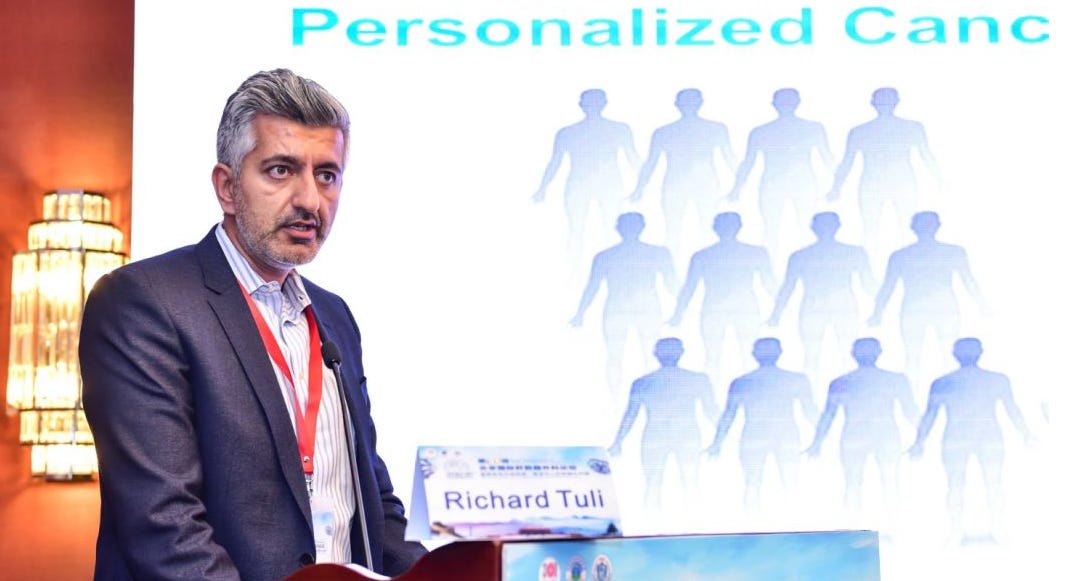
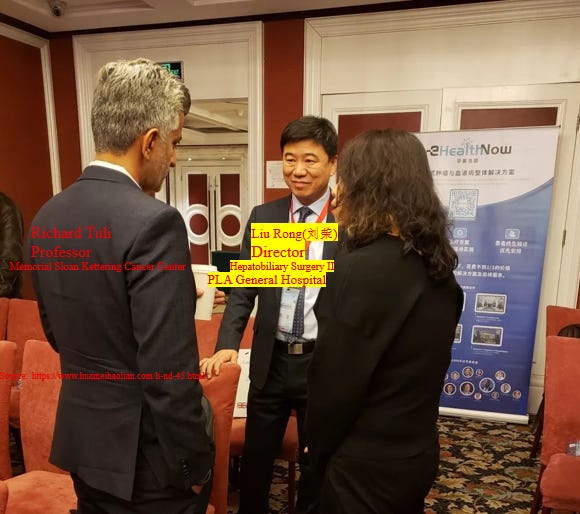
Importantly, this pattern of engagement is not limited to the 2023 Cure4Cancer conference. Earlier examples show a longer trajectory of interaction. In 2019, a physician from Memorial Sloan Kettering Cancer Center, Dr. Richard Tuli, participated in the 20th Beijing International Hepatobiliary and Pancreatic Surgery Forum, an event hosted by institutions directly affiliated with the Chinese PLA medical system, including departments of the PLA General Hospital. This demonstrates that MSKCC-linked participation in exchanges involving military-associated medical institutions predates recent initiatives and reflects an ongoing pattern rather than a one-off collaboration. For governance analysis, the implication is straightforward: the issue is not a single conference, but a sustained set of institutional interactions occurring over multiple years within complex, state-linked environments
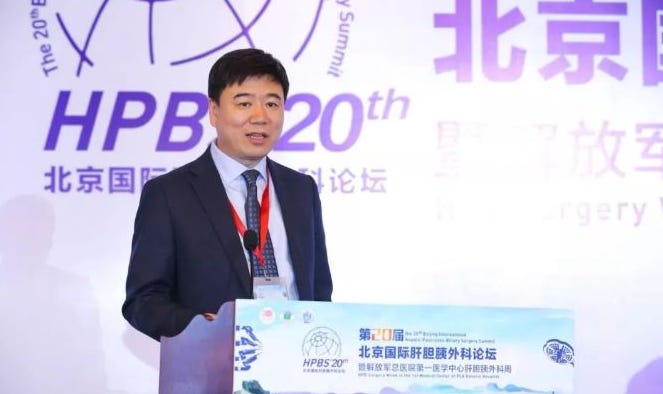
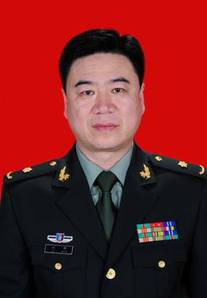
Liu Rong(刘荣), Director of the Department of Hepatobiliary Surgery II at the General Hospital of the PLA, delivered a speech at the Beijing International Hepatobiliary and Pancreatic Surgery Forum.
Dr. Richard Tuli, Professor of Biomedical Sciences, Associate Professor of Radiation Oncology, Clinical Director of Radiation Oncology, and Medical Director of Pancreatic Oncology at Memorial Sloan Kettering Cancer Center, was invited by E-Health Now to attend a special session of the Beijing International Hepatobiliary and Pancreatic Surgery Forum and shared his insights on “Comprehensive Treatment and Cutting-Edge Technologies for Biliary and Pancreatic Tumors” at the Comprehensive Cancer Treatment session.

.

Liu Rong(刘荣)

Liu Rong(刘荣):

I. Education Background

1981.09-1986.07 Bachelor of Clinical Medicine, Lanzhou Medical College

1990.09-1993.07 Master of Hepatobiliary Surgery, Second Military Medical University

1993.09-1995.07 Doctor of Hepatobiliary Surgery, Second Military Medical University

II. Work Experience

1986.07-1990.08 Resident Physician, Department of Oncology Surgery, First Affiliated Hospital of Lanzhou University

1995.07-1998.06 Attending Physician, Department of Hepatobiliary Surgery, General Hospital of the People’s Liberation Army

1998.07-2003.09 Associate Professor, Deputy Chief Physician, and Master’s Supervisor, Department of Hepatobiliary Surgery, General Hospital of the People’s Liberation Army

2003.09-2005.09 Professor (Qualified), Chief Physician (Qualified), and Doctoral Supervisor, Department of Hepatobiliary Surgery, General Hospital of the People’s Liberation Army

2005.09-2008.12 Professor, Chief Physician, and Doctoral Supervisor of Hepatobiliary Surgery, Department of Surgical Clinical Medicine, PLA General Hospital

2008.12-2011.05: Deputy Director of Administration, Professor, Chief Physician, and Doctoral Supervisor of Hepatobiliary Surgery, Department of Surgical Clinical Medicine, PLA General Hospital

2011.05-2013.12: Deputy Director of Administration, Professor, Chief Physician, and Doctoral Supervisor of Oncology Surgery, Department of Internal Medicine, PLA General Hospital

2013.12-2016.09: Director of Administration, Professor, Chief Physician, and Doctoral Supervisor of Department of Oncology Surgery II, Department of Internal Medicine, PLA General Hospital

2016.09-Present: Director of the PLA General Hospital Hepatobiliary Surgery Research Institute, Department of Surgical Clinical Medicine, PLA General Hospital; Director of Administration, Professor, Chief Physician, and Doctoral Supervisor of Department of Hepatobiliary Surgery II


Venture Capital and Strategic Technology Exposure

Helman’s long tenure at Greylock Partners adds further complexity. Venture capital firms play a central role in shaping the future of:

  • Artificial intelligence

  • Enterprise software

  • Data infrastructure

These sectors are increasingly subject to national security scrutiny due to their dual-use potential and strategic importance.

A director operating simultaneously in:

  • Venture capital

  • Biomedical governance

  • Global institutional collaboration

is positioned at the intersection of multiple high-sensitivity domains.


Rethinking Independence

Under current governance standards, Helman qualifies as independent. He has no direct employment relationship with Ford and no obvious financial conflict tied to the company.

But this definition is narrow—and increasingly outdated.

It fails to account for:

  • Institutional affiliations with global reach

  • Indirect exposure to state-linked systems

  • Cross-sector networks where influence flows through relationships rather than contracts

Independence, in today’s environment, is not just about who pays you.

It is about which systems you are embedded in—and how those systems interact.


Conclusion

William W. Helman IV’s profile does not point to misconduct. But it does reveal how modern governance risk operates.

Not through clear-cut conflicts of interest.

Not through direct actions alone.

But through networks—of institutions, collaborations, and overlapping domains where boundaries between civilian, commercial, and state-linked activity are increasingly blurred.

For a company like Ford, this raises a critical question:

Is formal independence enough, or should boards begin evaluating the deeper structural environments their directors are part of?

Until that question is addressed, the label “independent director” risks describing a legal status—rather than a meaningful safeguard.

#Democracy #Christ #Peace #Freedom #Liberty #Humanrights #人权 #法治 #宪政 #独立审计 #司法独立 #联邦制 #独立自治

Ad1