
On March 12, 2018, during the plenary meeting of the military and armed police delegation at the 13th National Congress, Xi Jinping sat facing China’s top operational commanders. Among those taking the microphone was Major General Chen Daoxiang (陈道祥), then Deputy Chief of Staff of the PLA Southern Theater Command and later Commander of the Hong Kong Garrison
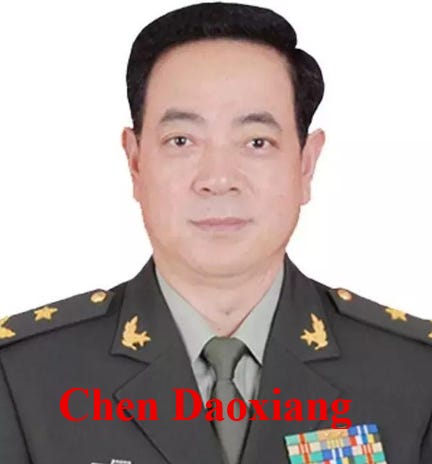
While Western observers often dismiss Chinese parliamentary speeches as ceremonial propaganda, Chen’s intervention was nothing short of an operational blueprint. He declared policy reform to be the “Third Major Campaign” of Xi’s military overhaul—the crucial “soft software” required to wire China’s newly built “hard structure” war machine for power projection.
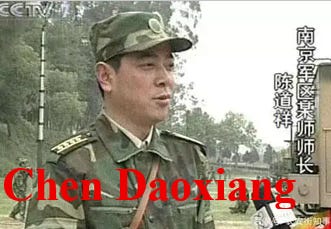
A deep dive into Chen’s statement reveals four critical strategic directives that transformed the Southern Theater Command—the operational hub for the South China Sea—into a global military actor.
1. Building the “Soft Link”: From Structural Overhaul to Institutional Power
“This round of policy reform aims to act as a lubricant and leverage, setting up ‘soft links’ within the ‘hard structure’ to fully unleash the vitality of the new system.”
Xi Jinping’s initial 2015–2016 reforms dismantled the legacy military regions and forged five theater commands. However, Chen recognized a fundamental bottleneck: a steel frame is useless without operational software.
Chen’s “soft links” refer to administrative mandates, chain-of-command protocols, and joint-operations doctrines. By framing institutional reform as a “Major Campaign,” Chen signaled that bureaucratizing party control and streamlining theater-level authority was as critical to winning wars as deploying advanced weaponry.
2. Legal Pretext for Overseas Power Projection (MOOTW)
“Focusing on the expansion of the military’s mission, we must formulate regulations for overseas Non-War Military Operations (MOOTW) to provide a legal basis for organizing and executing related tasks.”
This is the most critical geopolitical directive in Chen’s address. Long before China published its formal framework on Non-War Military Operations (MOOTW) in 2022, Chen explicitly demanded a legal mechanism allowing the armed forces to operate outside China’s sovereign borders.
Under the guise of MOOTW (e.g., anti-piracy, disaster relief, sea-lane protection, and overseas asset security), Chen called for establishing a domestic regulatory shield. This legal scaffolding enables the Southern Theater Command to project naval and air power across the South China Sea, the Indian Ocean, and key global maritime chokepoints without declaring formal war.
3. Asserting Theater Command Authority Over Resource Allocation
“Focusing on perfecting the strategic management link from demand planning to execution evaluation, we must strengthen the theater command’s centralized authority over regional military demands...”
In traditional military hierarchies, service branches (Army, Navy, Air Force) control their own procurement and tactical priorities. Chen demanded a structural shift: placing the Theater Command in absolute control of regional military requirements.
For the Southern Theater Command, this meant theater commanders—not Beijing-based service headquarters—dictate what assets are needed to secure disputed maritime features, construct artificial island garrisons, and confront foreign navies in regional waters.
                  CHEN DAXIANG'S OPERATIONAL PIPELINE
  +-----------------------------------------------------------------+
  |                   Southern Theater Command                      |
  |        Joint Operational Command Center (Strategic Hub)         |
  +-----------------------------------------------------------------+
                                   |
         +-------------------------+-------------------------+
         |                                                   |
         v                                                   v
+----------------------------------+               +----------------------------------+
| Overseas MOOTW Legal Framework   |               | Combat Demand Centralization     |
| - Legalized power projection     |               | - Theater dictates requirements  |
| - Out-of-area operations         |               | - Bypasses service-branch silos  |
| - Protection of Belt & Road      |               | - Enforces joint-strike rules    |
+----------------------------------+               +----------------------------------+
4. Directing Joint Training Toward Frontline Combat Realities
“Ensure joint combat requirements reach the very end of troop capability construction... defining standards based on capability indicators and cycles based on joint training needs.”
Chen concluded by dismantling the PLA’s historical tradition of scripted, showpiece exercises. By tying “joint training” strictly to “joint combat requirements,” he mandated that exercises in the South China Sea simulate actual conflict scenarios against peer adversaries.
The Strategic Takeaway
General Chen Daoxiang’s 2018 parliamentary statement was not a passive political reflection. It was an explicit blueprint for legalized, institutionalized power projection. By establishing the legal basis for overseas operations and consolidating command authority within the Southern Theater, Chen helped forge the administrative weapons the Chinese military uses today to assert dominance across regional and international maritime domains.
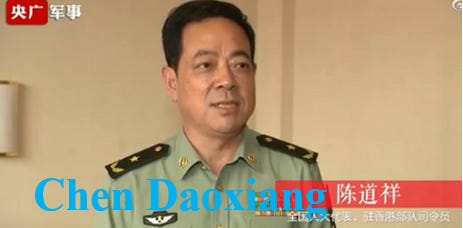
In April 2019, Major General Chen Daoxiang was appointed Commander of the PLA Hong Kong Garrison. Coming directly from his role as Deputy Chief of Staff of the Southern Theater Command, his transfer operationalized his 2018 NPC directives—translating joint command structures, MOOTW legal frameworks, and “soft link” institutional controls into direct urban crisis management
.
Strategic Significance
Institutionalizing the “Soft Link” in Civil-Military Operations: Chen applied his 2018 doctrine of administrative integration to bridge Southern Theater Command authority with Hong Kong’s local security apparatus. During the 2019 anti-extradition protests, he signaled readiness to deploy troops under the Garrison Law, embedding theater-level joint control into urban deterrence.
Operationalizing MOOTW Principles Locally: Chen executed non-war military operations (MOOTW) tactics short of direct kinetic intervention. Under his command, the garrison conducted high-visibility joint land-sea-air drills in Victoria Harbour and open-house deterrence displays, establishing psychological and operational dominance under a non-combat legal pretext.
Enforcing National Security Law (NSL) Integration: Following the June 2020 enactment of the Hong Kong NSL, Chen aligned the garrison’s posture with state security objectives. He restructured local troop readiness to support Beijing’s political control, demonstrating how theater-level operational requirements override regional administrative boundaries.
Maritime & Regional Security Linkage: Chen maintained the Hong Kong Garrison as an integrated forward node of the Southern Theater Command rather than an isolated outpost, ensuring coastal surveillance and naval assets in Hong Kong directly supported broader South China Sea operational readiness.
During the May 2020 Two Sessions, Major General Chen Daoxiang—Commander of the PLA Hong Kong Garrison and National People’s Congress delegate—publicly endorsed the draft Hong Kong National Security Law via China National Radio. He declared the garrison’s firm resolve, confidence, and capability to safeguard national sovereignty, security, development interests, and Hong Kong’s long-term stability.
Strategic Analysis of Chen’s 2020 Statement
Operationalizing MOOTW Principles: Chen’s public backing executed the legal framework for Non-War Military Operations (MOOTW) he advocated at the 2018 NPC. It codified domestic security enforcement and regime preservation as core military duties without formal war declaration.
Dual-Hat Political Authority: Leveraging his concurrent roles as garrison commander and NPC legislator, Chen directly validated state-level security legislation, demonstrating how PLA delegates use legislative platforms to reinforce military deterrence over civilian governance.
Integration into Theater Command Strategy: The statement aligned the Hong Kong Garrison with the Southern Theater Command’s broader strategic posture, establishing that internal security enforcement in Hong Kong is directly linked to China’s regional defense architecture.
中国人民解放军南部战区副参谋长陈道祥2018年3月发言:“当前,战区已进入由立起来到强起来的关键阶段,迫切需要健全完善联合作战指挥体系制度机制。在政策制度层面,应着眼支撑战略战役战术指挥体系一体联动、高效运行,建立各级指挥权责清单,理顺上下指挥运行关系,畅通横向指挥协调关系;着眼军队使命任务拓展,制定军队境外执行非战争军事行动相关条例,为组织遂行相关任务提供依据;着眼健全完善从需求规划到执行评估的战略管理链路,强化战区对本方向军事需求的统筹权,增强评估督查的刚性约束力;着眼顺畅以战领训机制,准确把握联合训练服务联战需求、催生联战能力的功能定位,完善各类训练法规技术标准规范,按照能力指标定标准、围绕联训需要定周期,确保联战需求落到部队能力建设末端。”


No comments:
Post a Comment