
The participation of PLA, the CCP’s military force, and Armed Police (PAP) delegates in the Assembly appears to involve far more than simply applauding speeches or raising their hands in formal votes.
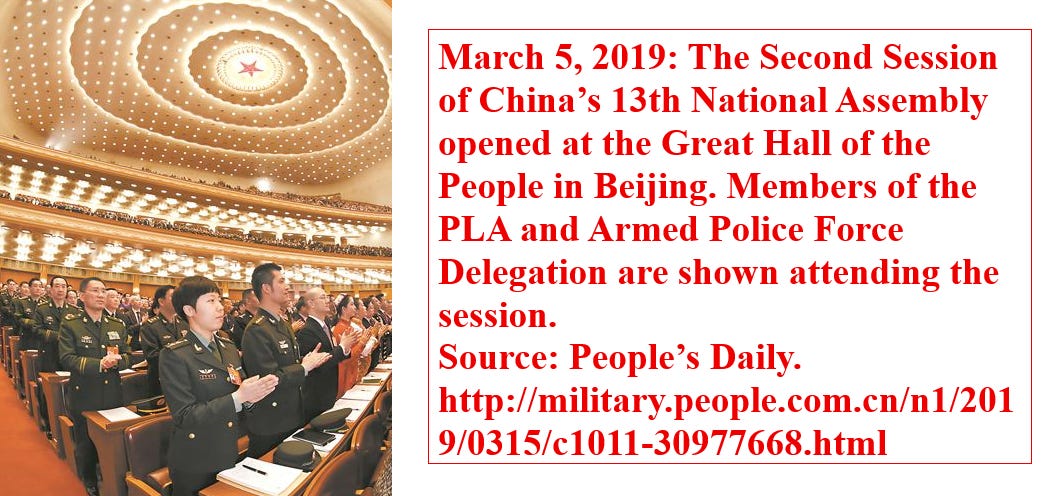
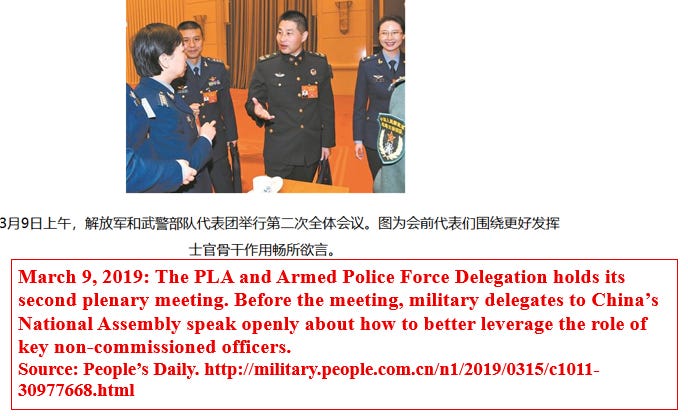
Official reports provide concrete evidence that military delegates actively participate in the exercise of state power through the Assembly. They hold plenary and group meetings, deliberate government work reports, review draft legislation, submit bills and recommendations, and put forward proposals concerning national policy and administration.
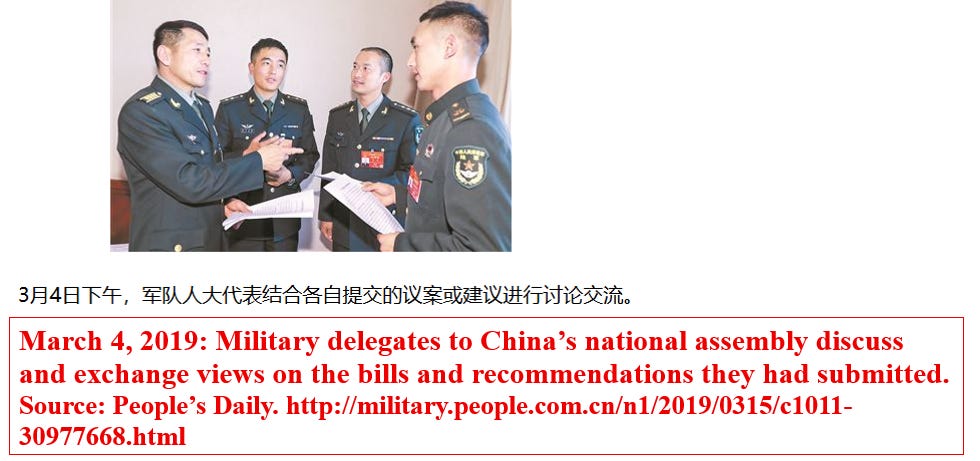
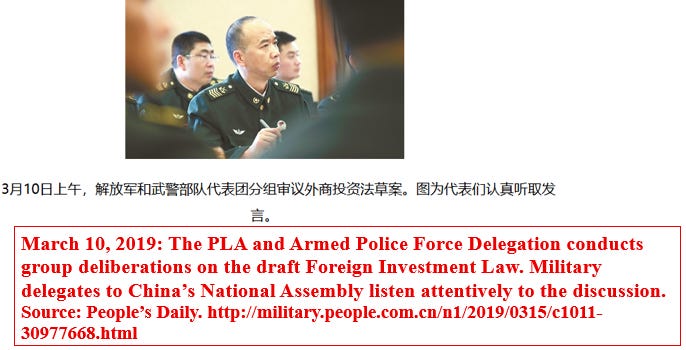
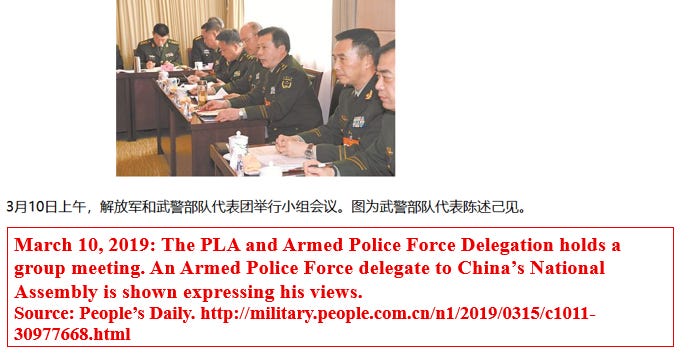
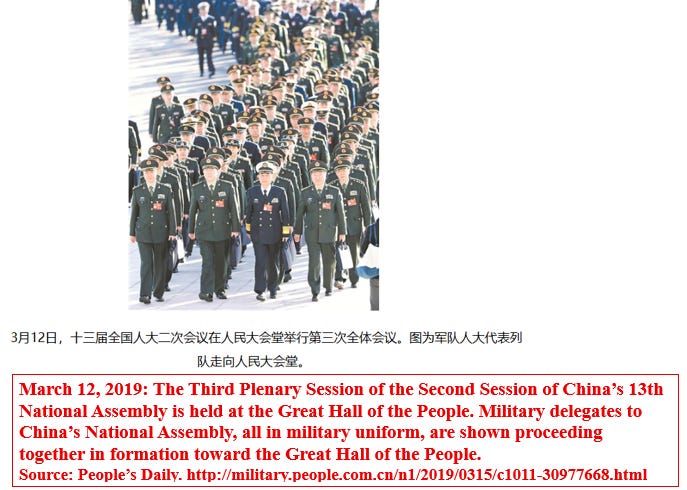
For example, during the 2019 session of the National Assembly in China, military delegates met to discuss bills and recommendations they submitted. They subsequently participated in group deliberations on the draft Foreign Investment Law. The official military newspaper described these activities as delegates “performing their duties” and “making suggestions and proposals.” On March 12, 2019: The Third Plenary Session of the Second Session of China’s 13th National Assembly is held at the Great Hall of the People to hear and deliberate the work reports of China’s Supreme Court and China’s Supreme Procuratorate. Military delegates to China’s National Assembly, all in military uniform, are shown proceeding together in formation toward the Great Hall of the People.
What Was the 2019 Government Work Report?
China’s Government Work Report was delivered by Premier Li Keqiang on March 5, 2019, at the Second Session of the 13th National Assembly.
It was not simply a retrospective account of what the government had done during the previous year. The report also set out the government’s priorities and tasks for 2019, including fiscal spending, scientific and technological development, major infrastructure and research programs, emerging industries, national security, and social governance.
Among other things, the report discussed:
optimizing the structure of fiscal expenditure and making better use of existing government funds;
ensuring spending in key areas;
strengthening major scientific and technological infrastructure and innovation centers;
supporting basic and applied basic research and tackling key core technologies;
launching national laboratories and restructuring the national key laboratory system;
improving the organization and management of major science and technology projects;
promoting emerging industries, including information technology, advanced equipment, biomedicine, new-energy vehicles and new materials;
expanding international cooperation in innovation; and
strengthening national security capabilities and the social security and public-security system.
The report therefore covered matters with direct implications for the allocation and use of public resources, as well as major national policy priorities.
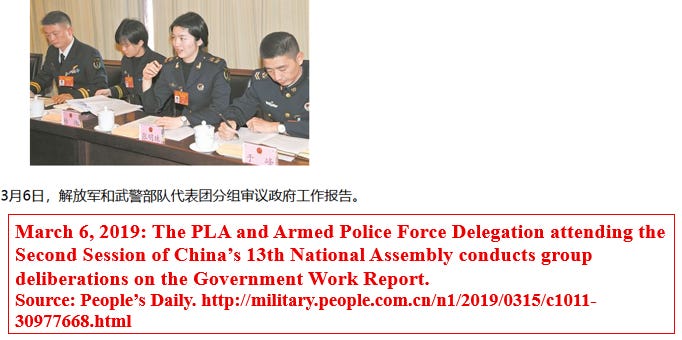
The PLA and Armed Police Force Delegation participated in group deliberations on this Government Work Report on March 6, 2019.
This places military delegates to China’s National Assembly directly within the Assembly’s deliberation of the government’s proposed work and policy agenda for 2019.
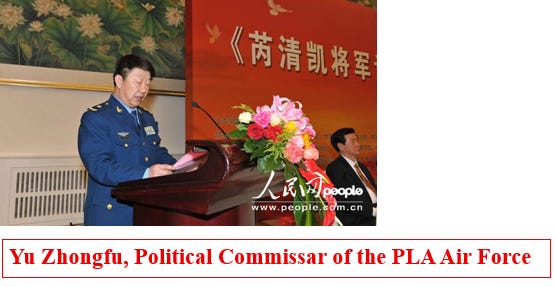
The 2021 session provides an even clearer illustration. The PLA and PAP delegation held a plenary meeting in which 15 delegates, including Yu Zhongfu, Political Commissar of the PLA Air Force, discussed the Government Work Report and put forward recommendations based on their professional and operational experience. Their interventions covered military preparedness, implementation of the 14th Five-Year Plan, military personnel development, military training, political education, Party building, and other issues concerning national defense and military modernization
This is significant because these are not merely internal military consultations. The delegates were participating in the proceedings of the national Assembly while it was exercising constitutional legislative and supervisory functions. Their activities included deliberation on the Government Work Report and examination of national legislation, including the draft Foreign Investment Law.
The distinction matters. A military delegate sitting in an Assembly is not simply a member of an audience. As an Assembly delegate, he or she occupies a position within a state power institution and is entitled to participate in its deliberations, legislation, elections and other statutory functions. When that delegate also holds military authority or represents an organization possessing coercive force, the institutional significance is considerably greater than that of an ordinary ceremonial participant.
The available official reports therefore provide a basis for examining PLA and PAP Assembly representation as a mechanism through which military personnel participate directly in the exercise of state power—not merely as observers, but as participants in deliberation over legislation, government policy and the administration of the state.
This raises a further institutional question: when military personnel exercise these functions through an Assembly, to what extent is their representation independent of the military command structure that controls the armed forces and determines their institutional interests? That question becomes particularly important when examining the relationship between the PLA, the PAP, the Central Military Commission and the Assembly system.


No comments:
Post a Comment