


The Constitutional Mirage: A Republic Without Public Control
The foundational preamble of the United Nations Charter explicitly establishes that the post-WWII international order was built to “save succeeding generations from the scourge of war” by dismantling authoritarian militarism and subjecting national defense structures to civilian, public governance (res publica).
Yet, inside the United Nations Security Council, a permanent veto power is wielded by a regime whose state architecture directly violates the basic definitions of a republic. Under the name “People’s Republic of China,” the state apparatus operates not as a neutral public framework, but as an institutional vessel for absolute party leadership—a contradiction clearly demonstrated through the legal framework and legislative roles assigned to active-duty military commanders.
       UN CHARTER FOUNDATIONAL PRINCIPLES
   [Public Neutral Governance & Civilian Oversight]
                      │
                      ▼
   ┌──────────────────────────────────────────┐
   │         CONSTITUTIONAL CONTRADICTION     │
   │  Is a state governed by a Party-Army     │
   │  legally a "People's Republic"?          │
   └──────────────────────────────────────────┘
                      │
        ┌─────────────┴─────────────┐
        ▼                           ▼
ARTICLE 59 CONSTITUTION     NATIONAL DEFENSE LAW
Active-Duty Military Bloc   Party Supremacy & MCF
in the Legislature          Directives (Arts 4, 21, 22)
Exhibit A: Major General Leng Zhiyi and the Dual-Hatting of Military Enforcement
The structural integration of military power into civilian legislative bodies is not theoretical; it is operationalized by high-ranking active-duty officers across local and national political assemblies.
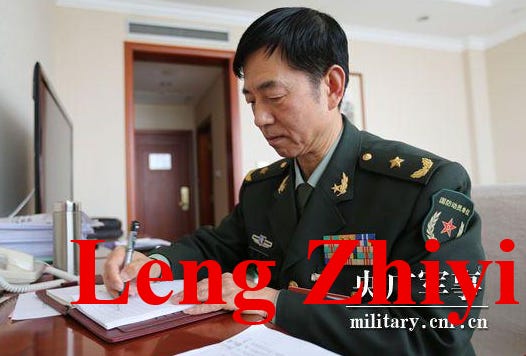
A prime case is Major General Leng Zhiyi (冷志义). His career demonstrates the seamless overlap between provincial military command, internal party-military discipline, and state legislative functions:
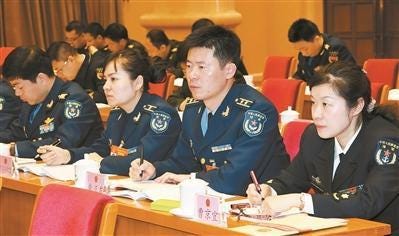
Provincial Military Command & National Delegation: In March 2018, serving as Political Commissar of the PLA Sichuan Provincial Military District, Leng sat as a deputy in the 13th National People’s Congress (NPC). In Sichuan, Leng was part of a local assembly that included 28 active-duty officers—ranging from provincial military district leaders to command staff from the 77th Group Army, strategic support units, and military aerospace divisions—who directly shaped the election of the 148-member provincial delegation to the national legislature.
Political Discipline & Combat Readiness: By March 2019, Leng transitioned to serve as a Senior Inspector (正军职巡视专员) of the Central Military Commission (CMC) Inspection Group. Addressing the military delegation at the NPC, Leng explicitly advocated for using party inspection and disciplinary mechanisms to enforce combat readiness, demanding “joint military-civilian inspection and enforcement in sectors with high Military-Civil Fusion (MCF) integration.”
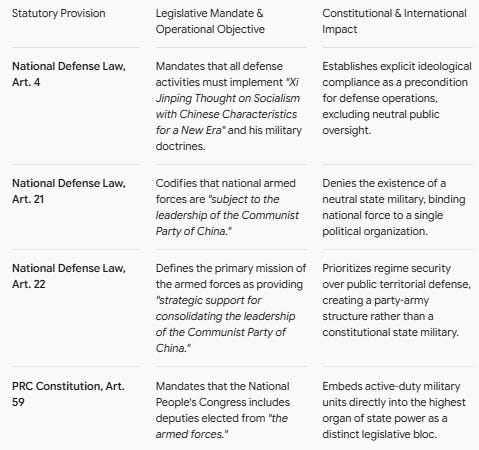
The Statutory Paradox: Articles 4, 21, and 22 of the National Defense Law
The presence of officers like Leng Zhiyi inside the legislature is not an anomaly—it is codified by statutory mandates that subordinate public governance to political imperatives.
Judicial Immunity and the Invalidation of Civilian Oversight
To maintain this party-army loop, the legal architecture explicitly insulates military operations from civilian judicial review.
Under Articles 128 and 134 of the PRC Constitution, the SUPREME COURT (SPC) functions as the supreme judicial organ, while the SUPREME PROCURATORATE (SPP) serves as the supreme legal supervision body. However, under Articles 133 and 138, both organs are explicitly answerable to and supervised by the National People’s Congress.
Because active-duty officers sit as a permanent, organized bloc within the NPC under Central Military Commission authority, the highest judicial authorities lack any jurisdiction or constitutional standing to review, challenge, or invalidate military decisions, defense mobilization mandates, or Military-Civil Fusion (MCF) operations.
┌─────────────────────────────────────────────────────────┐
│              NATIONAL PEOPLE'S CONGRESS                 │
│  Includes Active-Duty Military Deputies (Article 59)    │
└────────────────────────────┬────────────────────────────┘
                             │ Supervial / Responsible To
              ┌──────────────┴──────────────┐
              ▼                             ▼
   SUPREME COURT (SPC)           SUPREME PROCURATORATE (SPP)
     (Article 128)                  (Article 134)
              │                             │
              └──────────────┬──────────────┘
                             ▼
     NO JURISDICTION OVER MILITARY / MCF MANDATES
The Institutional Loophole: Legislative Dual-Hatting and the Complete Erasure of Civilian Oversight
Unassailable Timeline and Personal Identity: The institutional record establishes a direct, unassailable identity across both provincial and national legislative assemblies. Major General Leng Zhiyi (冷志义)—serving as Political Commissar of the PLA Sichuan Provincial Military District in 2018 and transitioning to Senior Inspector of the Central Military Commission (CMC) Inspection Group by 2019—exercised concurrent voting power within the 13th Sichuan Provincial People’s Congress and the 13th National People’s Congress (NPC). This is not a matter of shared nomenclature; it is a documented, continuous tenure of an active-duty flag officer exercising dual-level legislative authority.
Provincial-Level Legislative Control and Fiscal Allocation: At the provincial level, Leng sat as one of 28 active-duty military deputies in the Sichuan Provincial People’s Congress. In this capacity, Leng did not merely represent defense interests; he wielded direct constitutional authority to:
Approve Provincial Executive and Judicial Leadership: Vote on the appointment and work reports of the Governor of Sichuan Province, the President of the Sichuan High People’s Court, and the Chief Procurator of the Sichuan People’s Procuratorate.
Direct Public Fiscal Appropriations: Review and approve the Sichuan provincial annual budget, ensuring the redirection of local public revenues toward Military-Civil Fusion (MCF) infrastructure, military recruitment mandates, and provincial military district operations.
Determine National Legislative Delegation: Cast votes to elect the 148 deputies representing Sichuan Province in the National People’s Congress, embedding active-duty military influence directly into the selection of the national legislative body.
National-Level Ratification and the Inversion of Civilian Control: Upon entering the National People’s Congress, Leng’s legislative role expanded from provincial budget approval to the highest level of state ratification. As an active-duty officer operating under Central Military Commission discipline, Leng voted to:
Ratify State Leadership and Constitutional Amendments: Formally approve the presidency of the PRC, the chairmanship of the State Central Military Commission, the Premier of the State Council, and the members of the Standing Committee of the NPC.
Authorize National Public Budgets: Review and pass the central government’s national budget, channeling public funds directly into defense mobilization, strategic force expansion, and state-directed Military-Civil Fusion initiatives.
Endorse Judicial Work Reports While Maintaining Absolute Immunity: Review and pass the annual work reports of the SUPREME COURT (SPC) and the SUPREME PROCURATORATE (SPP).
The Constitutional Paradox of Self-Authorization: This dual-hatting structure creates a fatal conflict of interest that dismantles the core principles of res publica:
                  PARTY-ARMY COMMAND STRUCTURE
             (Central Military Commission / Active Duty)
                                 │
                                 ▼
                    MAJOR GENERAL LENG ZHIYI
                                 │
        ┌────────────────────────┴────────────────────────┐
        ▼                                                 ▼
SICHUAN PROVINCIAL CONGRESS                       NATIONAL PEOPLE'S CONGRESS
  • Votes on Provincial Budget                      • Votes on National Budget
  • Approves High Court & Procuratorate              • Approves SPC & SPP Reports
  • Elects 148 NPC Deputies                         • Elects PRC President & Premier
        │                                                 │
        └────────────────────────┬────────────────────────┘
                                 │
                                 ▼
                     THE CONSTITUTIONAL LOOP
           Military votes to approve civilian courts,
          while civilian courts possess ZERO jurisdiction
                     over military commands.
Unassailable Timeline and Personal Identity: The institutional record establishes a direct, unassailable identity across both provincial and national legislative assemblies. Major General Leng Zhiyi (冷志义)—serving as Political Commissar of the PLA Sichuan Provincial Military District in 2018 and transitioning to Senior Inspector of the Central Military Commission (CMC) Inspection Group by 2019—exercised concurrent voting power within the 13th Sichuan Provincial People’s Congress and the 13th National People’s Congress (NPC). This is not a matter of shared nomenclature; it is a documented, continuous tenure of an active-duty flag officer exercising dual-level legislative authority.
Provincial-Level Legislative Control and Fiscal Allocation: At the provincial level, Leng sat as one of 28 active-duty military deputies in the Sichuan Provincial People’s Congress. In this capacity, Leng did not merely represent defense interests; he wielded direct constitutional authority to:
Approve Provincial Executive and Judicial Leadership: Vote on the appointment and work reports of the Governor of Sichuan Province, the President of the Sichuan High People’s Court, and the Chief Procurator of the Sichuan People’s Procuratorate.
Direct Public Fiscal Appropriations: Review and approve the Sichuan provincial annual budget, ensuring the redirection of local public revenues toward Military-Civil Fusion (MCF) infrastructure, military recruitment mandates, and provincial military district operations.
Determine National Legislative Delegation: Cast votes to elect the 148 deputies representing Sichuan Province in the National People’s Congress, embedding active-duty military influence directly into the selection of the national legislative body.
National-Level Ratification and the Inversion of Civilian Control: Upon entering the National People’s Congress, Leng’s legislative role expanded from provincial budget approval to the highest level of state ratification. As an active-duty officer operating under Central Military Commission discipline, Leng voted to:
Ratify State Leadership and Constitutional Amendments: Formally approve the presidency of the PRC, the chairmanship of the State Central Military Commission, the Premier of the State Council, and the members of the Standing Committee of the NPC.
Authorize National Public Budgets: Review and pass the central government’s national budget, channeling public funds directly into defense mobilization, strategic force expansion, and state-directed Military-Civil Fusion initiatives.
Endorse Judicial Work Reports While Maintaining Absolute Immunity: Review and pass the annual work reports of the SUPREME COURT (SPC) and the SUPREME PROCURATORATE (SPP).
The Constitutional Paradox of Self-Authorization: This dual-hatting structure creates a fatal conflict of interest that dismantles the core principles of res publica:
PARTY-ARMY COMMAND STRUCTURE
(Central Military Commission / Active Duty)
│
▼
MAJOR GENERAL LENG ZHIYI
│
┌────────────────────────┴────────────────────────┐
▼ ▼
SICHUAN PROVINCIAL CONGRESS NATIONAL PEOPLE'S CONGRESS
• Votes on Provincial Budget • Votes on National Budget
• Approves High Court & Procuratorate • Approves SPC & SPP Reports
• Elects 148 NPC Deputies • Elects PRC President & Premier
│ │
└────────────────────────┬────────────────────────┘
│
▼
THE CONSTITUTIONAL LOOP
Military votes to approve civilian courts,
while civilian courts possess ZERO jurisdiction
over military commands.
Under Articles 128, 133, 134, and 138 of the PRC Constitution, the SUPREME COURT (SPC) and SUPREME PROCURATORATE (SPP) are subordinate to and supervised by the National People’s Congress. When an active-duty military commander votes to approve the leadership and budgets of these supreme judicial bodies, an inverted power dynamic occurs: the military sits in judgment of the judiciary, while the judiciary is constitutionally barred from exercising any jurisdiction, legal review, or oversight over the military.
Rather than civilian legislators exercising democratic oversight over the armed forces, active-duty officers like Leng Zhiyi hold dual-level voting power over civilian governments, public treasuries, and judicial organs—insulating military operations from legal accountability while claiming the international legitimacy of a public republic.
The Institutional Irony at the United Nations
The founding mandate of the UN Security Council relies on the assumption that permanent members operate as sovereign, public state entities subject to international law and constitutional accountability.
When a regime operates an unchecked Military-Civil Fusion (MCF) strategy, embeds military commanders like Leng Zhiyi into its legislative bodies, and statutorily dedicates its military to defending party rule rather than neutral public security:
It contradicts the literal meaning of a “Republic”: A state where the military belongs to a party rather than the public fails the fundamental test of res publica.
It undermines UN Security Council Neutrality: Granting a permanent veto to a regime that systematically fuses civilian research, local administration, and military mobilization creates an unconstrained party-state bloc inside the global security structure.
As long as state power remains structurally fused with party-army directives, the claim that this system represents a true “People’s Republic” under the spirit of the UN Charter remains one of the most profound institutional paradoxes in modern international law.
No comments:
Post a Comment