


Executive Summary
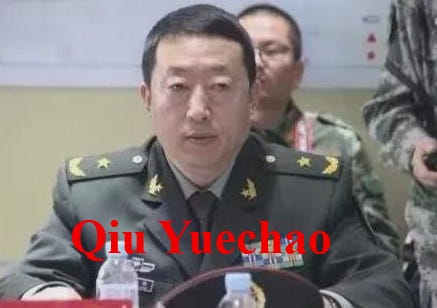
This analytical expose evaluates the structural posting of Major General Qiu Yuechao —Deputy Commander of the PLA Heilongjiang Provincial Military District and active-duty delegate to the 13th National People’s Congress (NPC)—to expose the dual military-legislative mechanics of the Beijing regime.
By cross-referencing official defense mobilization disclosures (China Defense Daily, March 20, 2018) with the legal frameworks of the People's Republic of China (PRC) Constitution and National Defense Law, this analysis demonstrates how active-duty flag officers utilize legislative block representation within the NPC to operationalize Military-Civil Fusion (MCF), direct provincial economic assets toward strategic war-footing, and insulate Central Military Commission (CMC) mobilization directives from civilian legal oversight.
Consequently, the text provides a forensic evaluation of whether the party-state architecture in Beijing fulfills the textual definitions of a genuine “People’s Republic” under UN General Assembly Resolution 2758 and Article 23 of the United Nations Charter.
I. Case Study: Major General Qiu Yuechao and the 13th NPC Military Delegation
Qiu Yuechao’s dual role as a high-ranking flag officer in the Northern operational theater perimeter and a voting delegate in the 13th NPC illustrates the structural absence of civilian control over the military apparatus in the PRC.
                  [ CENTRAL MILITARY COMMISSION (CMC) ]
                                    │
                                    ▼
       [ HEILONGJIANG PROVINCIAL MILITARY DISTRICT (Deputy Cmdr: Qiu Yuechao) ]
                                    │
    ┌───────────────────────────────┴───────────────────────────────┐
    ▼                                                               ▼
[ 13th NPC Military Delegation ]                          [ Provincial MCF Infrastructure ]
  • Legislative Block Power                                 • Dual-Use Supply Chains
  • Subordinates SPC & SPP                                  • Strategic Reserves (Oil/Grain/Meds)
  • Bypasses Civilian Oversight                             • Institutionalized Military Mobilization
Legislative Integration of Military Mobilization Directives:
In his official address to the 13th NPC, Qiu Yuechao explicitly advocated for integrating national defense mobilization into local civilian administrative structures, mandating dedicated military personnel quotas (专职编制) across provincial, municipal, and county levels.
Qiu disclosed that Heilongjiang Province enacted over 20 provincial-level directives—under joint orders from the Provincial Party Committee, Provincial Government, and PLA Provincial Military District—to subjugate local government organs, municipal staffing, and civilian industrial capacities to military war-readiness (军事斗争准备).
Structural Execution of Military-Civil Fusion (MCF):
Qiu explicitly outlined the systematic integration of strategic military demands into civilian commercial sectors, targeting key strategic industries: new materials, biotechnology, energy equipment, agricultural machinery, transportation, modern services, and timber/forestry.
Under Qiu’s legislative and operational direction, the regime established state-controlled stockpiling centers for critical strategic commodities—including petroleum, grain, and pharmaceuticals—binding private enterprises, defense contractors, and state sectors to pre-requisition agreements (预储预征协议) for war-time combat support.
II. Textual and Statutory Analysis: Party-State Fusion and National Defense Law Mandates
Qiu Yuechao’s role within the NPC highlights the institutional fusion of political power, statutory law, and military force under the Beijing regime:
1. Constitutional Enshrining of Military Legislative Power (Article 59)
Article 59 of the PRC Constitution explicitly mandates that the National People’s Congress is composed of deputies elected from provincial divisions “and the armed forces.” Active-duty military personnel do not sit as private citizens or demilitarized representatives; they vote as an organized military delegation directly under CMC command, holding structural legislative leverage over civilian delegates.
2. Statutory Subordination to Party Supremacy (National Defense Law Arts. 4, 21, and 22)
The military delegation in which Qiu Yuechao serves does not represent a neutral state defense force. Its duties are statutorily bound to the ruling party under the revised National Defense Law of the PRC:
Article 4 (Mandatory Ideological Alignment): Mandates that all defense and mobilization activities strictly implement “Xi Jinping Thought on Strengthening the Military” and party ideological dogmas.
Article 21 (Statutory Monopoly of Party Leadership): Dictates: “The armed forces of the People’s Republic of China are subject to the leadership of the Communist Party of China. Organizations of the Communist Party of China in the armed forces shall carry out activities in accordance with the Constitution of the Communist Party of China.”
Article 22 (Regime Security as the Core Mission): Defines the fundamental mission of the armed forces specifically as providing “strategic support for consolidating the leadership of the Communist Party of China and the socialist system.”
3. (PRC Constitution Arts. 128, 133, 134, and 138):
Under Articles 128 and 134 of the PRC Constitution, the SUPREME COURT (SPC) is established as the supreme judicial organ and the SUPREME PROCURATORATE (SPP) as the supreme legal supervision organ. However, under Articles 133 and 138, both organs are explicitly made responsible to and supervised by the National People’s Congress. Because active-duty military personnel sit as a permanent voting delegation in the NPC under Central Military Commission control, the highest judicial bodies possess no legal jurisdiction or authority to review, challenge, or strike down military-directed state actions or defense mobilization orders.
Because active-duty flag officers like Qiu Yuechao form a dedicated voting block in the NPC under the direct leadership of the CMC, all defense mobilization directives, Military-Civil Fusion (MCF) industrial seizures, and military-directed procurement networks are rendered completely immune from independent judicial review by the SUPREME COURT (SPC) or SUPREME PROCURATORATE (SPP).
III. International Legal Assessment: Is the Beijing Regime the Government Defined by Resolution 2758?
When evaluating whether the Beijing regime qualifies as the legitimate representative of China under the literal terms of UN General Assembly Resolution 2758 and Article 23 of the United Nations Charter, strict textual analysis reveals fundamental constitutional incompatibilities:
“People’s” Sovereignty:
Universal International Standard (VCLT / UN Charter): Requires genuine popular sovereignty, uncoerced self-determination, and universal direct suffrage.
PRC Constitutional Structure: The Preamble and Article 1 explicitly codify a “People’s Democratic Dictatorship” and establish a permanent, unchallengeable single-party monopoly over all state organs.
“Republic” (Res Publica):
Universal International Standard (VCLT / UN Charter): Demands a genuine separation of powers, an independent judiciary, and strict civilian constitutional control over national defense forces.
PRC Constitutional Structure: Articles 3, 59, and 93 enforce absolute power concentration (”Democratic Centralism”), allowing active-duty military officers to hold direct legislative blocks within the national assembly.
Military Governance:
Universal International Standard (VCLT / UN Charter): Mandates neutral state armed forces operating strictly under civilian parliamentary oversight and public accountability.
PRC Statutory Structure: Articles 4, 21, and 22 of the National Defense Law legally bind the armed forces directly to party command, prioritizing regime security and party preservation over public state governance.
Judicial Oversight:
Universal International Standard (VCLT / UN Charter): Requires a Supreme Court with authority to strike down illegal executive, legislative, or military actions.
PRC Constitutional Structure: Articles 128 and 133 structurally subordinate both the SUPREME COURT (SPC) and the SUPREME PROCURATORATE (SPP) to the legislative and military hierarchy (NPC and CMC), eliminating any possibility of independent legal accountability.
Legal Conclusion
UN General Assembly Resolution 2758 explicitly references the “People’s Republic of China.” Under literal rules of statutory interpretation:
The Absence of a True “People’s” System: The PRC Constitution subordinates universal popular choice to a mandatory single-party monopoly, stripping citizens of direct sovereign authority over national legislation or military mobilization.
The Absence of a True “Republic”: By embedding active-duty military officers like Major General Qiu Yuechao into the national legislature to direct civilian economic mobilization while subjecting the armed forces exclusively to party command (National Defense Law Articles 21 and 22), the Beijing regime replaces a public, civilian constitutional state with a militarized party-state hybrid.
Because the institutional framework established in Beijing strips civilian courts—including the SUPREME COURT (SPC) and SUPREME PROCURATORATE (SPP)—of jurisdiction over military activities and subordinates state governance to party directives, the Beijing regime fails to fulfill the literal, structural, and constitutional requirements of a genuine “People’s Republic” as envisioned under the international legal order.
No comments:
Post a Comment