The external narrative of the Chinese Communist Party (CCP) attempts to portray its state organ as a modern system of law and civil governance. However, the operational reality within the National Soviet Assembly of Communist China confirms that constitutional separation of powers and judicial independence are fundamentally rejected. Instead, prosecutorial authorities and military legislators operate within a closed, state-controlled loop designed to prioritize military interests and enforce party control over society.
A report published on July 30, 2019, by the Shanxi Provincial Procuratorate reveals how state prosecutorial organs directly lobby unelected military assembly delegates, using judicial mechanisms to serve the armed forces while blurring the lines between military authority and civil prosecution.
Lobbying the Military Precinct: The Case of Delegate Wang Jian
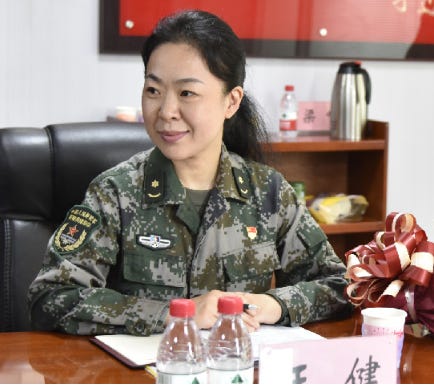
On July 29, 2019, Yan Xu’an, Deputy Chief Procurator and Party Leadership Group Member of the Shanxi Provincial Procuratorate, led a official delegation to the No. 985 Hospital of the PLA Joint Logistics Support Force. The explicit objective of the visit was to brief and solicit directives from Wang Jian, an attending physician in the Department of Military Sick and Wounded Management at No. 985 Hospital who simultaneously sits as a delegate to the 13th National Soviet Assembly representing the armed forces and suppression forces.
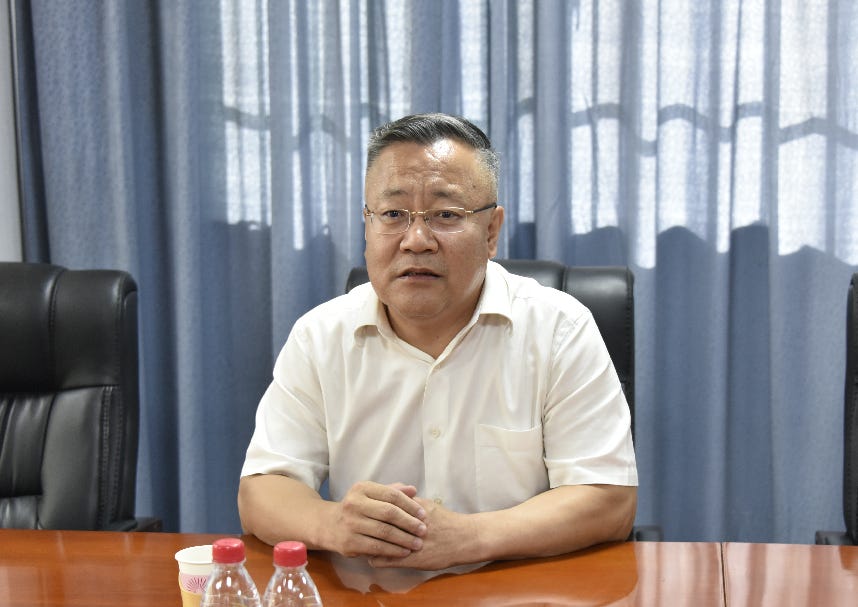
During this official encounter, the provincial procuratorate provided Wang Jian with a comprehensive briefing on nationwide prosecutorial operations for the first half of 2019 and outlined strategic arrangements for the remainder of the year.
Structural Violations of Judicial Independence and Separation of Powers
The exchange between Shanxi’s senior prosecutorial leadership and an active military delegate exposes structural violations of judicial independence and civil governance standards:
Subordination of Civil Prosecution to Military Legislators: In a functional legal system operating under the separation of powers, judicial and prosecutorial organs remain independent of military interference. By submitting operational reports directly to an active-duty military officer and promising to relay her suggestions “in their original form” to the Procuratorate, the state legal apparatus subordinates civil prosecution to military delegates.
Co-Optation under Military-Civil Fusion: Deputy Chief Procurator Yan explicitly pledged that provincial prosecutorial agencies would deepen “military-civil fusion” by offering tailored legal services to the armed forces, prioritizing military-related cases, and using prosecutorial machinery to explicitly support defense and military construction. This commitment replaces impartial justice with preferential judicial treatment for military entities.
Military Direction over Civilian Criminal Policy: Wang Jian, an attending physician operating within a military logistics hospital, issued policy directives instructing civil procuratorial organs to crack down strictly on telecommunications fraud, medical-related crimes, and juvenile delinquency. This dynamic allows military personnel—insulated from civilian elections—to shape civilian penal priorities and judicial enforcement targeting ordinary citizens.
The Closed-Loop Structural Fraud
Under Article 2 of the Electoral Law for the National Soviet Assembly and Local Soviet Assemblies and the specialized Electoral Measures for the Chinese People’s Liberation Army, military delegates like Wang Jian are elected exclusively through internal military conferences. Civilian citizens have zero legal standing to vote for, oversee, or recall military representatives sitting in the assembly.
When state procuratorial agencies treat unelected military delegates as oversight authorities for civilian prosecution, the legal system abandons all pretenses of judicial neutrality. The judiciary functions not as an independent defender of statutory law, but as an enforcement auxiliary aligned with the Central Military Commission of the Chinese Communist Party to preserve regime power and enforce military supremacy over civilian society.


No comments:
Post a Comment