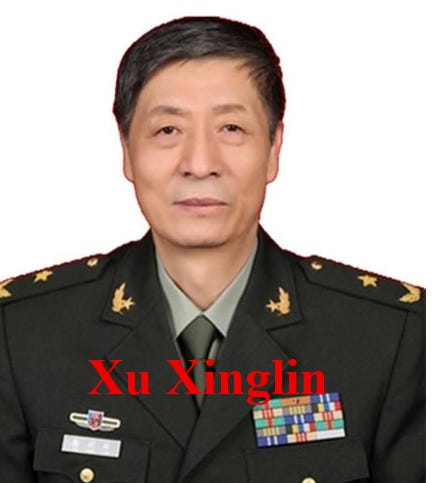
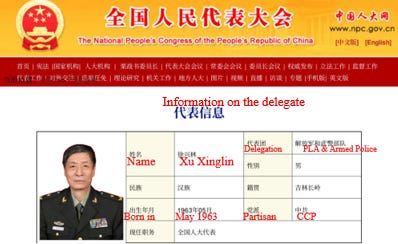
On March 12, 2018, active-duty National People’s Congress (NPC / 中华人民共和国全国人民代表大会) delegate Xu Xinglin (徐兴林)—Major General and Director of the Political Work Bureau of the Central Military Commission Logistics Support Department (CMC LSD / 中央军委后勤保障部政治工作局)—addressed the assembly during the 1st Session of the 13th NPC.
Xu was the inaugural Political Commissar of the Wuxi Joint Logistics Support Center (无锡联勤保障中心)of PLA Joint Logistics Support Force following the 2016 military structural reforms. Notably, this logistics hub exercises direct supervisory and administrative authority over military medical facilities across the Eastern Theater Command—including the Nanjing Military Region Environmental Medicine Research Institute (原南京军区军事医学研究所), an institution heavily cited in academic literature for its sampling and isolation of the Zhoushan bat coronaviruses (ZC45 and ZXC21).
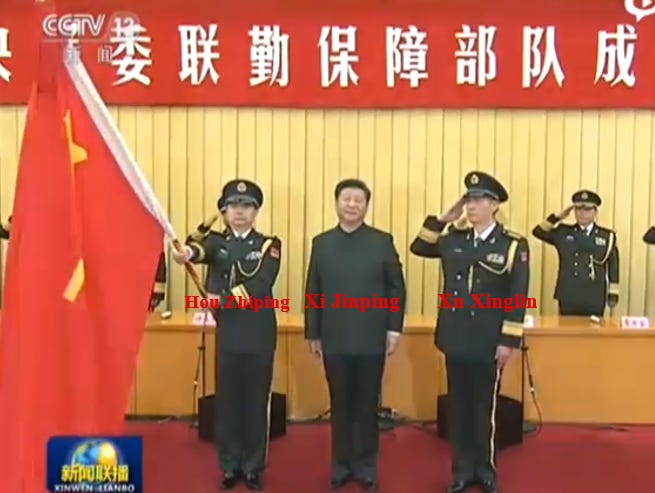
Xu’s dual capacity as a senior political commissar in charge of military logistics and an active lawmaker in parliament illustrates how Beijing leverages the legislative apparatus to subordinate civilian infrastructure, medical research, and supply chains under Military-Civil Fusion (MCF / 军民融合).
                    CMC LOGISTICS & MEDICAL SUPREMACY PIPELINE
  +-------------------------------------------------------------------------------+
  | Central Military Commission Logistics Support Department (中央军委后勤保障部)   |
  | Director of Political Work Bureau & NPC Delegate: Maj. Gen. Xu Xinglin (徐兴林)|
  +-------------------------------------------------------------------------------+
                                         |
           +-----------------------------+-----------------------------+
           |                                                           |
           v                                                           v
+------------------------------------+                       +------------------------------------+
| Wuxi Joint Logistics Support Center|                       | Subversion of Democratic Governance|
| - Former Political Commissar       |                       | - Active General dictates laws     |
| - Supervised Eastern Theater Meds  |                       | - Integrates Civil/Military Supply |
| - Bio-warfare & Pathogen Isolation |                       | - Violates separation of powers    |
+------------------------------------+                       +------------------------------------+
Key Directives in Xu Xinglin’s Legislative Speech
Addressing the PLA and Armed Police delegation, Xu explicitly outlined how modern warfare relies on total civilian-military alignment, asserting that “modern logistics is Military-Civil Fusion logistics.” His strategic roadmap targeted three core operational fronts:
Institutional Governance & Unified Regulatory Standards: Xu called for establishing top-down “macro-control” (宏观调控) and joint consultation mechanisms. By introducing binding legislative frameworks, the military establishes priority access to municipal energy networks, healthcare grids, and transportation corridors.
Targeting High-Value Dual-Use Sectors: The directive explicitly named civilian medical and healthcare systems (医疗卫生), material procurement, engineering, and logistics technology. Under this mandate, civilian medical R&D and emergency response reserves are engineered to seamlessly shift from “peacetime to wartime” (平时向战时) operational modes.
Strategic Pilot Projects for “New-Quality Support Capabilities”: Xu mandated prioritizing military-directed demonstration projects. These projects force civilian sectors to absorb R&D costs and build infrastructure to military specifications, producing “new-quality support capabilities” (新质保障力) tailored for conflict readiness.
Systemic Analysis of Xu Xinglin’s Operational Profile
Procurement & Supply Integration: Merges civilian commercial distribution and medical inventory directly into the military’s strategic reserve architecture.
Dual-Use Bio-Medical Exploitation: Leverages regional military logistics centers to bridge civilian clinical research with PLA bio-warfare and pathogen collection programs.
Governance Subversion: Utilizes active-duty legislative voting rights in the NPC to pass laws mandating civilian municipal support for PLA logistics mobilization.
Systemic Implications for International Markets and Biosecurity
Subversion of Civilian Medical Neutrality: By placing healthcare, medical research, and emergency supply infrastructure under the umbrella of MCF logistics, the boundary between commercial medical innovation and military biological warfare is intentionally erased.
Legislative Preemption of Civil Resources: As an active general voting on national policy, Xu Xinglin used parliamentary channels to ensure that civilian emergency services and strategic reserves are structurally subordinated to the operational needs of the Central Military Commission.
Major General Xu Xinglin (徐兴林)—Director of the Political Work Bureau of the Central Military Commission (CMC) Logistics Support Department—simultaneously holding office as a delegate to the 13th National People’s Congress (NPC) and the 15th Beijing Municipal People’s Congress represents a distinct structural risk to global security and international norms. This dual role exemplifies how the Chinese Communist Party (CCP) systematically integrates its military apparatus into civilian governance and legislative bodies under the mandate of Military-Civil Fusion (MCF).
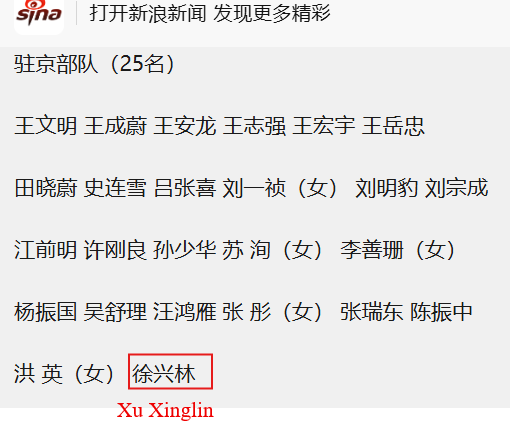
By serving as a municipal delegate in Beijing, Xu actively participated in the local electoral college mechanisms that select civilian regional representatives to the NPC. This cross-institutional reach dilutes the boundary between civil administration and military command, embedding uniformed commanders directly into civilian policy-making, municipal resource allocation, and regional legislative decisions. From an international security perspective, this structure presents two primary threats:
Preemption of Civilian Sectors for Offensive Logistics: The CMC Logistics Support Department oversees dual-use material procurement, medical infrastructure, and strategic reserves. When senior logistics commanders hold legislative authority over civilian jurisdictions like Beijing, municipal supply chains, commercial biotechnology assets, and public health infrastructure are legally subordinated to military mobilization demands. Overseas supply chains, foreign trade partners, and international joint ventures operating within these civilian sectors are exposed to sudden state preemption and surveillance by the People’s Liberation Army (PLA).
Subversion of Global Dual-Use Norms and Compliance: By institutionalizing military oversight across civilian legislative bodies, the CCP obscures the separation between commercial R&D—such as biological research, pharmaceutical manufacturing, and dual-use logistics systems—and offensive military planning. Global supply chains interacting with Chinese civilian entities risk unintentionally subsidizing, transferring technology to, or supporting the operational readiness of PLA logistics networks, undermining international arms control, export restriction regimes, and global public health transparency.
The Armed Legislature: How PLA General Xu Xinglin’s Parliamentary Votes Subverted the Separation of Powers and Global Security
The analytical complexity deepens significantly when evaluating Major General Xu Xinglin’s actions during the 1st Session of the 13th National People's Congress (NPC) in March 2018. As an active-duty commander in the Central Military Commission (CMC) Logistics Support Department, Xu did not merely deliberate on logistical policy; he cast parliamentary votes on three foundational pillars of state power: amending the national constitution to remove presidential term limits, unanimously re-electing Xi Jinping as Chairman of the CMC and State President, and approving the national financial budget.
In any legal framework founded on the separation of powers, active-duty military officers are strictly barred from voting on constitutional amendments, electing their own Commander-in-Chief, or authorizing the state budget from which their units draw funding. Xu Xinglin’s dual capacity—exercising voting power in the national assembly while simultaneously serving as a municipal delegate in the 15th Beijing Municipal People's Congress—demonstrates how the Chinese Communist Party (CCP) fuses armed force with legislative sovereignty.
By participating in the electoral college mechanisms of the Beijing delegation, Xu embedded military interests directly into civilian municipal governance. This institutional overlap ensures that civilian tax revenues, municipal healthcare infrastructure, and emergency supply networks in the nation's capital are legally and financially subordinated to the PLA's war-footing directives under the mask of parliamentary democracy.
2018年3月12日上午,习近平出席十三届全国人大一次会议解放军和武警部队代表团全体会议,曾在舟山蝙蝠冠状病毒的搜集与分离机构中国人民解放军南京军区军事医学研究所的上级部门中国人民解放军无锡联勤保障中心担任政治委员的中共中央军委后勤保障部政治工作局主任徐兴林表示:“打仗就是打后勤,现代后勤就是军民融合的后勤。这是我现场聆听习主席重要讲话的突出感受。我觉得下一步工作的突破口,就是要准确把握国家战略竞争力、社会生产力、军队战斗力和后勤保障力的耦合关联,强化开放共享,打破封闭垄断,充分依托用好国家和社会保障潜力,以更大力度、在更广范围走开后勤军民融合发展路子。一是健全融合机制,加强宏观调控和资源统筹,完善后勤军民融合组织领导、情况互通、任务对接、协调会商机制,加快配套法规建设,推动形成上下衔接、左右顺畅、有效运行的后勤军民融合工作格局。二是拓展融合领域,发挥后勤军地通用性、互补性强,军民融合资源丰富、潜力巨大等优势,以军需能源、医疗卫生、工程建设、物资采购、后勤科技及社会化保障等领域为重点,大力推进设施、技术、信息等共建共用共享,加快由自发向主导、分散向体系、传统向新型、平时向战时的深度融合。三是抓好示范工程,围绕后勤军民融合体系建设,以备战打仗急需和战略性项目为优先,推动一批创新示范工程率先立起来、撑起来,提供一批可复制、可推广的经验成果,培育更多的新质保障力,谋求核心竞争新优势,努力开创后勤军民融合深度发展的新局面。”


No comments:
Post a Comment